
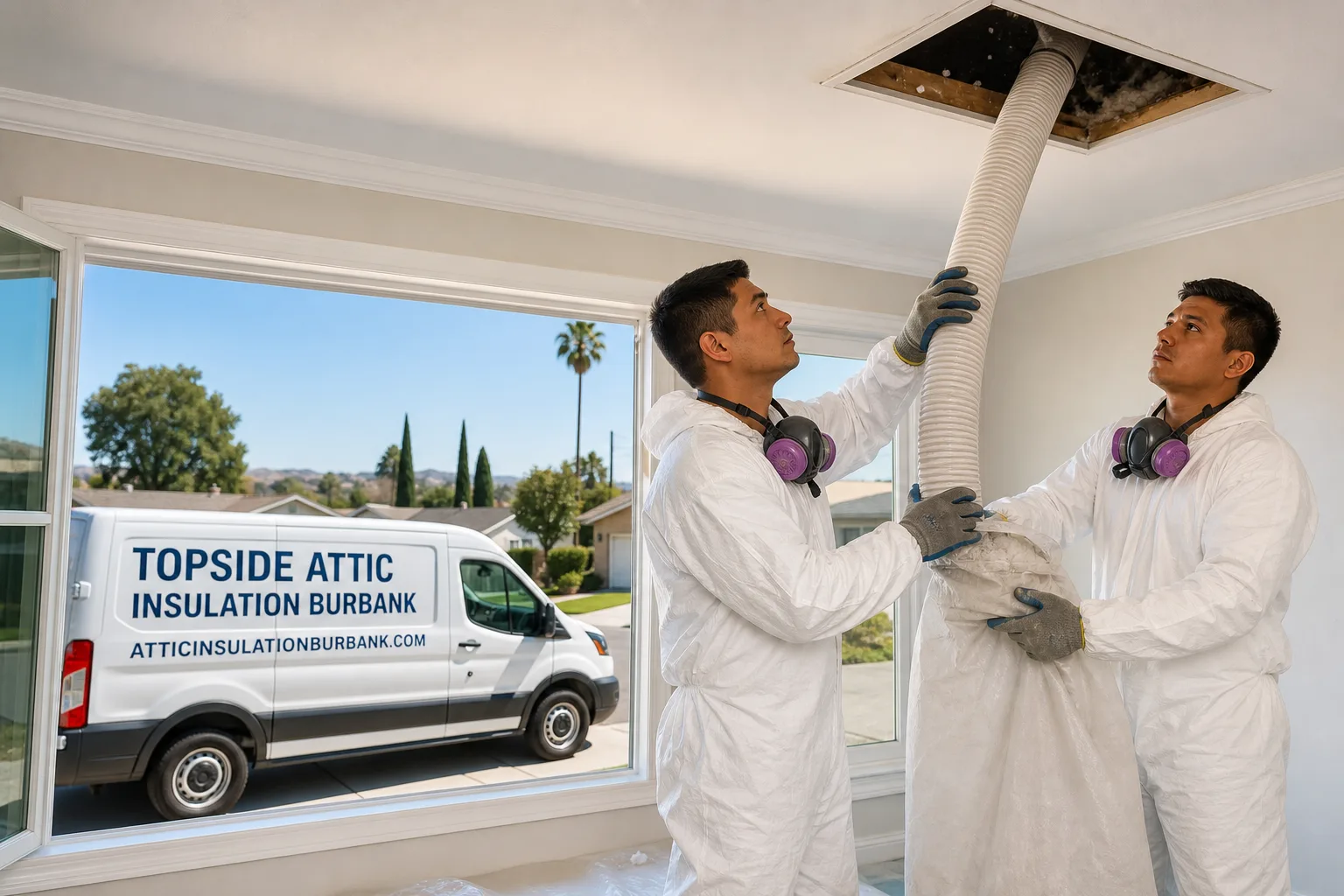
Trusted Radiant Barrier Installation for Burbank Homeowners
Radiant barrier installation in Burbank typically costs $1,800-$4,200 for a single-family attic, with most jobs completed in one day. At Topside Attic Insulation Burbank, we’ve sealed and insulated over 9,000 homes since 2016, and we treat radiant barrier as part of a complete envelope strategy - never a standalone sticker. Our crews are in Burbank neighborhoods like Magnolia Park, Rancho Adjacent, and the Hillside District weekly, and we answer calls live at (213) 816-1699 around the clock.
Burbank’s combination of intense San Fernando Valley sun and older housing stock built before modern energy codes creates a specific problem: attics that hit 140°F in August, forcing air conditioners to run continuously and shortening equipment life. A radiant barrier - a reflective surface, usually aluminum foil laminated to substrate or woven into fabric, installed on the attic floor or roof deck - blocks radiant heat transfer from the roof deck to the living space below. But here’s what most contractors in Burbank won’t tell you: radiant barrier performs poorly if your attic floor leaks air. We seal first, then reflect. That’s the Haven Standard.
Our crews document every job with before-and-after photos and, where applicable, blower-door readings - a pressurization test that shows, in one number, how much conditioned air your home was losing before and after the work. You get the written scope, the written warranty, and the photo record before anyone leaves your driveway.
What Our Radiant Barrier Installation Service Includes
Attic Radiant Barrier
Attic radiant barrier is reflective material installed across the attic floor joists or stapled to the underside of the roof rafters, creating a surface that reflects up to 97% of radiant heat rather than absorbing it. In Burbank, we see this specified most often in homes built between 1940 and 1980 with minimal existing insulation and no original radiant barrier - which describes most of the Magnolia Park and Burbank Junction housing stock. At Topside Attic Insulation Burbank, we inspect your attic floor for air leaks at top plates, plumbing penetrations, and electrical chases before installing any radiant barrier; blowing reflective foil over a leaky attic is like putting a windbreaker over a screen door. Our crews use a smoke pencil and thermal imaging to locate leaks, seal them with fire-rated caulk and foam, then install the barrier with proper gaps to allow moisture escape.
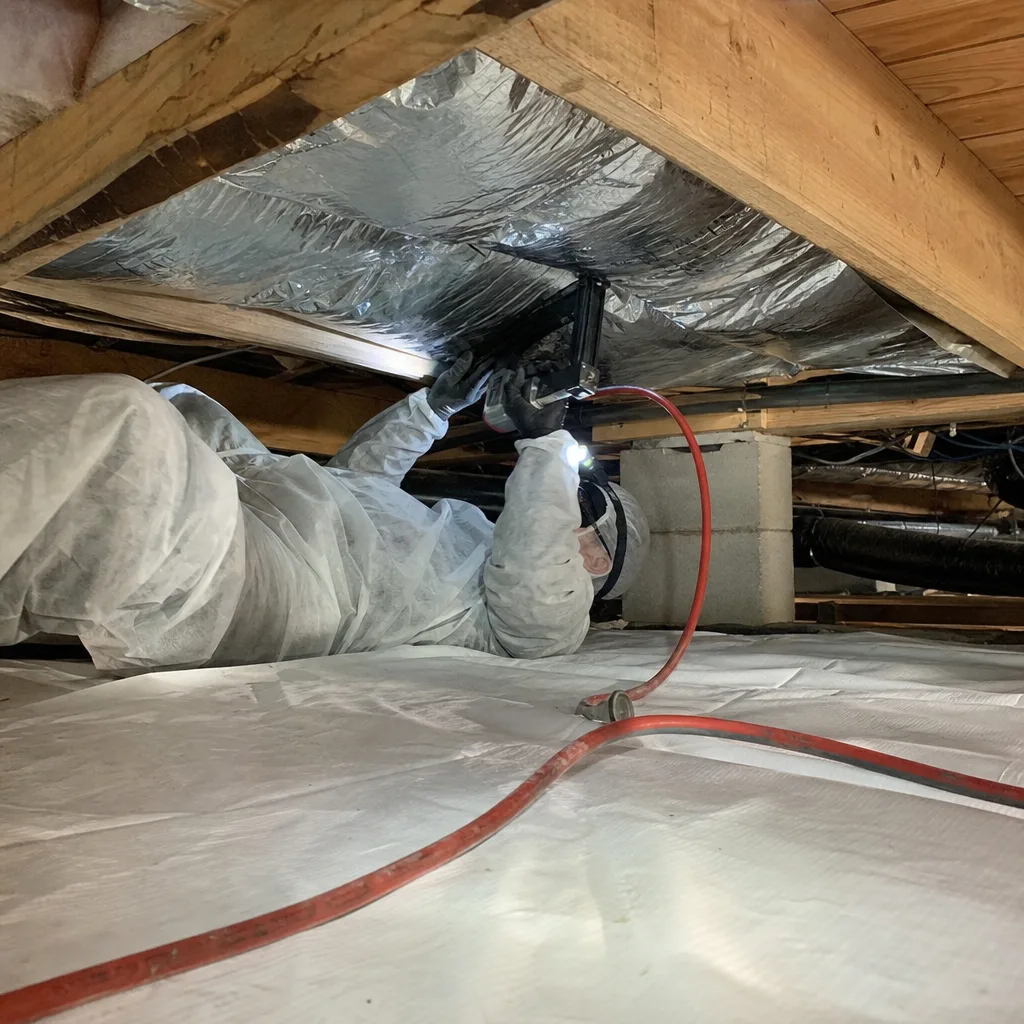
Radiant Barrier Foil
Radiant barrier foil is the most common material type - a thin, reinforced aluminum sheet that comes in rolls, either perforated to allow vapor passage or solid for use in ventilated attics where moisture management is handled separately. Burbank’s dry climate means we can use perforated foil in most applications without condensation risk, but homes near the Verdugo Mountains with morning fog exposure sometimes need solid foil paired with enhanced ventilation. We source radiant barrier foil from Owens Corning and Johns Manville, among others, and we don’t lock you into proprietary products - we specify based on your roof type, existing ventilation, and whether your attic houses HVAC equipment that needs service access. Every roll is cut to fit your joist spacing, not draped loosely over insulation where it loses effectiveness through contact conduction.
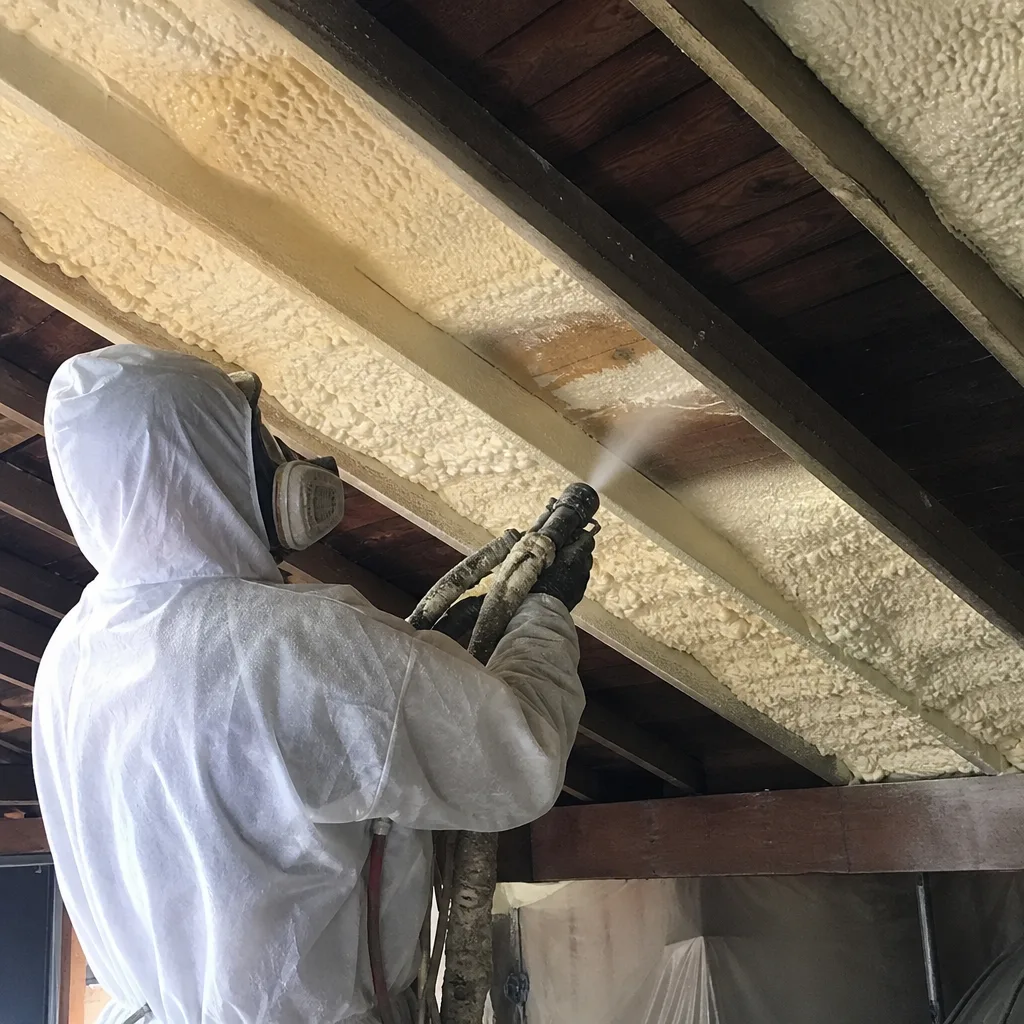
Radiant Barrier Roof Deck
Radiant barrier roof deck installation attaches reflective material directly to the underside of the roof sheathing, creating a continuous barrier between the hot roof surface and the attic air. This approach works best in Burbank homes with cathedral ceilings, finished attic spaces, or where attic floor access is obstructed by extensive ductwork - common in 1990s additions in the Hillside District and areas above Glenoaks Boulevard, and similar to what we see with Radiant Barrier Installation in West Hollywood. We use Knauf and Owens Corning roof-deck-specific products with proper fire ratings for California Title 24 compliance, and we always verify that your existing soffit and ridge ventilation can handle the reduced radiant heat load - cooler attics move less air by thermal buoyancy, and underventilated roof decks can trap moisture. Our crews photograph every rafter bay before and after installation, and we mark HVAC access points with permanent tags so future service techs don’t tear the barrier.
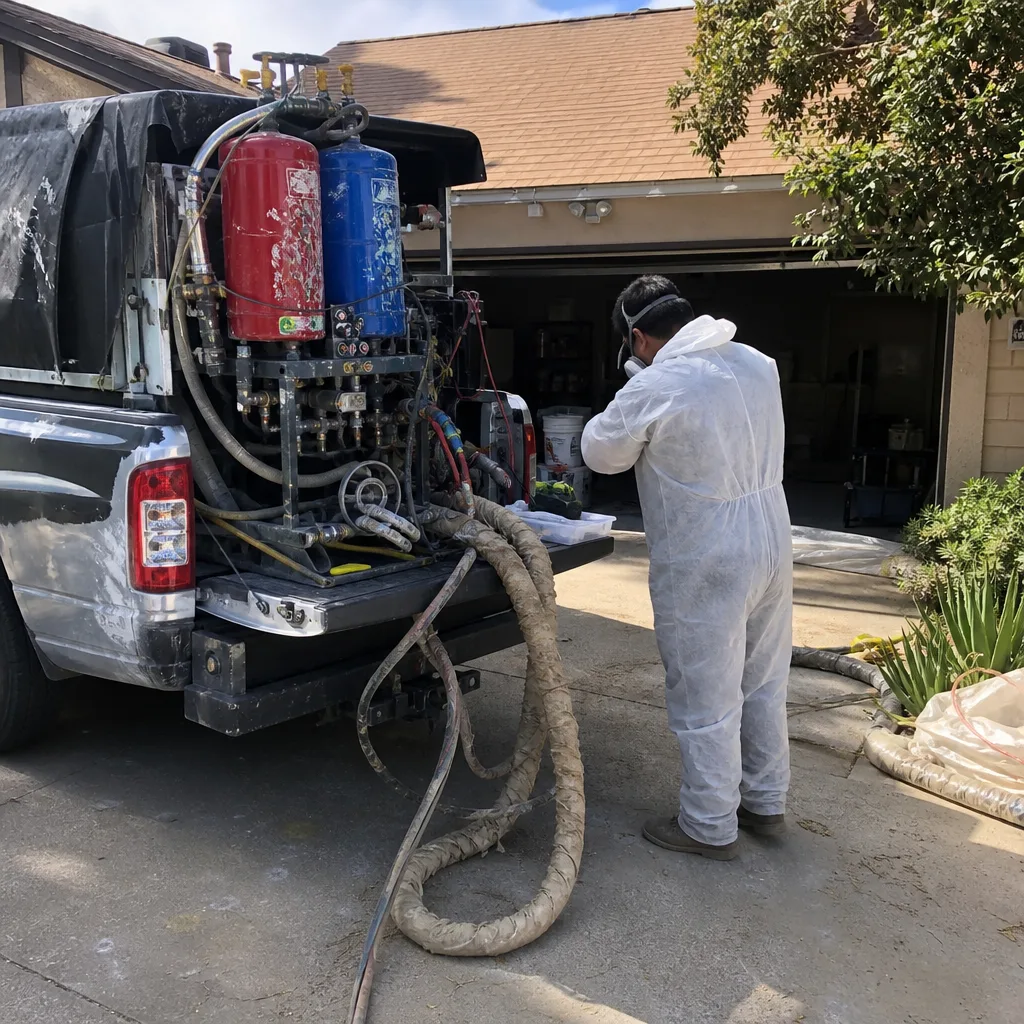
Radiant Barrier & Ventilation
Radiant barrier and ventilation must be designed together - a reflective surface without adequate airflow creates a sealed hot pocket, while excessive ventilation without radiant barrier lets unfiltered solar heat pour into the attic. In Burbank, we calculate ventilation requirements using the 1:300 attic floor ratio from California building code, then adjust for radiant barrier’s effect on attic temperature, which can drop 20-30°F and reduce the stack effect that drives natural ventilation. For homes in the Chandler Boulevard corridor with tile roofs and limited soffit exposure, we often pair radiant barrier with solar-powered attic fans or wind turbines to maintain airflow without adding electrical load. Our written scope specifies both the radiant barrier material and the ventilation verification method - we don’t consider the job complete until we’ve confirmed intake and exhaust airflow with a flow hood or anemometer.
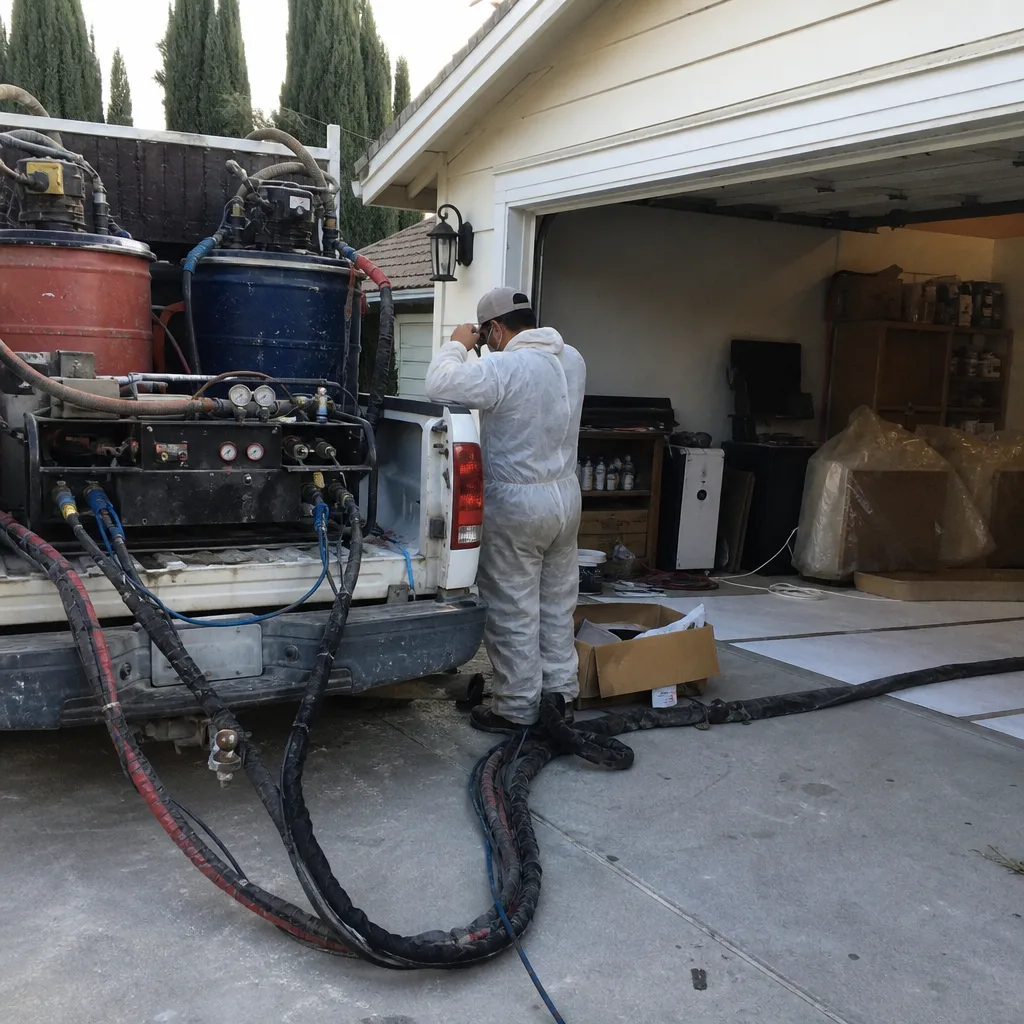
What happens when you call
- 1
A real person answersNo phone trees - you reach a local pro.
- 2
You get an upfront price rangeHonest numbers before anyone is dispatched.
- 3
A background-checked tech heads outLicensed & insured, dispatched right away.
- 4
You approve before work beginsNothing starts until you say go.
Brands We Service for Radiant Barrier Installation
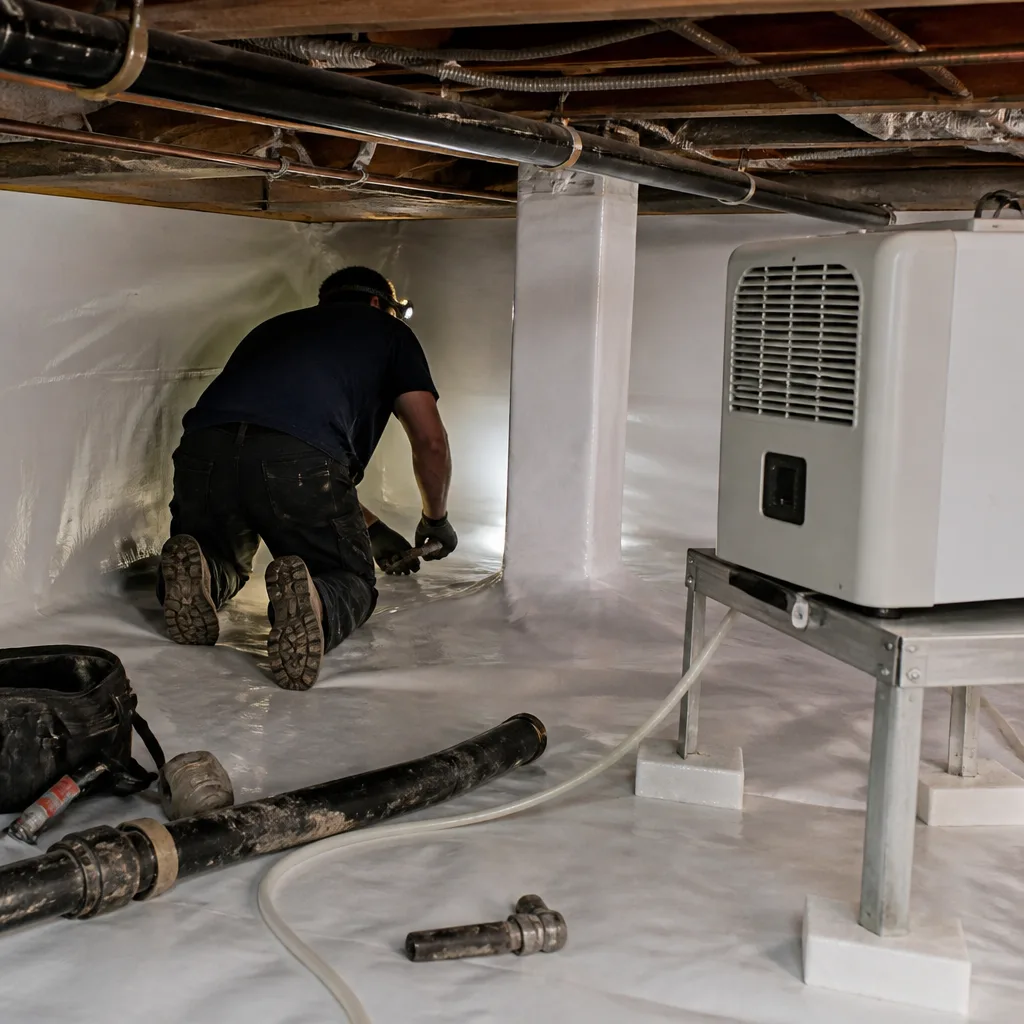
We’ve installed radiant barrier products from Owens Corning across hundreds of Burbank attics, primarily their LP TechShield radiant barrier sheathing for new roof deck applications and foil rolls for retrofit work. Owens Corning’s perforated foil performs consistently in our blower-door-verified assemblies, and we keep their product data sheets on file for every job so you have the fire rating and emissivity numbers in your documentation package. We’ve also worked extensively with Johns Manville reflective insulation products, particularly in commercial-adjacent residential projects near the Burbank Media District where building officials require specific UL listings that JM carries.
Knauf’s radiant barrier solutions see regular use in our roof-deck retrofits - their foil-faced insulation boards combine reflective performance with additional R-value in a single installation, which matters in Burbank’s stricter Title 24 compliance zones. GreenFiber’s cellulose-based reflective products occasionally fit specific applications where homeowners want a renewable-content barrier material. Whether you have Owens Corning, Johns Manville, Knauf, GreenFiber, or any other make specified in an existing estimate, we can evaluate it, install it, or recommend a better-suited alternative based on your actual attic conditions. Our home page has more on our full envelope approach.
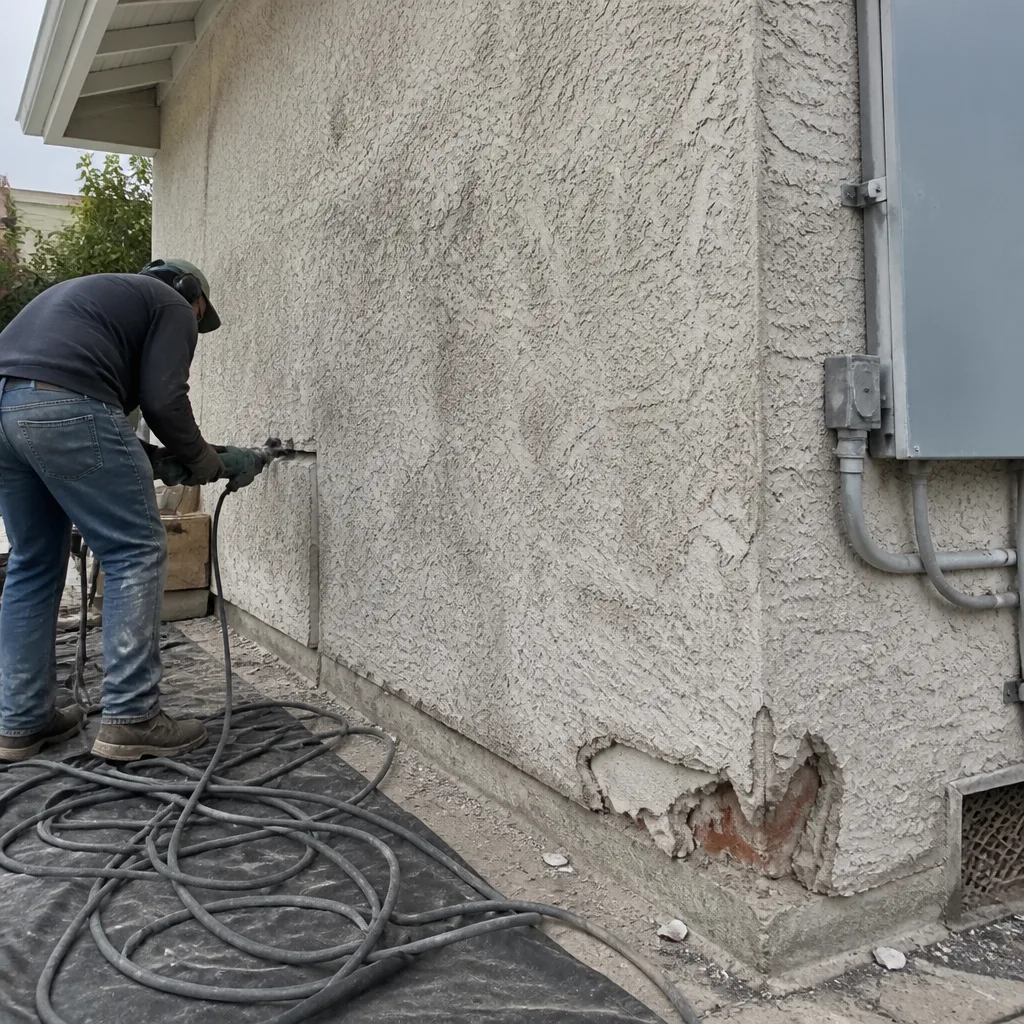 Before
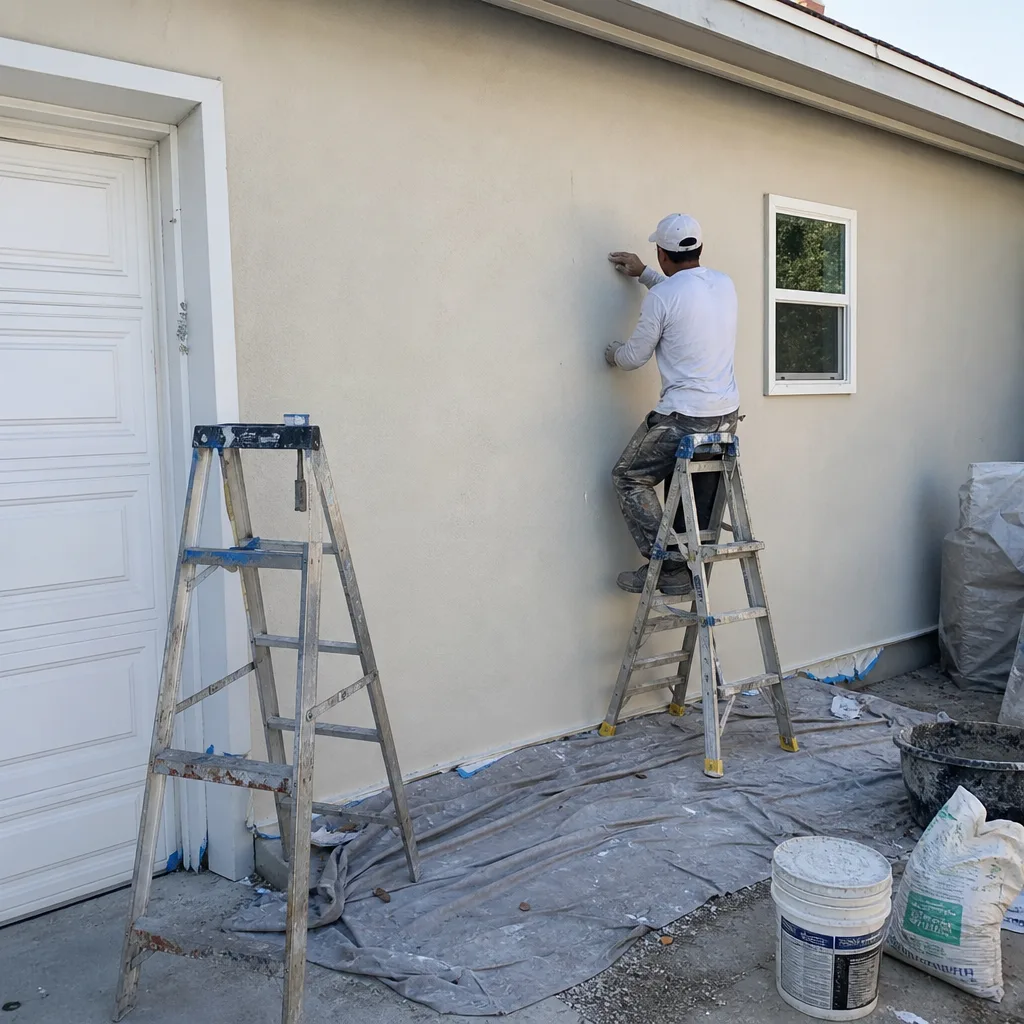 After
AfterSigns You Need Radiant Barrier Installation Right Now
- Your upstairs rooms are 10-15°F hotter than downstairs by mid-afternoon. This temperature stratification means radiant heat from the roof deck is overwhelming your insulation’s conductive resistance. In Burbank’s climate, unshaded roofs absorb 800-1,000 watts per square meter at solar noon; without a radiant barrier, that energy radiates downward through the attic all afternoon.
- Your air conditioner runs continuously from 2 PM to 8 PM but never reaches the thermostat setpoint. The equipment is sized correctly for your home’s conductive load, but it’s fighting an uncontrolled radiant heat gain that conventional insulation doesn’t address. We’ve measured attic temperatures of 150°F in Burbank homes where a simple radiant barrier would have cut that gain by half.
- Your energy bills spike July through September despite no change in thermostat settings. Southern California Edison time-of-use rates hit peak pricing precisely when radiant heat gain is highest. A radiant barrier reduces the timing mismatch between solar load and cooling demand, flattening your demand curve and keeping you out of the highest rate tiers.
- Your existing attic insulation is compressed, stained, or has dark spots on top. Those dark spots are dust filtration marks from air moving through the insulation - meaning your attic floor leaks, and any radiant barrier installed without sealing those leaks will perform at a fraction of its rated effectiveness. We see this pattern constantly in Burbank’s pre-1970s housing near Victory Boulevard.
- You’re replacing your roof and the decking is exposed. This is the only opportunity to install radiant barrier roof sheathing without the cost of removing finished ceiling material or working around existing insulation. The incremental material cost is minimal during re-roofing; retrofitting later requires dedicated labor that doubles the effective price per square foot.
Our Radiant Barrier Installation Process - Step by Step
- 1
Attic inspection and blower-door test. We start with a visual assessment of your attic floor, roof deck, and ventilation openings, followed by a blower-door test if air sealing is part of the scope - a pressurization reading that shows, in one number, how much air your building envelope is losing. In Burbank’s older homes, we typically see 3,500-6,000 CFM50 before any work; our target is under 2,000 for a 2,000-square-foot home. You get the photo record and the number before we quote.
- 2
Written price and scope delivery. Under Haven Standard Clause 1, you receive a flat price, written scope, and written warranty before anyone lifts a tool. The scope specifies radiant barrier type, installation location, air-sealing details, ventilation verification method, and material brands. No work starts without your signature on that document.
- 3
Air sealing (when applicable). For attic floor installations, we seal top plates, wire and pipe penetrations, can light housings, and duct boot connections with fire-rated materials. This step typically takes 2-4 hours in a Burbank single-family home and is non-negotiable - we will not install radiant barrier over an unsealed attic floor. The crew documents every sealed location with photos.
- 4
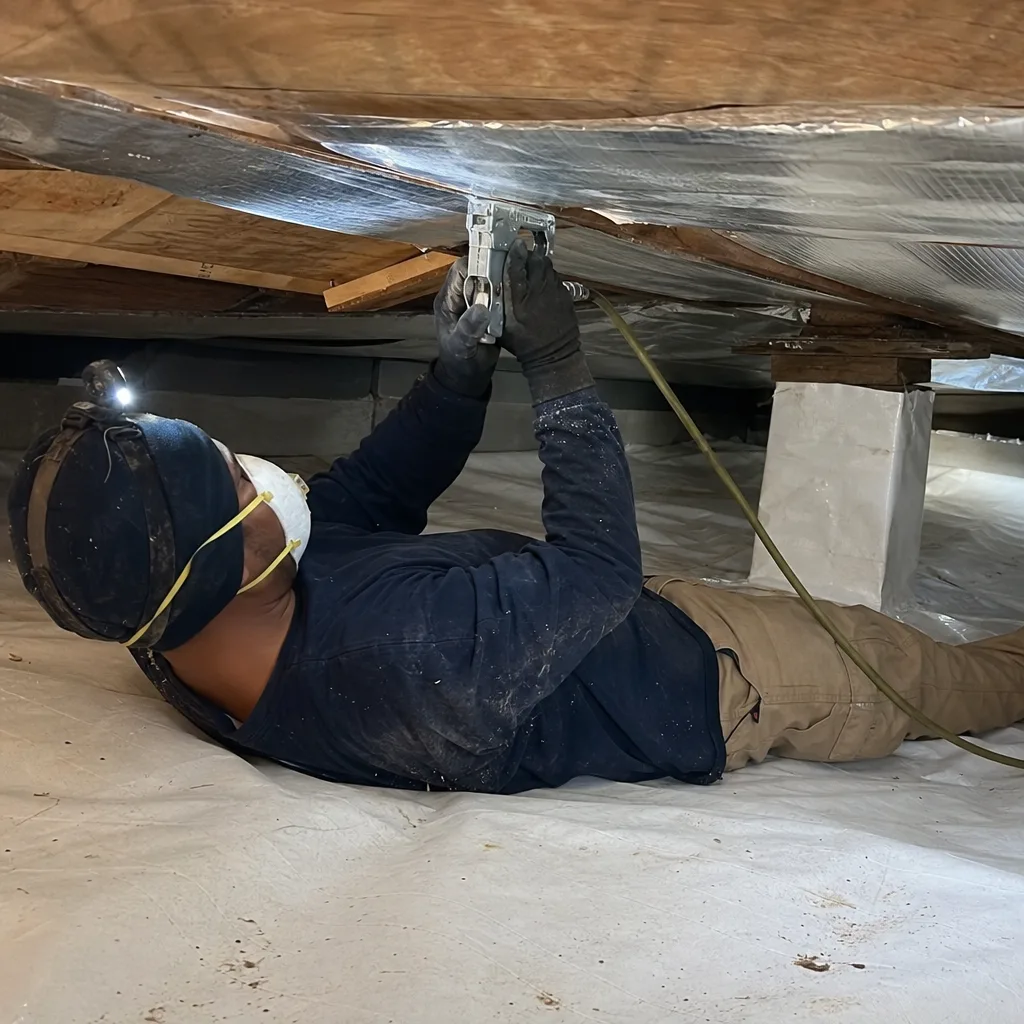
Radiant barrier installation. We install per manufacturer specifications with proper orientation (reflective side toward the heat source), adequate gaps at rafters for moisture management, and cutouts for any fixtures or access points. Roof deck installations use mechanical fasteners or adhesive rated for elevated temperatures; attic floor installations use staples with proper spacing to prevent sagging into insulation.
- 5
Verification and documentation. We re-run the blower-door test on air-sealing jobs, photograph the completed installation from multiple angles, and verify ventilation airflow with a flow hood or anemometer. You receive the before-and-after numbers, the photo record, and the completed warranty card before the crew leaves. The 365-Day Done Right Promise applies from that moment.
How Much Does Radiant Barrier Installation Cost in Burbank?
A typical attic floor radiant barrier installation in a Burbank single-family home runs $1,800-$3,200 for homes between 1,200 and 2,400 square feet, with most falling in the $2,200-$2,800 range. Roof deck installations cost more - typically $2,800-$4,200 - because of the labor intensity of working overhead and the need for proper ventilation integration. Homes requiring extensive air sealing before radiant barrier installation add $800-$1,500 to the total, though this investment pays back faster than radiant barrier alone because it addresses conductive and convective losses, not just radiant gain.
Several factors move the price within these ranges. Attic accessibility matters: a hatch in a closet with 10 feet of headroom costs less to access than a scuttle hole in a garage with a steep pull-down ladder. Existing insulation depth affects whether we install over, remove and replace, or work around - deep cellulose or fiberglass makes clean radiant barrier installation harder and slower. Roof pitch is significant for roof deck work; Burbank’s 1950s ranch homes with 4:12 pitches are straightforward, while the steeper roofs in the Hillside District require scaffolding or specialized fall protection. Finally, material choice moves the needle: standard perforated foil is the baseline, while foil-faced rigid boards or proprietary laminated products add 15-30% to material cost.
To avoid overpaying, get any competing quote in writing and bring it to us - our radiant barrier installation in Burbank includes a Free Second Opinion on any written estimate. We’ll read it with you and flag anything that doesn’t match your home’s actual conditions. Our free estimate includes the attic inspection, blower-door test if applicable, and the written price with no obligation. Call (213) 816-1699 to schedule.
Radiant Barrier Installation Near Burbank - Our Service Area
Topside Attic Insulation Burbank runs radiant barrier crews throughout the San Fernando Valley and adjacent foothill communities. We’re in Glendale weekly - typically a 15-minute response from our Burbank staging point - and handle regular work in La Cañada Flintridge where the steeper terrain and larger homes require specialized ventilation calculations. West Hollywood, Beverly Hills, and Culver City homes often specify radiant barrier as part of whole-house energy upgrades; Pasadena, Altadena, and South Pasadena see demand tied to historic home renovations where roof deck access is limited. San Fernando, Alhambra, and Los Angeles proper round out our core service radius, with most Burbank-area calls scheduled within 48 hours and emergency assessments same-day when attic temperatures create immediate equipment risk.
Serving Burbank, CA - Our Local Coverage Area
We’re based in the Burbank area and know this community well. Use the map below to see our service coverage - if you’re nearby, we can almost certainly help.
Frequently Asked Questions - Radiant Barrier Installation in Burbank
Radiant Barrier Installation - Burbank is the process of adding reflective material - typically aluminum foil laminated to substrate - to your attic floor or roof deck to block radiant heat transfer from a hot roof surface into your living space. In Burbank’s climate, this can reduce attic temperatures by 20-30°F and cut cooling loads significantly during peak summer months. We install radiant barrier only after verifying or completing air sealing, because reflective surfaces don’t stop the convective heat movement that leaks create.
Most residential radiant barrier installations in Burbank are completed in one day, with typical job durations of 4-8 hours depending on attic size, accessibility, and whether air sealing is included. Roof deck installations or homes with complex HVAC duct routing in the attic may extend to a second day. We schedule a specific arrival window, text when the technician is en route, and leave only when the photo documentation and any verification tests are complete.
Attic floor radiant barrier installation in Burbank typically costs $1,800-$3,200 for single-family homes, while roof deck installations run $2,800-$4,200. The final price depends on attic square footage, accessibility, existing insulation condition, and whether air sealing is required. Call (213) 816-1699 for a free estimate with a written price before any work starts - estimates are free and include the full attic inspection.
Yes, we install Owens Corning and Johns Manville radiant barrier products regularly, along with Knauf, GreenFiber, and other major brands. We don’t require proprietary products and specify based on your home’s actual conditions and any existing estimates you’ve received. Bring us a competing quote with a specific brand specified and we’ll evaluate whether it’s the right choice for your attic.
We answer calls live 24/7 and can schedule emergency assessments when extreme attic heat threatens HVAC equipment or creates uninhabitable conditions upstairs. Same-day service is often available in Burbank and our Radiant Barrier Installation in Glendale for urgent situations. The crew arrives with diagnostic tools, takes blower-door and temperature readings, and delivers a written price on the spot if work is recommended.
All radiant barrier installation is covered by our 365-Day Done Right Promise - if it’s not done right, we make it right. The written warranty delivered before work starts specifies material performance guarantees from the manufacturer and our labor coverage for installation quality. Under Haven Standard: Have it in writing, you receive this documentation before anyone lifts a tool, not after the job is finished.
Clear a path to your attic access and remove any stored items from the attic floor that you want to keep; our crews will move anything that remains, but we prefer homeowners handle valuables personally. Ensure we can access electrical panels if we’re running blower-door tests or powered ventilation equipment. Pets should be secured away from work areas. We’ll text 30 minutes before arrival with the technician’s name and photo, per Haven Standard: Arrive on schedule, you get a named technician.
Schedule Your Radiant Barrier Installation Service in Burbank Today
Call (213) 816-1699 now to schedule your free attic inspection and written estimate. A live person answers around the clock - no voicemail loops, no callback windows measured in business days. We’ll inspect your attic, run the blower-door test if air sealing is part of the scope, and deliver a flat price with written scope and warranty before any work starts. That’s Haven Standard Clause 1, and it’s how we’ve operated since 2016.
Written by Wes Okafor, Owner at Topside Attic Insulation Burbank, serving Burbank since 2016.