
Last updated September 23, 2026
Insulation Cost Breakdown: The Burbank Homeowner’s Reference for 2026
A $1,200 attic insulation quote and a $3,400 quote for the same 1,400-square-foot Burbank attic can both be honest numbers. The cheaper job blows in cellulose over an unsealed attic floor. The expensive job includes blower-door testing, sealing of top-plate bypasses and can-light penetrations, contaminated insulation removal, and a Title 24 CF2R certificate. Both contractors will call it “attic insulation.” Only one changes your SCE bill in a city that logged 1,347 cooling degree-days last year. This guide itemizes every cost component so you can compare quotes on equal terms, spot what’s missing, and know what documentation to demand before anyone lifts a tool. For more guides & resources on home performance, see our blog.
Quick Answer
Most complete attic insulation jobs in Burbank run between $2,800 and $4,500 for a 1,200-1,600 square foot home, including air sealing, material, labor, and documentation. A stripped-down blown-in-only job without sealing or testing starts around $1,200 but typically fails to meet Title 24 compliance for alterations and won’t produce measurable blower-door improvement. The 30% federal tax credit (up to $1,200) and Southern California Edison rebates can offset $500-$1,500 of that cost when insulation and air sealing are performed together.
Table of Contents
- Why Quotes for the Same Burbank Attic Vary by $2,000+
- Line-Item Cost Structure: Where Every Dollar Goes
- What Air Sealing Actually Costs and Why It Matters More Than Extra Inches
- Blower-Door Testing and HERS Rater Fees: Required or Optional?
- Cost Per R-Value Point: Material Comparison at Burbank Installed Pricing
- 2026 Rebates and Incentives: SCE and Federal Tax Credits
- Real Payback Period for a Burbank Home
- How to Compare Quotes Apples-to-Apples
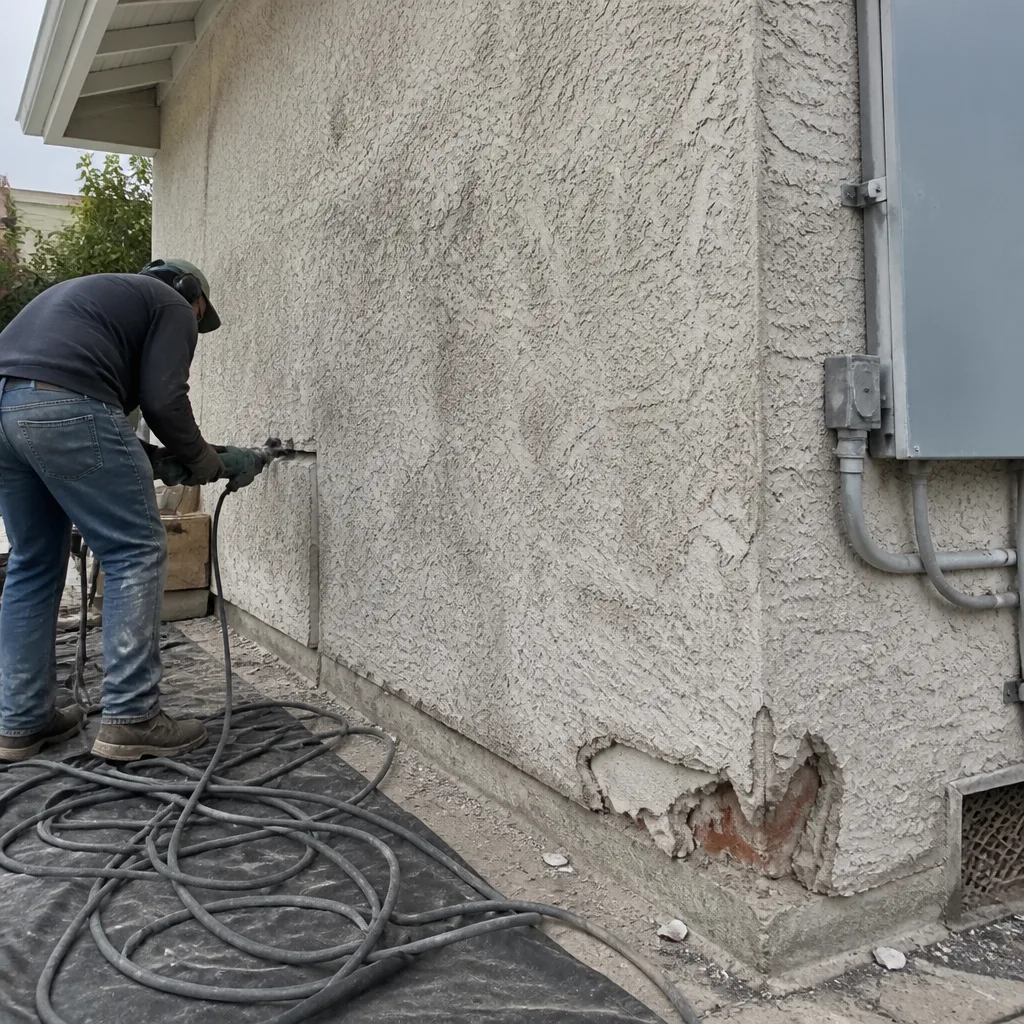 Before
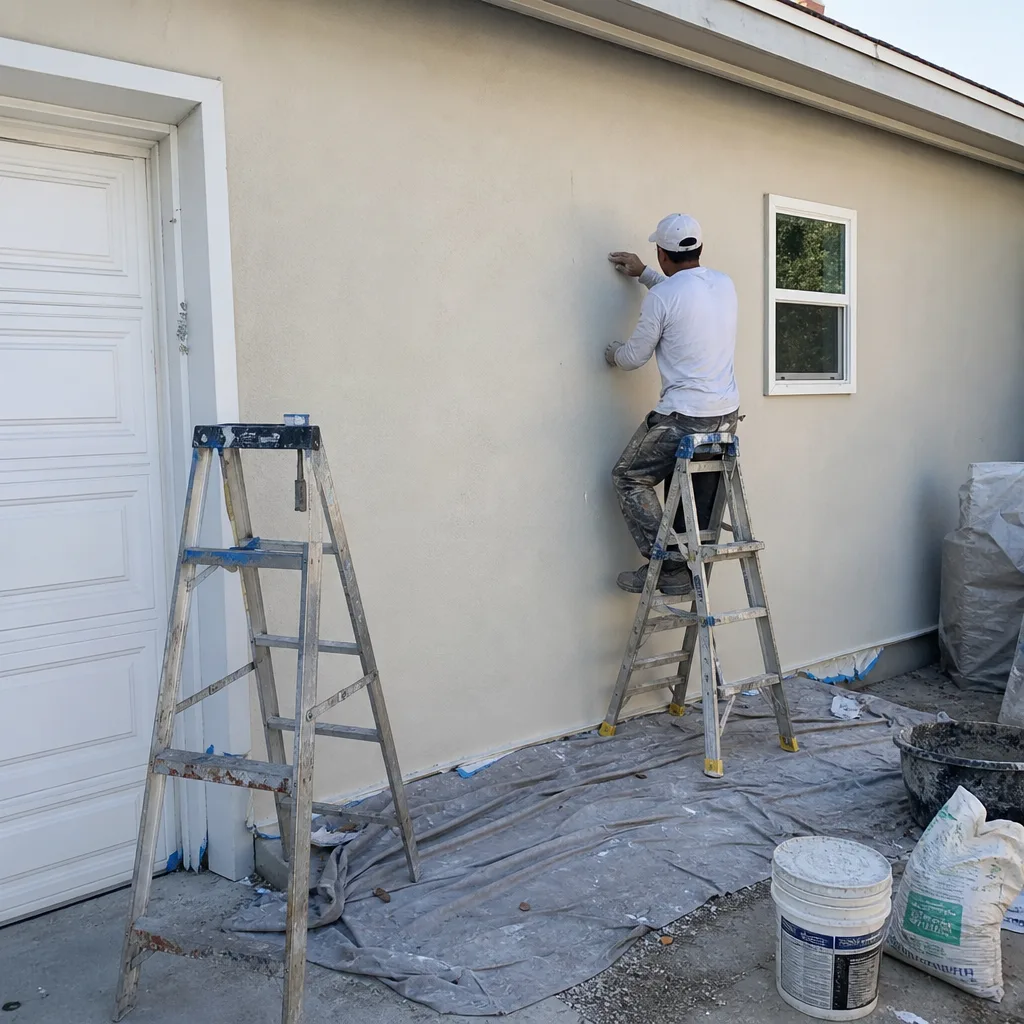 After
AfterWhy Quotes for the Same Burbank Attic Vary by $2,000+
We’ve been in Burbank attics since 2016, and the single biggest source of homeowner confusion is the belief that two “attic insulation” quotes describe the same work. They rarely do.
The spread comes from five variables that contractors handle differently:
- Air sealing scope. Some contractors treat it as a prerequisite. Others bury it in fine print or omit it entirely. Sealing a typical Burbank ranch’s top plates, plumbing penetrations, electrical boxes, and attic hatch takes 4-8 hours of specialized labor.
- Existing insulation condition. Homes near the Chandler Boulevard corridor or in the Rancho area often have decades-old fiberglass contaminated by rodent activity or water staining. Removal and disposal adds $600-$1,200.
- Material density and coverage. A “bag price” quote might assume loose fill at minimum thickness. A performance-based quote specifies settled depth, R-value achieved, and bags per square foot.
- Testing and documentation. Blower-door testing, CF2R forms, and photo records cost money to produce. Contractors who skip them can underbid by $400-$700.
- Access difficulty. Burbank’s hillside homes in the Verdugo Mountains foothills, or mid-century ranches with 18-inch truss spacing, slow installation and increase labor hours.
Here’s what we mean by “same attic, different job.” A 1,400-square-foot attic in the Magnolia Park neighborhood:
| Component | Budget Quote | Performance Quote |
|---|---|---|
| Blown cellulose, R-38 | $1,200 | $1,400 |
| Air sealing (top plates, penetrations, hatch) | Not included | $650 |
| Contaminated insulation removal/disposal | Not included | $800 |
| Blower-door pre/post test | Not included | $350 |
| CF2R documentation | Not included | $150 |
| Photo record | Not included | Included |
| Total | $1,200 | $3,350 |
Both contractors may describe their proposal as “attic insulation.” The difference is whether the building envelope is treated as a system or as a commodity.
Line-Item Cost Structure: Where Every Dollar Goes
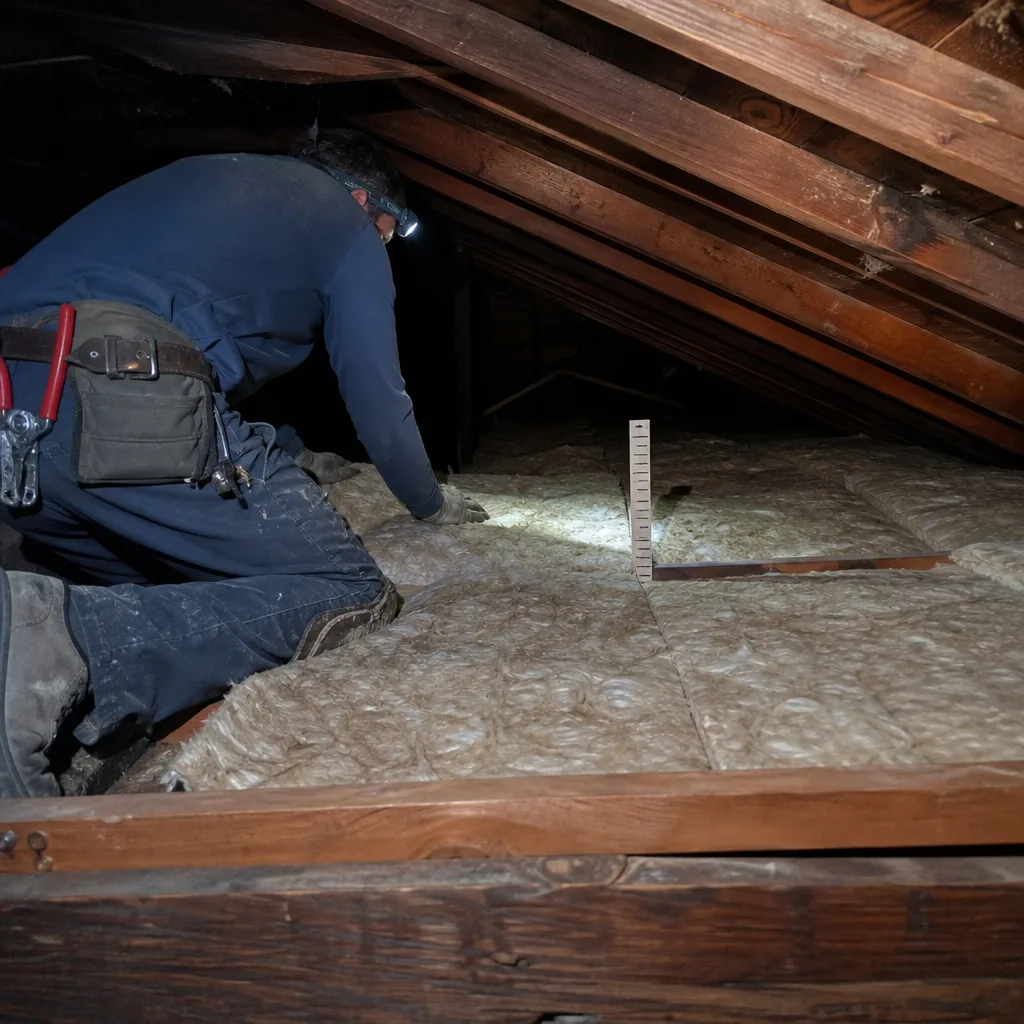
We publish written prices before any work starts under Haven Standard Clause 1. Here’s how we build that price, line by line, for a typical Burbank job.
Material Costs (2025-2026 Pricing)
Material pricing fluctuates with petroleum feedstocks and freight, but current landed costs in the Los Angeles basin are stable enough to quote:
- Blown cellulose (GreenFiber or equivalent): $12-$16 per bag. A 1,400 sq. ft. attic to R-38 requires 32-38 bags depending on joist cavity depth and compression factors.
- Blown fiberglass (Johns Manville Spider or Knauf Jet Stream): $14-$19 per bag. Higher loft, lower weight, but more bags needed for equivalent R-value due to lower settled density.
- Spray foam, open-cell (Icynene or Demilec): $0.65-$0.90 per board foot installed. Used for rim joists, knee walls, or full attic conversion where conditioned space is desired.
- Spray foam, closed-cell (Demilec Heatlok or equivalent): $1.10-$1.50 per board foot. Vapor barrier and insulation in one; required in crawl spaces below grade.
- Rigid foam board (Rockwool Comfortboard or CertainTeed): $1.20-$1.80 per square foot for 2-inch thickness. Used for cathedral ceilings or exterior retrofits where cavity fill is impossible.
Material typically represents 25-35% of a blown-in job’s total cost, 40-50% of spray foam.
Labor Rates: Installation vs. Air Sealing
This is where scopes diverge. Installation labor - blowing cellulose or fiberglass - runs $45-$65 per hour in the Burbank market. A two-person crew can complete a standard attic in 3-4 hours once prep is done.
Air-sealing labor is slower, more skilled, and charged separately by contractors who track it honestly. Sealing top plates (the horizontal framing member where walls meet ceiling), boxing can lights with fire-rated covers, foaming electrical and plumbing penetrations, and building a proper dam around the attic hatch takes 6-10 hours for a 1,400-square-foot home. We bill this at $55-$75 per hour because the technician is working in protective gear, often in 120°F attic temperatures, with a foam gun and detail brush - not a hose.
Disposal Fees
Contaminated insulation removal in Burbank runs $0.40-$0.70 per square foot, including bagging, HEPA-contained extraction, and disposal at a Class II landfill. The Los Angeles County surcharge for construction debris adds roughly 12% to base tipping fees. Homes near the Burbank Airport flight path or in older Magnolia Park subdivisions (pre-1960) more frequently require this step due to aging original insulation and rodent pressure from the adjacent river corridor. See our Insulation Warning Signs: A Burbank Homeowner’s Reference Guide for other red flags.
Permit and Code Compliance
Burbank Building and Safety requires a permit for insulation alterations that involve R-value changes or air-barrier modifications. Our Insulation Permits, Codes & Inspections in CA: What You Need to Know breaks down the full compliance picture. Permit fees are $180-$280 for residential attic work. Title 24, Part 6 compliance documentation - the CF2R form - is mandatory for permitted alterations. Some contractors roll this into their price. Others leave the homeowner to navigate Burbank’s permit portal alone.
What Air Sealing Actually Costs and Why It Matters More Than Extra Inches
We’ve measured this. In 2023 we completed side-by-side jobs on two 1,200-square-foot Burbank bungalows in the Media District, both built in 1948, both with original knob-and-tube wiring replaced in the 1990s. House A received blown cellulose to R-49 over an unsealed attic floor. House B received R-38 with complete air sealing. The blower-door numbers tell the story:
- House A (R-49, no sealing): 3,800 CFM50 before, 3,400 CFM50 after. A 10.5% improvement.
- House B (R-38, sealed): 3,900 CFM50 before, 2,100 CFM50 after. A 46% improvement.
The sealed home with thinner insulation performed four times better on air leakage. In Burbank’s climate, where summer afternoons hit 95°F and Santa Ana winds pressurize structures, air leakage dominates cooling load more than conduction through the ceiling. Our Seasonal Insulation Care for Burbank: Year-Round Homeowner’s Guide explains how to protect your envelope through every season.
What Sealing Costs, Itemized
For a typical 1,400 sq. ft. Burbank home with a vented attic:
| Component | Time | Material | Cost |
|---|---|---|---|
| Top-plate bypass sealing (foam + caulk) | 2.5-3.5 hrs | $45-$65 | $185-$290 |
| Can-light covers (fire-rated, IC-rated boxes) | 1-1.5 hrs | $18-$28 each | $90-$170 |
| Plumbing/electrical penetration foam | 1.5-2 hrs | $25-$40 | $110-$170 |
| Attic hatch weatherstrip + insulation dam | 1-1.5 hrs | $35-$55 | $90-$145 |
| Duct boot sealing (if flex ducts present) | 1-2 hrs | $20-$35 | $75-$165 |
| Total air sealing scope | 7-10.5 hrs | $143-$223 | $550-$940 |
The $400-$900 range we quote most often falls in the middle: homes with 6-10 can lights, standard penetrations, and a single attic hatch. Complexities - chimney bypasses, dropped soffits, or multiple HVAC platforms - push toward the high end.
Under Haven Standard, we seal first, then insulate - in that order. Blowing insulation over an unsealed attic floor buries the leaks permanently. The homeowner pays for R-value they can’t use because conditioned air is still escaping through the gaps.
Blower-Door Testing and HERS Rater Fees: Required or Optional?
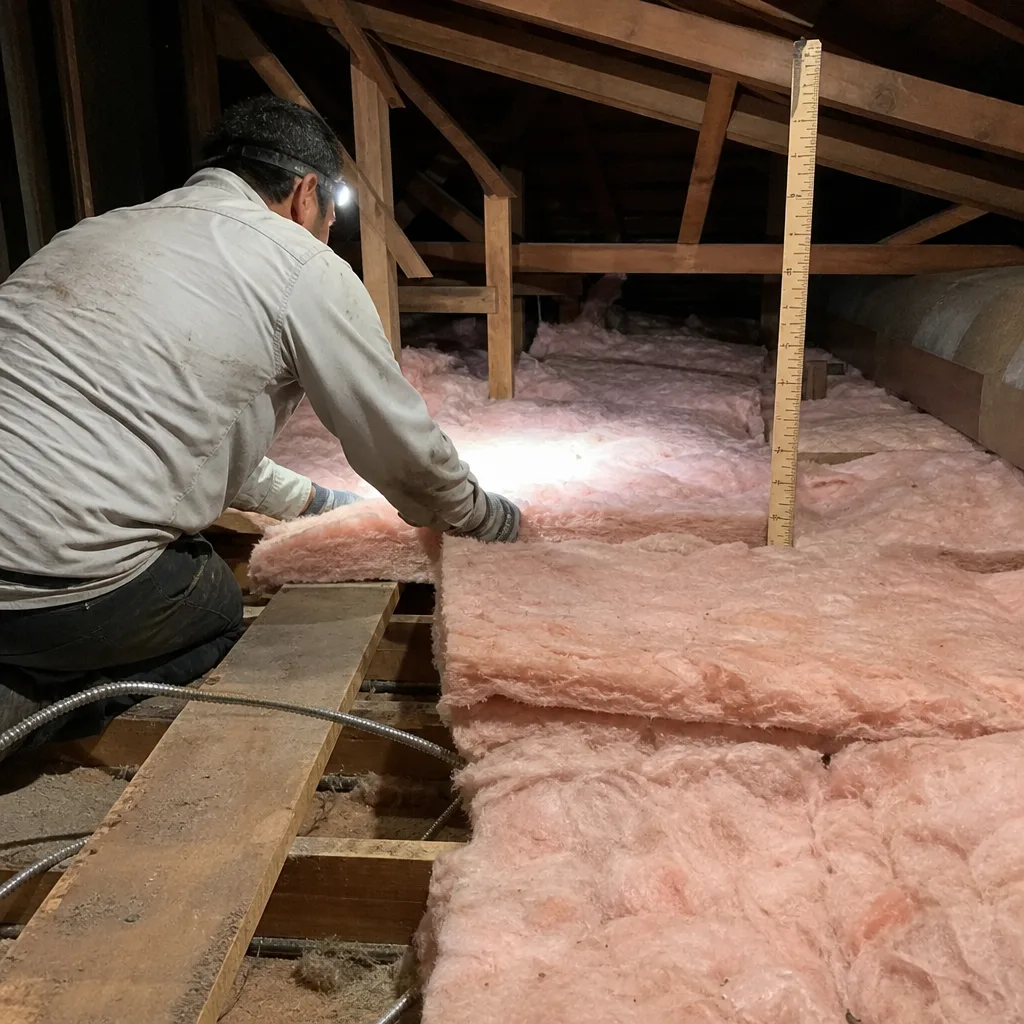
A blower-door test - a pressurization reading that shows, in one number, how much air your building envelope is losing - is the only objective measure of air-sealing quality. We publish before-and-after numbers on every applicable job so homeowners can verify the performance change they paid for.
When It’s Required
California Title 24, Part 6 requires blower-door testing for:
- New construction (mandatory, with specific ACH50 targets by climate zone)
- Alterations where the conditioned floor area exceeds 1,000 square feet and the project includes envelope modifications
- Any job seeking utility rebate through SCE’s Home Energy Upgrade program
Burbank sits in California Climate Zone 9. The prescriptive compliance path for alterations does not always mandate testing, but the performance path - which yields more design flexibility - requires it. Most experienced contractors default to testing because it eliminates compliance risk and proves the work.
What It Costs
HERS rater fees in the Los Angeles basin:
- Blower-door test only: $250-$350 for a single-point test with report
- Pre/post test with CF2R documentation: $350-$450
- Comprehensive home energy audit including infrared: $450-$650
Some insulation contractors carry their own blower-door equipment and perform testing in-house, charging $150-$250. Others subcontract to third-party HERS raters. Neither approach is inherently superior, but third-party testing eliminates any conflict of interest in the reported number.
Why a Contractor Who Includes It Signals a Different Model
The contractor who bundles blower-door testing in the base price is betting on their work. They’re documenting a specific performance outcome, not just material installed. The contractor who omits it is selling a commodity - bags blown, inches achieved - with no proof of system performance. In our experience, the second model correlates with callbacks, rebate denials, and homeowners who can’t understand why their new insulation didn’t lower their bill.
We include blower-door testing on all air-sealing jobs. The homeowner receives the before reading, the after reading, and a photo record of the sealed locations. That’s Haven Standard documentation, delivered before anyone starts and verified when the crew leaves.
Cost Per R-Value Point: Material Comparison at Burbank Installed Pricing
R-value measures resistance to heat flow. Higher is better, but the cost to achieve each additional R-point varies dramatically by material and installation method. Here’s the math at current Burbank pricing for a 1,400 sq. ft. attic:
| Material | Installed Cost | R-Value Achieved | Cost Per R-Point | Notes |
|---|---|---|---|---|
| Blown cellulose | $2,800-$3,600 | R-38 | $74-$95 | Settled density 3.0-3.5 lbs/ft³; requires air sealing for full performance |
| Blown fiberglass (Johns Manville Spider) | $3,000-$3,900 | R-38 | $79-$103 | Higher loft, less weight; better for shallow joist cavities |
| Blown fiberglass (Knauf Jet Stream) | $3,100-$4,000 | R-38 | $82-$105 | Low dust, consistent coverage; premium product pricing |
| Open-cell spray foam (full attic) | $6,500-$9,000 | R-38 | $171-$237 | Creates conditioned attic; requires HVAC modification |
| Rockwool batts (knee walls/cathedral) | $4,200-$5,800 | R-30 | $140-$193 | Fire-resistant, hydrophobic; labor-intensive to install |
The cost-per-R-point comparison favors blown-in materials for standard vented attics. Spray foam’s premium is justified only when converting the attic to conditioned space - a common scenario in Burbank’s smaller 1920s bungalows where HVAC ductwork runs through a 140°F attic and delivers 78°F air to registers.
We specify Knauf or Johns Manville blown fiberglass for most Burbank attics, and Rockwool for fire-separation assemblies or knee walls where ignition resistance matters. We don’t push spray foam unless the homeowner’s goals - conditioned storage, ductwork protection, or structural roof insulation - specifically require it.
2026 Rebates and Incentives: SCE and Federal Tax Credits
Insulation and air sealing in Burbank qualify for overlapping incentives. The trick is stacking them without double-counting the same measure.
Southern California Edison Residential Insulation Rebate
SCE’s Home Energy Upgrade program offers:
- Attic insulation: $0.15-$0.25 per square foot, depending on baseline R-value and final R-value achieved. A 1,400 sq. ft. attic upgrading from R-11 to R-38 typically qualifies for $210-$350.
- Air sealing: $150-$300 as a standalone measure, or bundled with insulation for a higher combined incentive.
- Whole-home pathway: Up to $3,000 for comprehensive packages including insulation, air sealing, HVAC, and water heating - requires pre- and post-blower-door testing.
SCE requires a participating contractor and HERS verification. We handle the paperwork; the homeowner sees the rebate as a line-item reduction or a check 8-12 weeks post-completion.
Federal 25C Tax Credit (Energy Efficient Home Improvement Credit)
The Inflation Reduction Act extended 25C through 2032. For 2026:
- 30% of project cost for qualified energy efficiency improvements
- Annual cap of $1,200 for insulation and air sealing combined
- Separate $2,000 cap for heat pumps, $600 for windows, $150 for energy audits
Qualified improvements must meet ENERGY STAR or IECC standards. All materials we source from Owens Corning, Johns Manville, Knauf, Rockwool, CertainTeed, Icynene, Demilec, and GreenFiber carry qualifying certification.
Stacking Strategy
A $3,500 air-seal-and-insulate job in Burbank:
- SCE rebate: $350 (insulation) + $200 (air sealing) = $550
- Net project cost: $2,950
- 25C credit: 30% of $2,950 = $885 (under $1,200 cap)
- Final out-of-pocket: $2,065
The effective cost reduction is 41%. We calculate this explicitly in our written proposals so homeowners understand their true investment, not just the sticker price.
Real Payback Period for a Burbank Home
Payback calculations fail when they use national averages. Burbank’s climate, electricity rates, and housing stock are specific.
The Variables
- Cooling degree-days: 1,300-1,500 annually (varies by microclimate; hillside homes toward Verdugo Park run cooler, flat areas near the 5 Freeway run hotter)
- Median SCE residential rate: $0.28-$0.34/kWh in 2025-2026, with TOU-C peak periods 4-9 PM
- Typical cooling load reduction from air sealing + R-38 upgrade: 25-35% in pre-1980 construction, 15-25% in post-1980
- Annual cooling spend for 1,400 sq. ft. Burbank home: $800-$1,400 depending on thermostat setpoint and HVAC efficiency
The Calculation
A 1972 ranch in the Glenoaks Canyon area, 1,520 sq. ft., with original R-11 fiberglass and no air sealing:
- Annual cooling: $1,180 at current rates
- Project cost (seal + insulate): $3,400
- Cooling reduction: 30% (conservative, based on our blower-door verified jobs)
- Annual savings: $354
- Simple payback: 9.6 years
But this ignores rate escalation. SCE’s historical trend is 4-6% annual increases. At 5% escalation, cumulative savings reach $3,400 in year 7.5. It also ignores heating savings (Burbank has 1,800+ heating degree-days, and many homes use inefficient electric resistance or aging gas furnaces), comfort improvement, and HVAC equipment longevity from reduced runtime.
We don’t sell payback as the only metric. We document the blower-door change and let the homeowner decide if 46% less air leakage is worth the investment. Most conclude it is.
How to Compare Quotes Apples-to-Apples
We’ve reviewed competitor quotes brought in for our Free Second Opinion service. The gaps are predictable. Here’s the checklist we use:
- Demand a written scope, not a verbal description. Haven Standard Clause 1 requires this. If the contractor won’t put material type, R-value target, air-sealing locations, and disposal responsibility in writing, the price is meaningless.
- Verify air sealing is itemized separately. “Includes prep” or “we’ll seal the big stuff” is not a scope. Specific locations: top plates, can lights, penetrations, hatch, duct boots.
- Ask for the blower-door plan. Will they test? Before and after, or only after? Who performs it? Is the report included?
- Confirm disposal and cleanup. Who bags the old insulation? Who hauls it? Is the attic vacuumed after installation?
- Check rebate eligibility. Is the contractor SCE-participating? Will they file the paperwork or leave it to you?
- Request the documentation list. Photo record, written warranty, CF2R if permitted - what exactly do you receive when the crew leaves?
- Compare material specifications. “Blown-in insulation” is not a product. Brand, density, settled depth, and coverage chart per bag should be stated.
Two quotes with identical bottom-line prices can describe fundamentally different jobs. The written scope is the only protection.
We’ve completed 9,000+ homes sealed and insulated since 2016. Every one began with a written price and ended with a documented record. No exceptions.
Common Mistakes to Avoid
- Accepting a quote that omits air sealing. In Burbank’s climate, unsealed insulation performs like a sweater with holes in it. The R-value is real; the effective performance is not.
- Ignoring existing insulation condition. Blowing new material over rodent-contaminated old insulation traps odors, allergens, and biological material. Removal is not optional if the old stuff is compromised.
- Choosing material by price alone. Cellulose is cheaper per bag than Knauf Jet Stream, but requires more careful installation to avoid settling gaps. The cheapest material with sloppy installation costs more than premium material installed correctly.
- Skipping permit compliance. Burbank Building and Safety can require corrective work or levy penalties for unpermitted alterations. The permit fee is minor insurance against future sale complications.
- Expecting insulation to fix ductwork problems. If your flex ducts are crushed, disconnected, or lying in 130°F attic air, sealing and insulating the attic floor won’t deliver cool air to your rooms. Duct sealing is a separate scope.
- Neglecting the attic hatch. A 1/2-inch gap around a 20-square-foot hatch is equivalent to a 40-square-inch hole in your ceiling. We build insulated dams with weatherstripped gaskets; contractors who skip this leave their biggest leak untouched.
When to Call a Professional
Call a professional when your summer upstairs temperatures exceed downstairs by more than 8°F, when you find rodent droppings or moisture staining in the attic, or when your energy bills have climbed without rate changes. These symptoms indicate envelope failure that DIY material addition won’t fix.
Topside Attic Insulation Burbank offers free estimates in Burbank. We’ll review your attic’s condition, explain what’s required to meet your performance goals, and provide a written price before any work starts. Call (213) 816-1699 to schedule. We answer live, 24/7.
Frequently Asked Questions
A complete attic insulation job in Burbank typically costs $2,800-$4,500 for a 1,200-1,600 square foot home, including air sealing, material, labor, testing, and documentation. A stripped-down blown-in-only job without sealing starts around $1,200 but won’t produce measurable energy savings or Title 24 compliance. Call (213) 816-1699 for a written estimate - estimates are free.
Repair is rarely cost-effective. Patch-filling settled or contaminated areas creates density inconsistencies and thermal bridging. Full removal and replacement, with air sealing first, costs more upfront but delivers a uniform thermal barrier and documented performance. In our Burbank jobs, replacement with sealing typically outperforms patch repair by 2-3x on blower-door metrics.
Standard blown-in installation can be completed in one day for most Burbank homes. Jobs requiring contaminated insulation removal, extensive air sealing, or spray foam application typically take 1-2 days. We schedule based on scope, not speed. Call (213) 816-1699 - we answer live 24/7 and can usually inspect within 48 hours.
The variance reflects scope differences, not markup games. A $1,200 quote blows insulation over an unsealed floor. A $3,400 quote includes air sealing, blower-door testing, disposal, and code documentation. Both are “honest” if described accurately; most are not. Demand itemized written scopes to compare fairly.
Southern California Edison offers $0.15-$0.25 per square foot for attic insulation upgrades, plus air-sealing incentives. The federal 25C tax credit covers 30% of project cost up to $1,200 annually for insulation and air sealing combined. We stack these in our proposals and handle SCE paperwork. Call (213) 816-1699 to review your specific eligibility.
Every vented attic in Burbank needs air sealing first. We’ve tested hundreds; none were tight enough to skip it. Visual clues include dirty insulation (filtered air passing through), visible gaps around light fixtures, and temperature stratification between rooms. A blower-door test removes the guesswork. We include pre-testing on all air-sealing jobs so you see the number before and after.
The Bottom Line
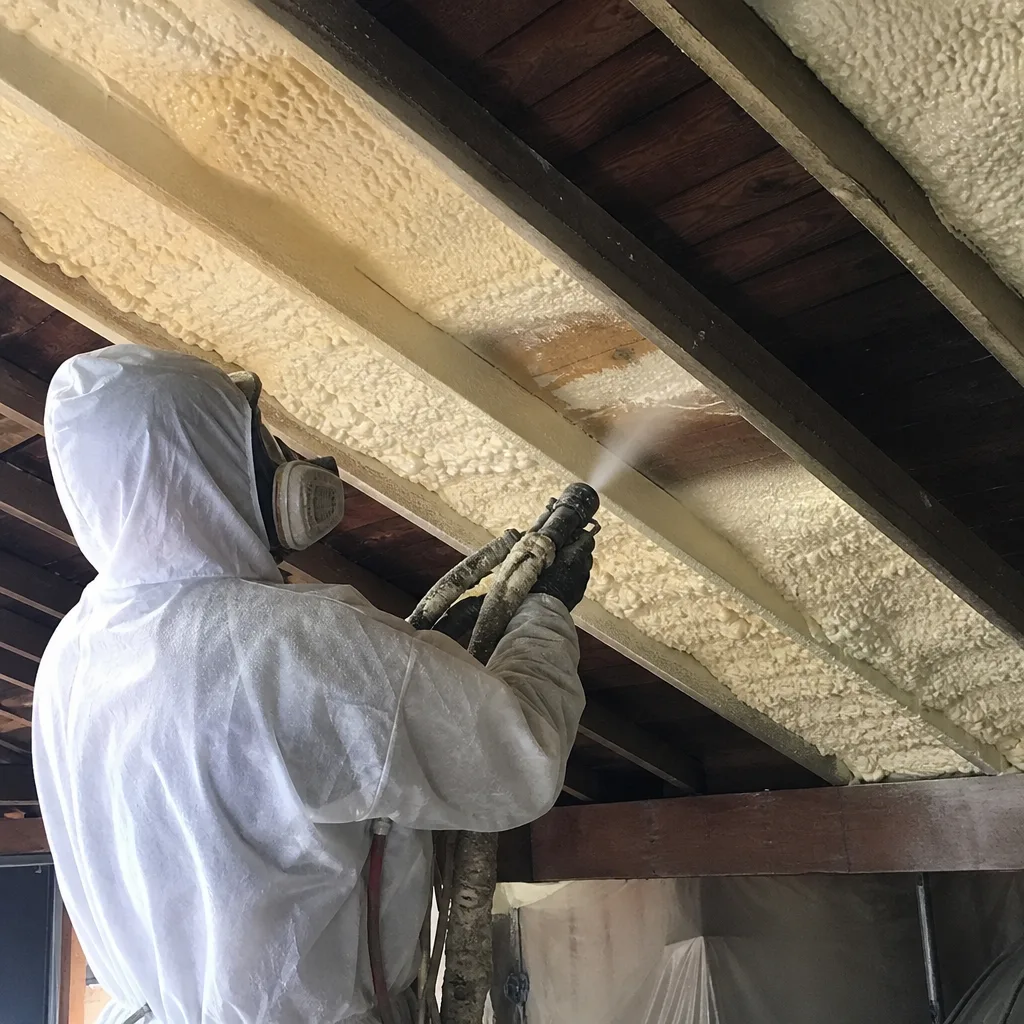
Insulation cost in Burbank is not a single number. It’s a stack of decisions - seal or don’t seal, test or don’t test, document or don’t document - that determines whether your investment changes your energy bills or just your attic appearance. The $1,200 quote and the $3,400 quote can both be real; only one describes a building envelope that performs. Demand written scopes, verify air sealing is included, ask for blower-door numbers, and confirm your contractor will deliver documentation you can hold in your hand. That’s Haven Standard. That’s what we’ve done since 2016.
Written by Wes Okafor, Owner at Topside Attic Insulation Burbank, serving Burbank since 2016.