
Last updated September 23, 2026
How to Hire a Insulation Contractor in Burbank: A Step-by-Step Guide
The most common insulation scam in Southern California isn’t outright fraud. It’s a quote that specifies “R-38 insulation” without stating the installed depth in inches, allowing a contractor to install 9 inches of material that settles to R-30 within two years and still claim compliance. In Burbank, where summer attic temperatures regularly hit 140°F and winter nights dip into the 40s, that missing detail costs homeowners hundreds per year in conditioning bills. This guide gives you a vetting protocol built around the specific documents and job-site questions that separate performance contractors from volume installers, and points you to insulation warning signs every Burbank homeowner should recognize. You’ll learn how to read a quote like a building inspector, verify a license in under two minutes, and refuse final payment until the paperwork proves the job was done right.
Quick Answer
To hire a legitimate insulation contractor in Burbank, verify their CSLB license online, request a written quote with five specific line items (material type, installed depth in inches, settled R-value, air-sealing scope, and blower-door test status), and withhold final payment until you receive a CF2R certificate, installed-R certificate, and post-work blower-door printout. Never sign with a contractor who won’t put settled R-value and air-sealing scope in writing.
Table of Contents
- How to Verify a Contractor’s License in California
- The Five Line Items Every Written Quote Must Contain
- The Air-Sealing Question That Separates Real Contractors From Upsellers
- How to Read a Blower-Door Report
- What Your Job-Completion Document Package Should Contain
- Burbank-Specific Considerations: Climate, Codes, and Common Issues
- Red Flags and Warning Signs
- Common Mistakes to Avoid
- When to Call a Professional
- Frequently Asked Questions
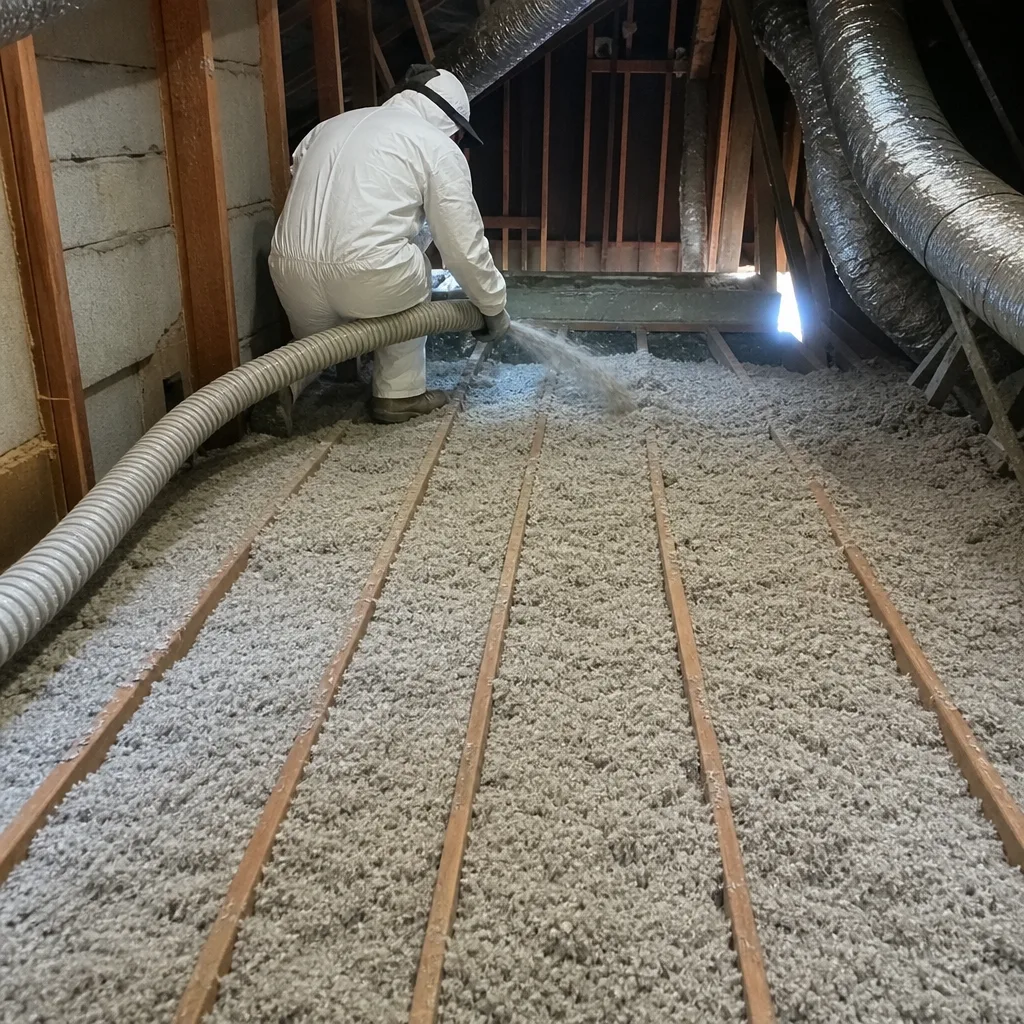
 Before
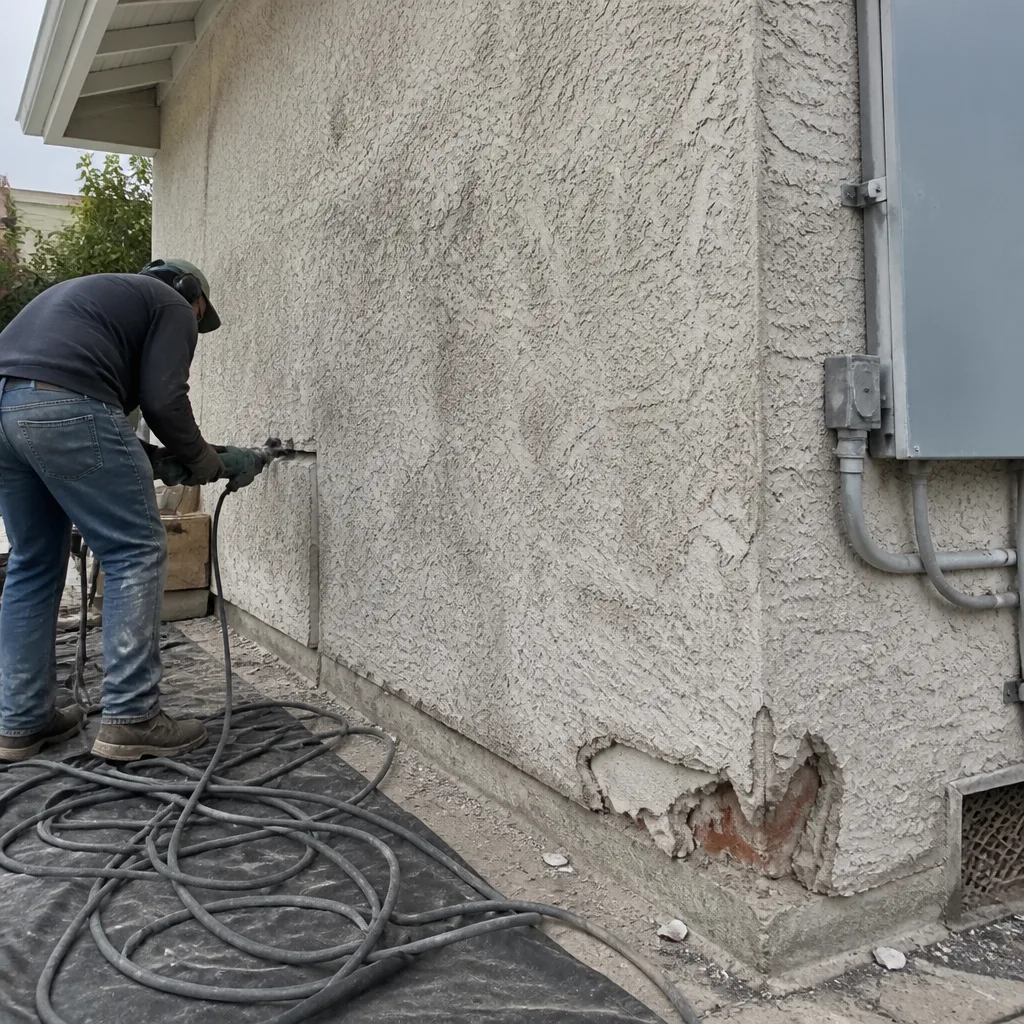
 After
AfterHow to Verify a Contractor’s License in California
California requires insulation contractors to hold either a C-2 (Warm-Air Heating, Ventilating and Air-Conditioning) license or a B (General Building) license. The verification takes 90 seconds and could save you from a crew with no legal standing to perform the work.
Step-by-Step CSLB Lookup
- Go to checkthelicensefirst.com (the CSLB’s official lookup portal).
- Enter the contractor’s license number, not the business name. Names change; numbers don’t.
- Verify three things: status shows “Active,” the classification includes C-2 or B, and the license bond is current.
- Click “View License Detail” and check the “Personnel” section. The name listed should match who you’re speaking with. If it doesn’t, you may be dealing with an unlicensed crew operating under a licensed shell company, a pattern we’ve seen repeatedly in the San Fernando Valley.
The shell-company arrangement works like this: a licensed contractor rents their license number to an unlicensed installer who bids jobs cheaper by skipping workers’ compensation insurance, pulling no permits, and carrying no liability coverage. When the work fails, the licensed figurehead disappears and the crew has no assets to pursue. In Burbank, where the Building Division requires permits for insulation work exceeding specific thresholds, this arrangement often means no permit gets pulled at all-a risk you can avoid by understanding insulation permits, codes & inspections in CA.
Ask directly: “Will you pull the permit, or will I need to?” A contractor who hesitates or suggests you handle permitting is signaling they don’t want their work inspected. Under Haven Standard: Have it in writing, we always pull permits when required and include the permit number in your job documentation.
The Five Line Items Every Written Quote Must Contain
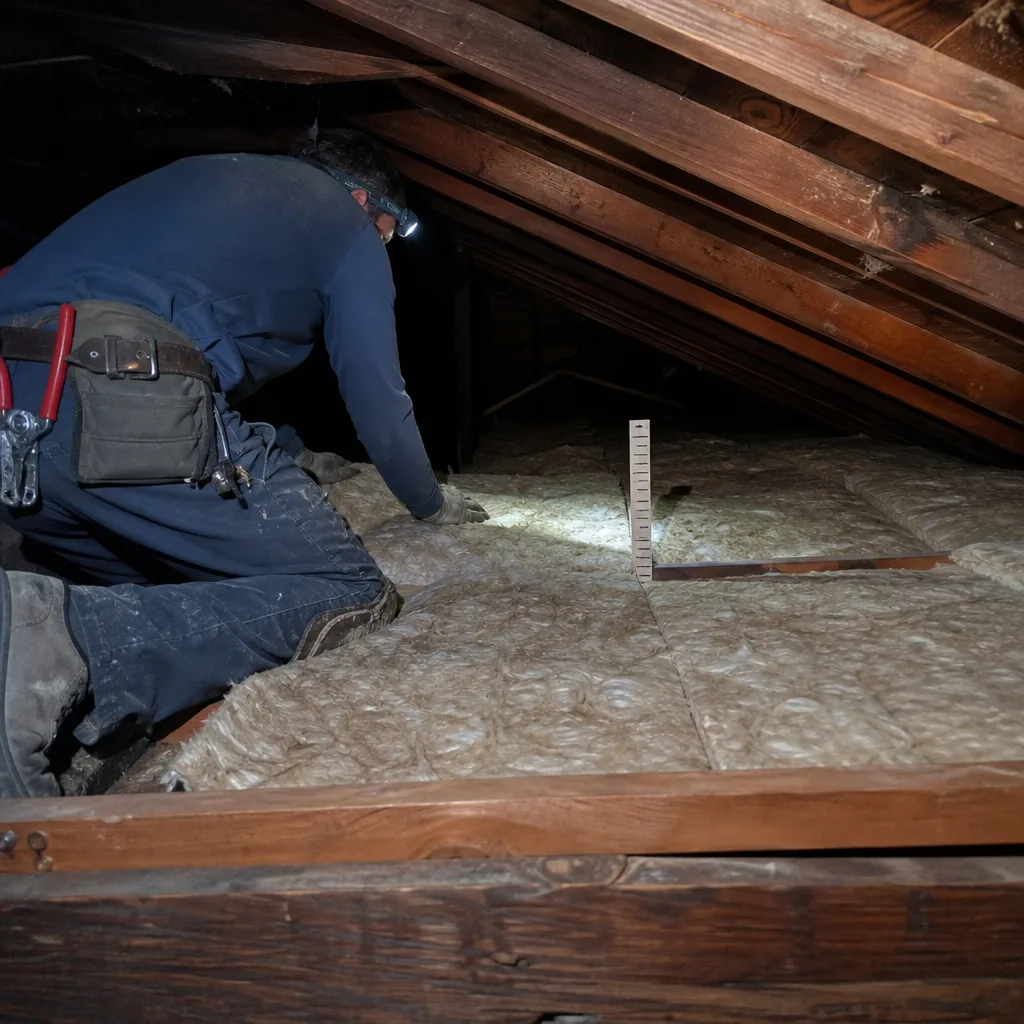
Most insulation quotes in Burbank are one-line items: “Attic insulation, R-38, $X,XXX.” That’s not a scope of work. It’s an invitation to a dispute. Here’s what a legitimate quote specifies, and why each matters.
1. Material Type and Manufacturer
Fiberglass batts, blown-in cellulose, mineral wool, open-cell spray foam, and closed-cell spray foam perform differently in Burbank’s climate. A quote should state the product name, not just the generic type. “Owens Corning AttiCat blown-in fiberglass” or “GreenFiber stabilized cellulose” lets you verify the product’s actual R-value per inch and settled density. We source materials from Owens Corning, Johns Manville, Knauf, Rockwool, CertainTeed, Icynene, Demilec, and GreenFiber, so we specify exactly what’s going in.
2. Installed Depth in Inches
R-value claims mean nothing without depth. Blown-in fiberglass at R-38 requires roughly 12 inches installed. Cellulose needs about 10 inches. If the quote says “R-38” with no depth, the contractor can install less material, let it settle, and blame you for “misunderstanding.” Demand the number in inches.
3. Settled R-Value (Not Peak)
Here’s where the Burbank market gets sloppy. Loose-fill insulation settles after installation. Manufacturers publish both “initial” and “settled” R-values. A quote citing only peak R-value is quoting a performance level that won’t exist 30 days after installation. The written scope must state the settled R-value, verified by an installed-R certificate after the work.
4. Air-Sealing Scope With Specific Locations Listed
This is the line item that separates envelope contractors from insulation installers. A proper scope lists: top plates, electrical penetrations, can light housings, chimney chases, duct boot connections, and attic access hatch. “Air sealing included” with no locations listed typically means a can of spray foam around the hatch and nothing else. In Burbank’s older neighborhoods, like the Rancho area and Magnolia Park, homes built before 1980 often have unsealed top plates that leak more conditioned air than the entire ceiling surface.
5. Blower-Door Test: Included or Excluded
A blower-door test, a pressurization reading that shows in one number how much air your building envelope is losing, is the only way to verify air-sealing results. The quote must state whether pre- and post-work tests are included, and if not, what the additional cost is. At Topside Attic Insulation Burbank home, we publish before-and-after blower-door numbers on every applicable job so homeowners can see the performance change they paid for.
Here’s how this looks in practice. A quote we reviewed last month from a competitor in the Burbank area listed: “Attic insulation R-38, $2,400.” No material named, no depth, no settled R, no air sealing, no blower door. Our quote for the same home listed: “Owens Corning AttiCat blown-in fiberglass, 12.5 inches installed depth, settled R-38, air sealing of top plates, 6 can lights, 4 electrical penetrations, chimney chase, and attic hatch, pre/post blower-door test included, $3,100.” The homeowner chose us because they could compare apples to apples, and because our written scope gave them leverage if we underperformed.
The Air-Sealing Question That Separates Real Contractors From Upsellers
Ask this exact question: “What is your standard scope if I ask for attic insulation only?”
The red-flag answer: “We can add air sealing as an upgrade if you want it.” This means the contractor treats the building envelope as an afterthought. They’ll blow insulation over leaky top plates, burying the leaks where they can’t be fixed later without removing all the new material. We’ve seen this in Burbank homes where a previous installer buried unsealed can lights under 14 inches of fiberglass, creating a mold risk that cost the homeowner $4,200 to remediate.
The correct answer: “We don’t install insulation over an unsealed attic floor. Air sealing of top plates, can lights, and penetrations is completed before any insulation goes in. It’s not an upgrade; it’s a prerequisite.” This is how we operate at Envelope Insulation Co. Sealed first, then insulated, in that order. No exceptions.
The distinction matters because insulation doesn’t stop air flow. It slows heat transfer. If conditioned air leaks through the ceiling, the insulation is doing half a job. In Burbank, where Pacific Gas & Electric rates have climbed steadily and summer cooling loads are severe, an insulated but unsealed attic is like wearing a winter coat with the zipper open.
A follow-up question reveals even more: “Will you run a blower-door test before and after?” Contractors who don’t own blower doors, or who treat testing as a premium service, are guessing at their results. We provide the actual CFM50 numbers, printed and signed, so you can verify the improvement yourself.
How to Read a Blower-Door Report
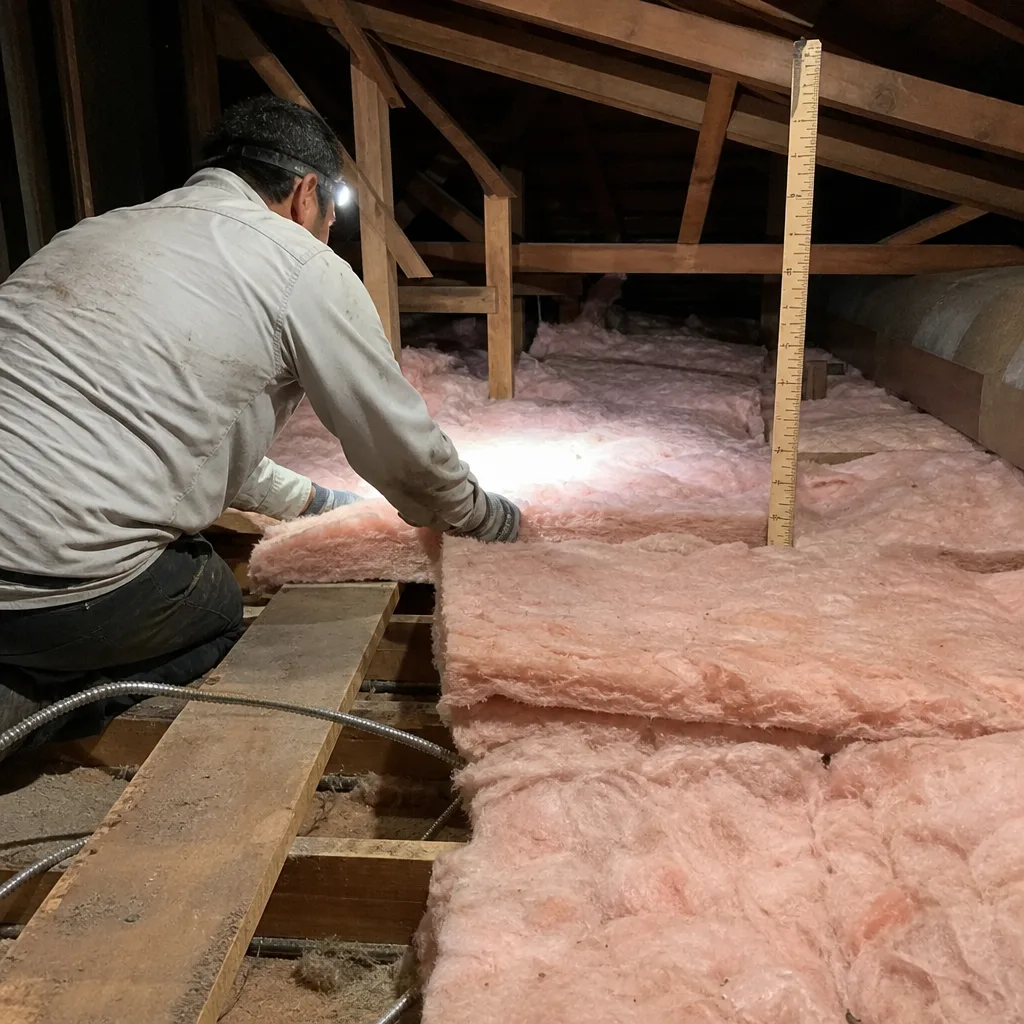
A blower-door test depressurizes your home to -50 Pascals and measures the airflow required to maintain that pressure, reported in CFM50 (cubic feet per minute at 50 Pascals). Lower numbers mean tighter envelopes. But the number alone doesn’t tell the whole story. You need to know how to spot a manipulated baseline.
What the Report Should Show
- Pre-work CFM50 with test date, time, indoor/outdoor temperature, and wind speed. Conditions above 15 mph wind or a 30°F temperature differential between inside and outside compromise accuracy.
- Post-work CFM50 under similar conditions, ideally within 48 hours of the pre-test.
- Percentage improvement calculated from the two numbers.
- Technician signature and equipment calibration date. Blower-door fans require annual calibration; an expired calibration invalidates the result.
How Contractors Inflate Apparent Improvement
The most common manipulation is taking the “before” reading under compromised conditions. An open fireplace damper, running range hood, or bathroom exhaust fan left on adds hundreds of CFM50 to the baseline. The contractor seals the obvious leaks, retests with everything off, and claims a 40% improvement that reflects testing conditions, not actual work.
Before the pre-test, walk through your home with the technician. Verify: all exterior doors and windows closed, fireplace damper shut, all exhaust fans off, HVAC system off, interior doors open. Ask the technician to note these conditions on the report. At Attic Insulation in Burbank, our technicians walk homeowners through this checklist and sign off on conditions before starting the fan.
A realistic improvement for attic air sealing in a typical Burbank home is 15-30% reduction in CFM50. Claims of 50%+ improvement from attic work alone warrant scrutiny, unless the home was exceptionally leaky to begin with. We publish our numbers so you can compare against regional averages.
What Your Job-Completion Document Package Should Contain
Never release final payment until you hold these documents. This is non-negotiable under Haven Standard Clause 1: flat price, written scope, written warranty before anyone lifts a tool, and documented proof before anyone leaves.
The Four Required Documents
- CF2R Certificate (Certificate of Final Inspection): California’s required documentation for energy efficiency measures. It verifies the work meets Title 24 standards and was installed to specification. Without it, your home’s energy improvements won’t appear in county records, complicating future sales or refinancing.
- Installed-R Certificate: A third-party or manufacturer-verified document stating the actual settled R-value achieved, not the design target. This protects against under-installation.
- Pre- and Post-Blower-Door Printout: Signed, dated, with conditions noted. This is your proof of performance.
- Documented Photo Record: Date-stamped photos of key conditions: attic before sealing, attic after sealing, installed depth measurement, material bags with lot numbers, and any unusual conditions encountered. We include this on every job, not available on request.
Some Burbank contractors deliver nothing but a handwritten receipt. Others provide photos only “on request,” which means they don’t exist unless you know to ask. A professional leaves you with a complete file that answers the question, “What did I actually pay for?” with evidence, not assurances.
Our 9,000+ homes sealed and insulated since 2016, every one with a written price before work started and a documented record when the crew left, demonstrates what this looks like at scale. The 365-Day Done Right Promise, if it’s not done right, we make it right, backs it up with a written warranty delivered before anyone starts.
Burbank-Specific Considerations: Climate, Codes, and Common Issues
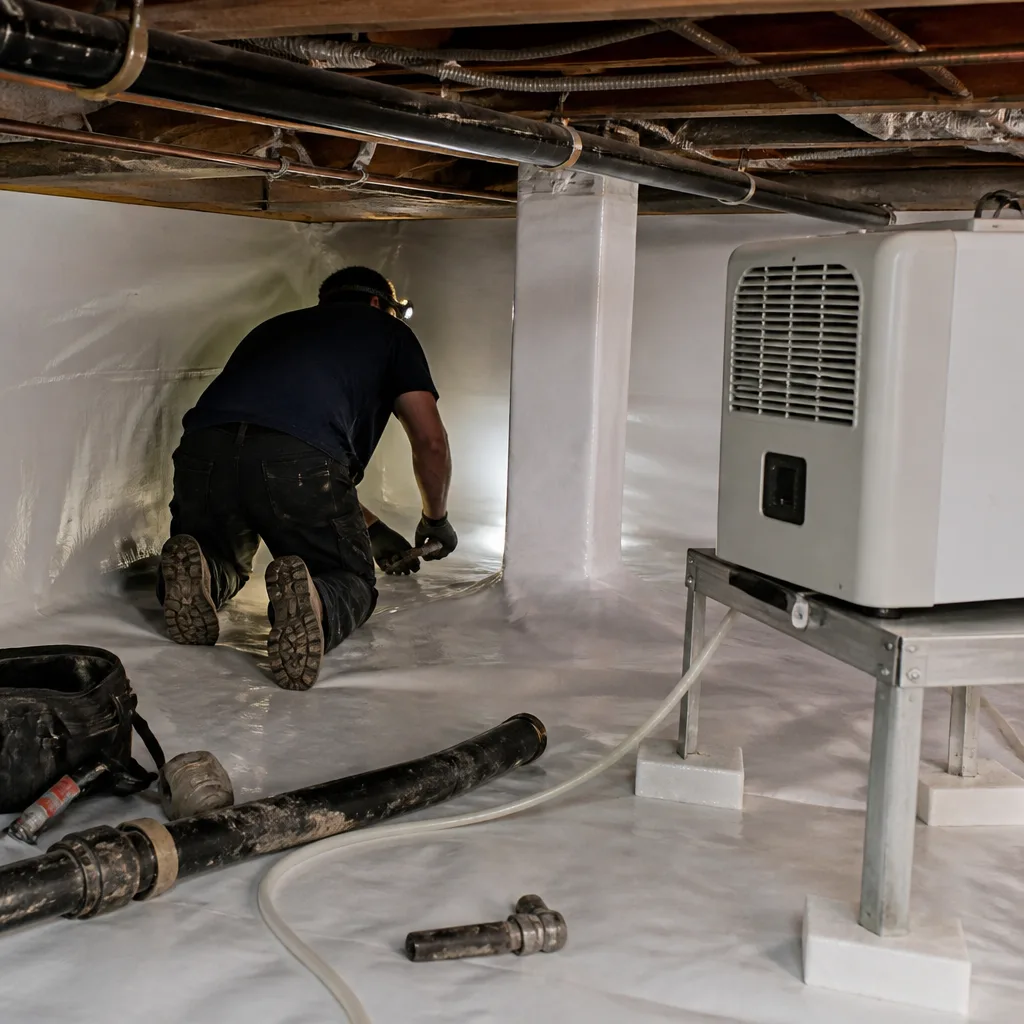
Burbank’s location in the San Fernando Valley creates insulation challenges distinct from coastal Los Angeles or the inland empire. Understanding these local factors helps you evaluate whether a contractor actually knows your market or is applying a generic Southern California playbook.
Climate Reality: Heat, Then More Heat
Burbank averages 286 sunny days yearly. Summer attic temperatures in uninsulated or poorly insulated homes reach 140-160°F, turning ceiling surfaces into radiant heaters. This isn’t a comfort issue alone; it’s a cooling load that strains HVAC equipment sized for milder conditions. R-value recommendations for Burbank attics start at R-38 and go to R-49 for new construction. Retrofit work should target R-38 settled minimum.
The 1980s Building Stock Problem
Neighborhoods like Magnolia Park, the Rancho area, and parts of Burbank Hills were built during periods when insulation was optional or minimal. Homes from this era often have:
- Unsealed top plates with visible gaps to exterior walls
- Recessed can lights that penetrate the thermal boundary with no air sealing
- Original fiberglass batts compressed by decades of storage or rodent activity
- Knob-and-tube wiring that must be evaluated before insulation contact
A contractor who doesn’t ask about wiring age or who proposes blowing insulation without inspecting for live knob-and-tube is creating a fire hazard. We encounter this regularly in Burbank’s older homes and coordinate with licensed electricians when needed.
Title 24 and Local Amendments
California’s Title 24 energy code applies statewide, but Burbank’s Building Division enforces specific documentation requirements for insulation work. The CF2R certificate mentioned earlier is state-mandated, but Burbank also requires permit applications to specify material type and target R-value. A contractor who suggests “skipping the permit to save money” is exposing you to future liability and likely doesn’t carry the insurance required for permitted work.
Wind and Wildfire Considerations
Burbank’s position below the Verdugo Mountains creates periodic Santa Ana wind events with gusts exceeding 50 mph. Attic ventilation must balance with insulation to prevent wind-driven moisture intrusion. In wildfire-prone interface areas near the hills, some insulation types require additional ignition barrier protection. A local contractor should know whether your home falls under enhanced requirements.
For homes with crawl space moisture issues common in Burbank’s flatter areas near the Los Angeles River, Crawl Space Encapsulation & Vapor Barrier in Burbank addresses the ground-level complement to attic work.
Red Flags and Warning Signs
These aren’t vague intuitions. They’re specific behaviors we’ve documented across hundreds of competitor quotes reviewed during our Free Second Opinion on Any Written Estimate service.
- “R-38” with no depth specified. This is the most common issue. It’s not oversight; it’s deliberate flexibility that lets the contractor under-install.
- Pressure to decide today. Legitimate contractors in Burbank have steady work. Anyone offering a “today only” discount is using urgency theater to prevent you from checking their license or getting competing quotes.
- No mention of air sealing in a quote for attic insulation. This signals a blow-and-go operation that doesn’t understand or doesn’t care about building envelope performance.
- Refusal to provide a written scope before work starts. Haven Standard Clause 1 exists because we’ve seen what happens without it: scope creep, disputed extras, and no recourse.
- Payment demanded in full before work begins. Standard practice is partial payment at contract signing, remainder at completion after documentation delivery. Full upfront payment removes your leverage.
- No local address or only a P.O. box. Fly-by-night operators target Burbank from outside the area, complete jobs poorly, and are unreachable for warranty claims.
Common Mistakes to Avoid
- Comparing quotes by total price alone. A $2,400 quote with no air sealing and no testing is not cheaper than a $3,100 quote with both included. It’s a different product entirely. Normalize by cost per square foot of conditioned space, then verify what’s included in that square foot.
- Assuming all fiberglass is the same. Blown-in fiberglass, batt fiberglass, and high-density batts have different R-values per inch, settling characteristics, and installed costs. The quote must specify which product.
- Ignoring the access hatch. The attic hatch is often the largest uninsulated surface in the ceiling. A contractor who doesn’t address it, either with an insulated cover or weatherstripped hatch, has left a significant thermal bypass.
- Skipping the post-work verification. Some homeowners trust visual inspection alone. You cannot see settled R-value or air leakage rates. Demand the numbers.
- Hiring based on review count without reading three-star reviews. Five-star reviews tell you who the contractor’s friends are. Three-star reviews tell you what actually goes wrong and how the contractor responds. Look for patterns in the complaints, not the star average.
- Neglecting to ask about rodent damage remediation. In Burbank’s hillside neighborhoods, roof rats and squirrels contaminate existing insulation. Blowing new material over soiled insulation traps odor, disease vectors, and reduces effectiveness. Insulation removal and replacement, followed by rodent proofing, may be needed first.
When to Call a Professional
Call a professional when your energy bills spike without usage changes, when rooms have persistent temperature differences of more than 3°F, when you see insulation settling below joist tops in the attic, or when you detect musty odors after rain suggesting roof leaks or crawl space moisture intrusion. In Burbank’s climate, these symptoms rarely resolve themselves and typically worsen through summer heat cycles.
Topside Attic Insulation Burbank offers free estimates in Burbank. Call (213) 816-1699 to schedule. We’ll review your existing conditions, provide a written scope with the five required line items, and if you have a competing quote, we’ll read it with you through our Free Second Opinion service. Every estimate includes a Documented Photo Record of what we find, delivered before we leave.
Frequently Asked Questions
Most attic insulation jobs in a Burbank home between 1,200 and 2,400 square feet run between $2,800 and $5,200, depending on material type, existing insulation condition, and air-sealing complexity-see our Insulation Cost Breakdown: The Burbank Homeowner’s Reference for 2026 for detailed pricing factors. Spray foam applications run higher, typically $4,500 to $8,500 for the same footprint. These ranges include air sealing and blower-door verification. Call (213) 816-1699 for an exact quote; estimates are free and come with a written scope before any work is discussed.
Yes, if the work exceeds specific thresholds or involves spray foam. Burbank’s Building Division requires permits for insulation work that changes the thermal envelope or involves ignition-barrier materials. A legitimate contractor pulls the permit as part of the job and provides the permit number in your documentation. If a contractor asks you to pull the permit, they’re avoiding inspection and likely lack proper coverage.
Repair is rarely cost-effective if the existing insulation is compressed, contaminated, or installed below current code. Adding new material over old often creates layering issues that reduce overall performance. In most Burbank homes built before 1990, removal and replacement with proper air sealing delivers better ROI than topping off. We provide both options in our written estimates so you can compare 10-year costs.
Read the scope of work. If air sealing is included, the quote lists specific locations: top plates, electrical penetrations, can lights, chimney chase, duct boots, and attic hatch. Generic language like “prep work included” or “air sealing as needed” means it’s not in the fixed price and will be upsold later. Ask directly: “Is air sealing of top plates and can lights included in this flat price?” The answer must be yes or no, not “we’ll see when we get up there.”
Same-day service is available for urgent situations like failed insulation after rodent contamination or weather damage, but standard performance work requires scheduling to ensure proper material delivery and crew assignment. We don’t rush jobs that require blower-door verification because testing conditions matter. Call (213) 816-1699 to discuss your timeline; we’ll be direct about what’s possible and what would compromise the result.
A blower-door test is a pressurization reading that shows, in one number, how much air your building envelope is losing. It matters because insulation doesn’t stop air flow, and air leaks can waste 30% of conditioning energy even with perfect insulation. The test provides a baseline before work, verifies improvement after, and gives you documented proof of performance that generic contractors can’t fake. We publish before-and-after numbers on every applicable job.
The Bottom Line
Hiring an insulation contractor in Burbank comes down to documentation discipline. Verify the license in 90 seconds. Demand five specific line items in every quote. Ask the air-sealing question and reject contractors who treat it as an upsell. Learn to read a blower-door report so you can’t be manipulated. And hold final payment until the CF2R, installed-R certificate, post-blower-door printout, and photo record are in your hands. The contractors who resist this protocol are telling you exactly who they are. The ones who embrace it, like Spray Foam Insulation in Burbank specialists who document every step, are built for performance, not volume.
Written by Wes Okafor, Owner at Topside Attic Insulation Burbank, serving Burbank since 2016. Explore more guides & resources for homeowners.