
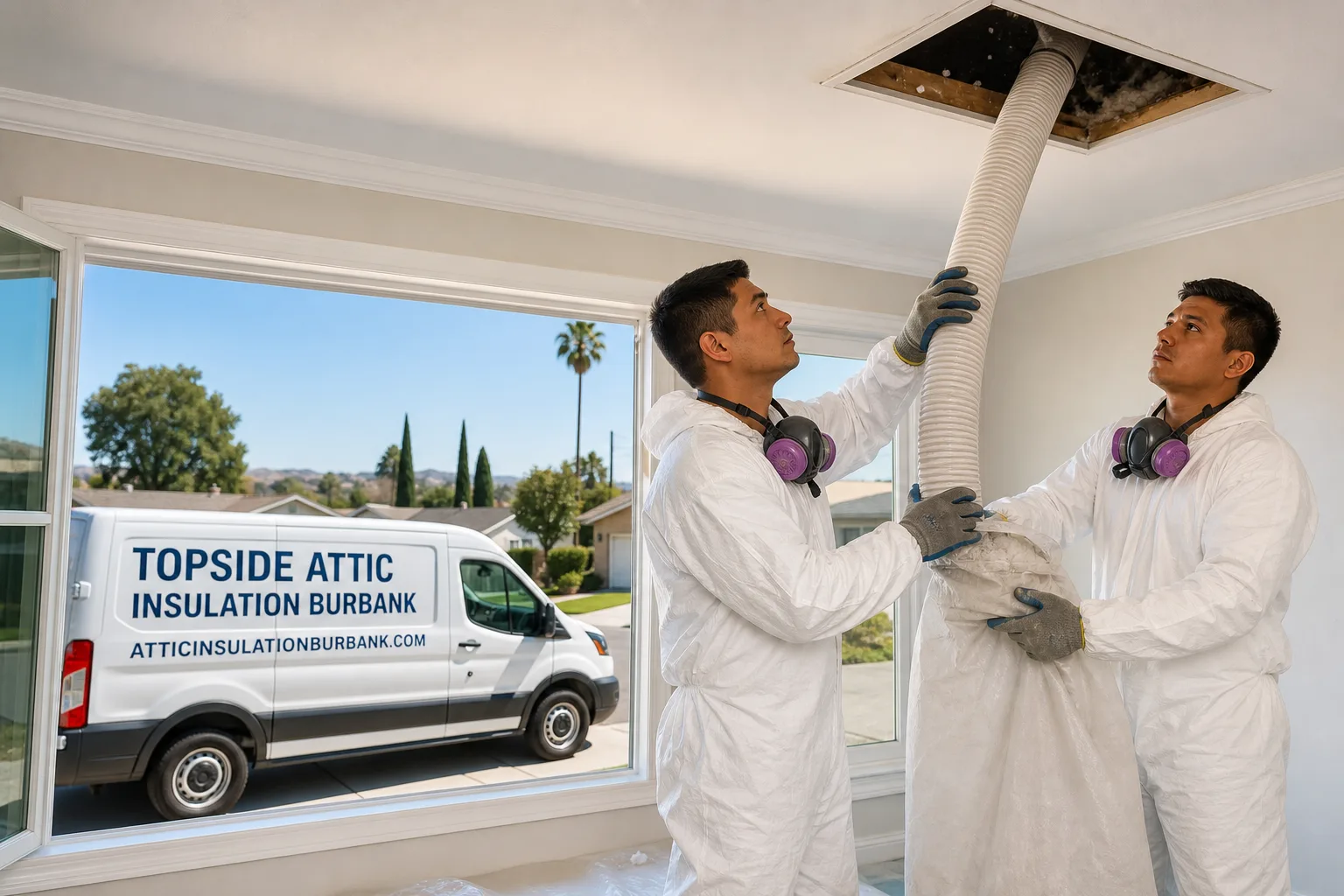
Fast, Reliable Spray Foam Insulation Across San Fernando
San Fernando homeowners dealing with 105°F attic heat and winter nights in the upper 30s need our Attic Insulation in San Fernando to handle both extremes. We dispatch crews to San Fernando from our Los Angeles office, and most spray foam jobs in the city are scheduled within 48 hours of your call. If your bungalow off Maclay Avenue or your tract home near the foothills has compacted old insulation, unsealed ceiling patches, or a garage ceiling that bakes all afternoon, we’ll test the envelope, seal the leaks, and install foam that matches the assembly. Call (213) 816-1699 to get a written price before any work starts.
Why Topside Attic Insulation Burbank Is San Fernando’s Preferred Spray Foam Insulation Company
We’ve worked enough San Fernando attics to recognize the pattern: post-1971 blown-in insulation, compacted to R-5 or less, laid over earthquake-era ceiling patches that were never sealed. Our Spray Foam Insulation in San Fernando crews document every job with before-and-after blower-door readings so you see the actual CFM50 change, not a promise.
Our technicians are background-checked and uniformed, and calls are answered by a live person 24/7. No voicemail loops. No callback windows measured in business days. Under Haven Standard Clause 1, you get a flat written price, written scope, and written warranty before anyone lifts a tool. That applies whether we’re sealing a 1940s bungalow near downtown or spraying a garage ceiling in the foothills.
We also offer a Free Second Opinion on any written estimate. Bring us a competing quote and we’ll read it with you.
Our Spray Foam Insulation Services in San Fernando
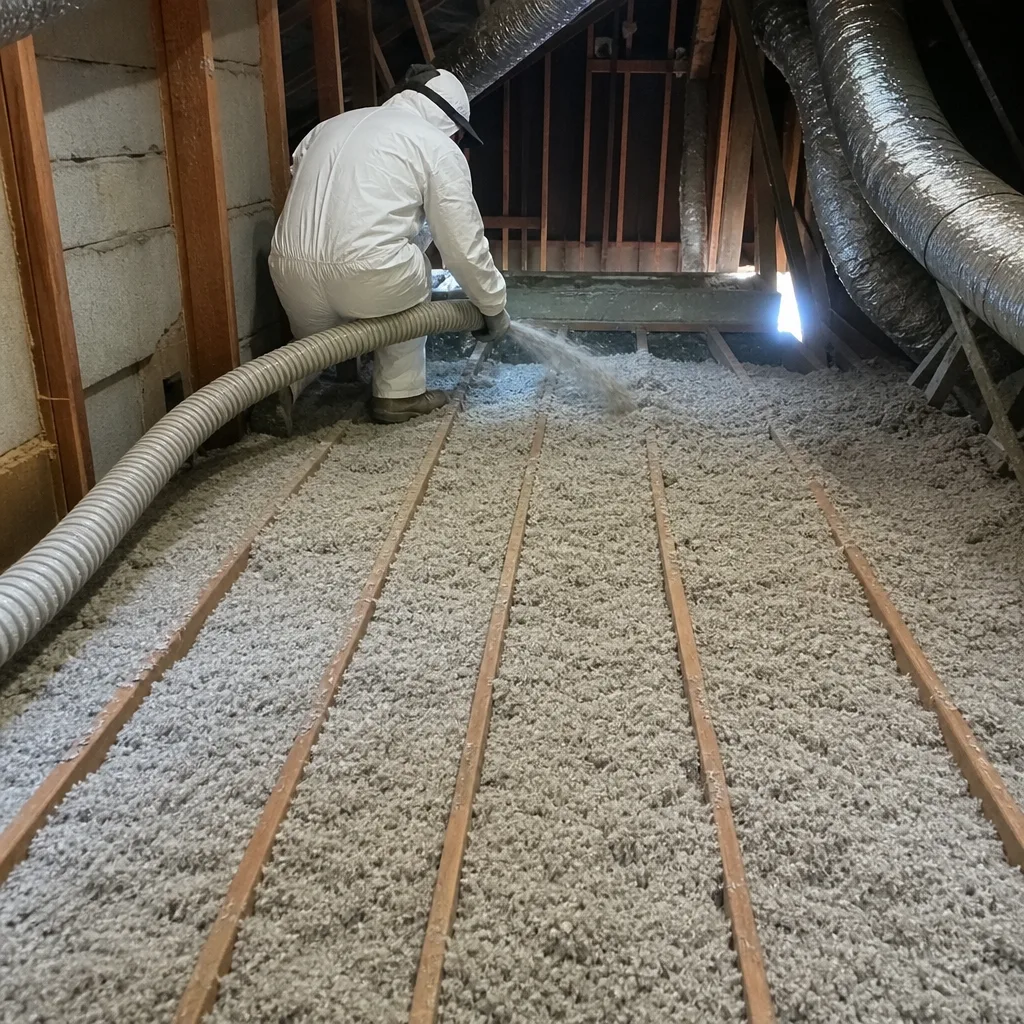
Closed-Cell Spray Foam
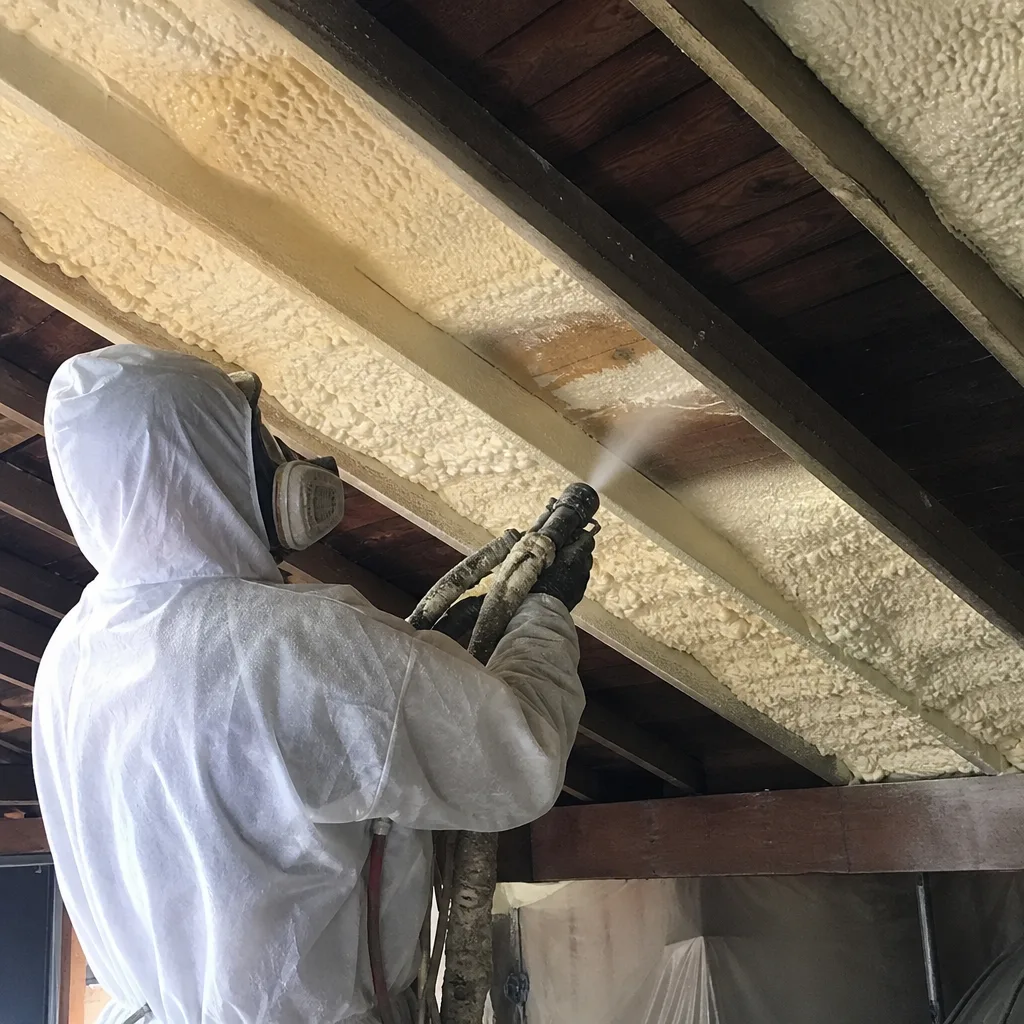
Closed-cell spray foam is our most specified product for San Fernando’s inland heat trap. Because this city sits on the valley floor with no coastal marine layer, the annual temperature swing - upper 30s in winter to 105°F+ in summer - creates condensation risk at rim joists and roof decks that milder coastal neighborhoods never see. Closed-cell foam at 2.0 lbs per cubic foot delivers R-6.5 per inch, acts as its own vapor retarder, and adheres to wood-frame assemblies common in San Fernando’s 1940s-1960s bungalows. We source from Owens Corning and Icynene depending on the assembly requirements.
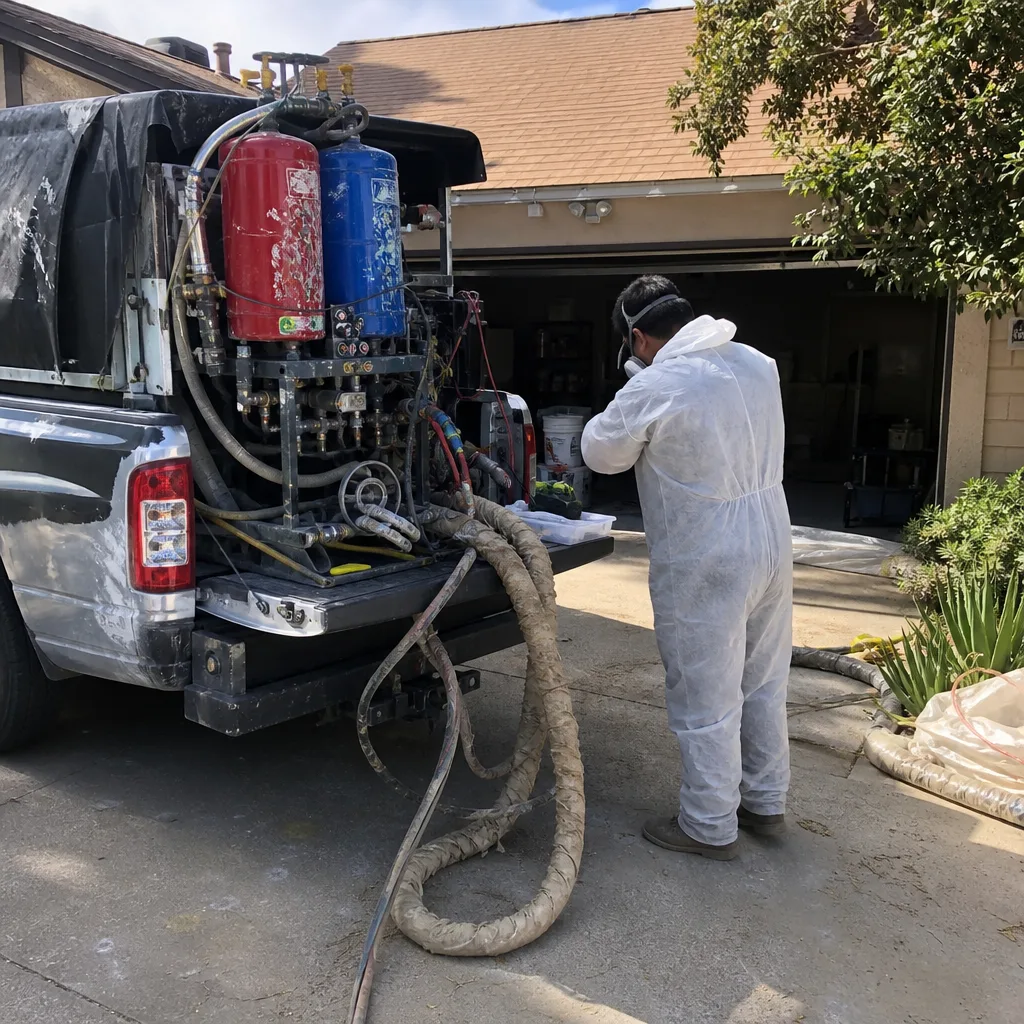
Open-Cell Spray Foam
Open-cell foam at 0.5 lbs per cubic foot works for above-grade wall cavities and certain attic applications where vapor permeability is desired. In San Fernando, we specify open-cell only after confirming the assembly won’t see the condensation loads that closed-cell handles better. It’s not our default for roof decks or rim joists in this climate. Our Spray Foam Insulation team will tell you straight if open-cell fits your specific wall or ceiling assembly.
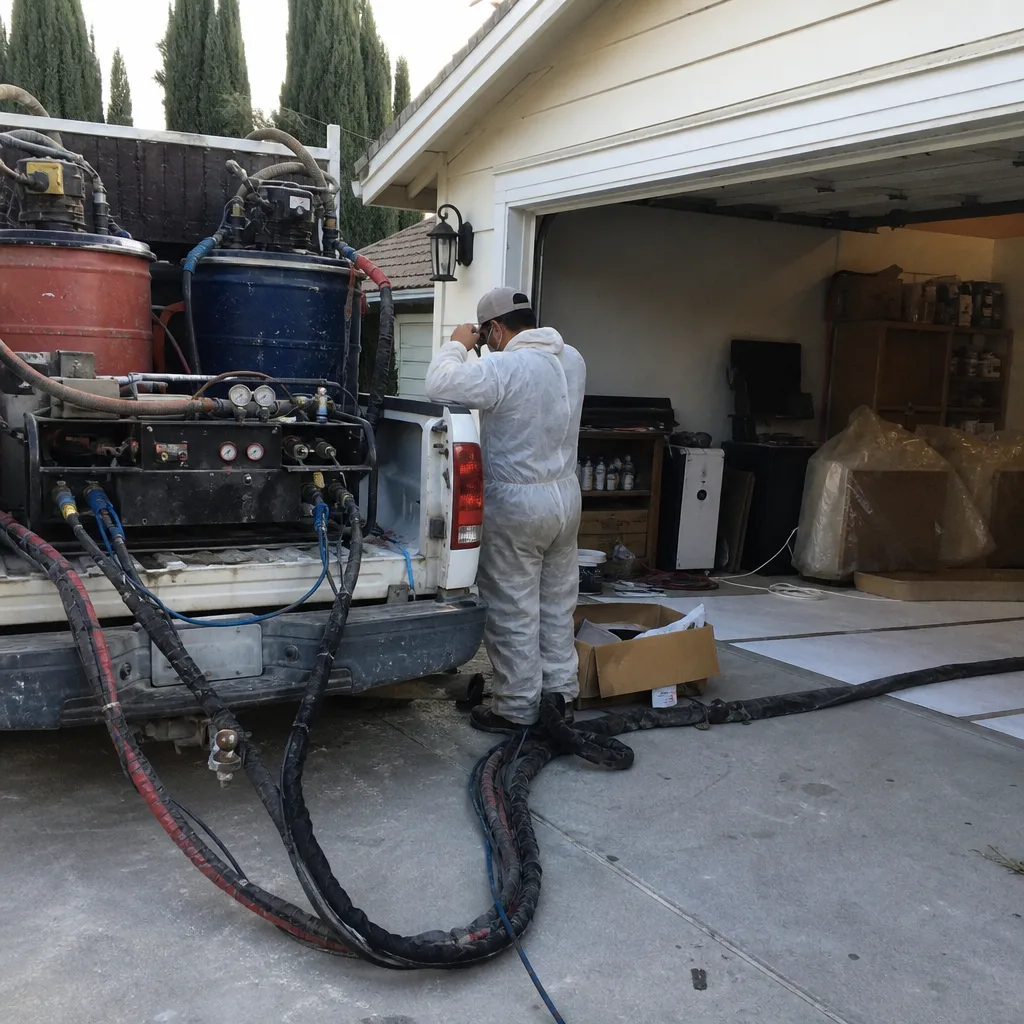
Rim Joist Spray Foam
Rim joists are where the floor framing meets the foundation, and in San Fernando’s wood-frame bungalows they’re often completely unsealed. The combination of cold winter air below and 105°F+ attic heat above drives stack effect leakage year-round. We spray closed-cell foam on rim joists to create an air barrier and thermal break in one pass. This is non-negotiable in our San Fernando work: an unsealed rim joist defeats every other insulation upgrade in the building.
Garage Ceiling Spray Foam
Garage ceilings in San Fernando, especially homes near the Santa Susana foothills, get direct afternoon sun that pushes surface temperatures past 140°F. Poorly adhered spray foam can delaminate or sag under that load. We mechanically verify substrate adhesion, specify high-temperature-rated closed-cell products from Johns Manville or Knauf where appropriate, and document the installation with photos. If your garage ceiling is currently uninsulated or has degraded batt insulation, we’ll specify foam that survives the thermal cycling.
Spray Foam Roof Deck
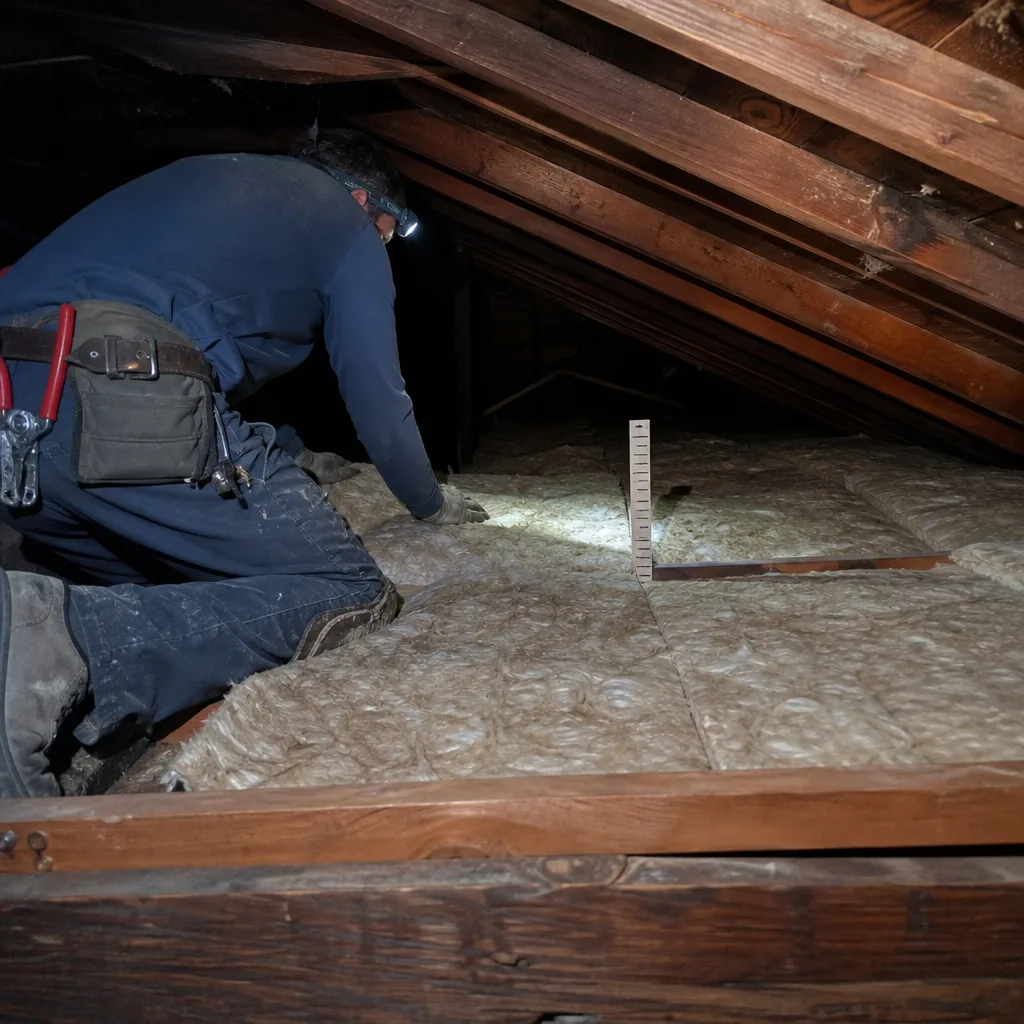
Unvented roof decks in San Fernando attics need closed-cell spray foam applied directly to the underside of the roof sheathing. This creates a conditioned attic space and eliminates the 105°F+ heat sink that short-cycles HVAC equipment in upstairs rooms. We see this constantly in the 1950s stucco bungalows near Maclay Avenue: roof deck temperatures spike, ductwork in the attic gains 15-20 degrees, and the system runs continuously without ever satisfying the thermostat. Closed-cell foam on the roof deck, combined with sealed ceiling patches below, solves both problems.
What happens when you call
- 1
A real person answersNo phone trees - you reach a local pro.
- 2
You get an upfront price rangeHonest numbers before anyone is dispatched.
- 3
A background-checked tech heads outLicensed & insured, dispatched right away.
- 4
You approve before work beginsNothing starts until you say go.
 Before
 After
AfterTrusted Brands We Service in San Fernando
We source spray foam materials from Owens Corning, Johns Manville, Knauf, and other manufacturers including Icynene and Demilec. No proprietary lock-in. For San Fernando jobs, we stock formulations rated for the temperature extremes this valley sees, not coastal-grade products that underperform inland. Our crew carries multiple densities and chemistries so we can match the specification to your assembly rather than forcing a one-product approach. Fast turnaround on material means your job isn’t delayed waiting for a special order.
Common Spray Foam Insulation Problems We See in San Fernando Homes
- Compacted post-1971 blown-in over unsealed ceiling patches. Contractors working older blocks near Maclay Avenue find insulation that was blown in after the Sylmar earthquake but never re-inspected. It’s compacted to R-5 or less and installed over patches that were never air-sealed, creating thermal bypasses that defeat any new insulation installed above.
- Rim joist condensation from extreme temperature swings. San Fernando’s upper-30s winter nights and 105°F+ summer days create a delta-T that drives moisture to cold rim joist surfaces. Open-cell foam alone can’t stop it; closed-cell is required to prevent mold and rot in the floor assembly.
- Garage ceiling foam delamination from foothill sun exposure. West- and south-facing garage ceilings near the Santa Susana foothills see surface temperatures exceeding 140°F. Foam installed without proper substrate prep or high-temperature specification sags or pulls away within two summers.
- HVAC short-cycling from unconditioned attics. Roof decks without spray foam create 130°F+ attic spaces that superheat ductwork. The system runs continuously, never satisfies the thermostat, and burns through compressors faster than in homes with conditioned attics.
Pricing for Spray Foam Insulation in San Fernando, CA
Most closed-cell spray foam jobs in San Fernando run $1.80-$2.80 per board foot installed, depending on thickness and access. A typical 1,200-square-foot attic roof deck at 5 inches runs $10,800-$16,800. Rim joist sealing on a standard bungalow foundation runs $2,400-$4,200. Garage ceiling spray foam at 3 inches runs $3,600-$6,000 for a two-car footprint.
What moves the number: thickness specified, accessibility (steep roof pitch or tight crawl space), existing insulation removal, and whether ceiling patches need sealing before foam goes in. Many San Fernando homes need the old compacted material removed first, which adds $1.50-$2.50 per square foot for disposal and surface prep.
We give you a written price before any work starts. Always. No exceptions. Estimates are free. Call (213) 816-1699 for yours.
We Also Serve Cities Near San Fernando
Our crews work throughout the metro area, including San Fernando neighbors in Burbank, Glendale, West Hollywood, and Beverly Hills. Same written-price guarantee, same documented photo record, same before-and-after blower-door numbers where applicable.
Serving San Fernando, CA - Our Local Coverage Area
We’re based in the San Fernando area and know this community well. Use the map below to see our service coverage - if you’re nearby, we can almost certainly help.
FAQs - Spray Foam Insulation in San Fernando
Yes, spray foam outperforms blown-in in San Fernando’s heat because it air-seals while it insulates, stopping the attic heat gain that forces HVAC systems to run continuously. Blown-in alone, even at proper R-value, doesn’t stop air leakage through ceiling patches and top plates. For a written price on your specific assembly, call (213) 816-1699.
Closed-cell foam is required at San Fernando rim joists because the valley’s temperature swing - upper 30s to 105°F+ - creates condensation on cold surfaces that open-cell foam, being vapor-permeable, cannot block. Closed-cell acts as both insulation and vapor retarder, preventing moisture accumulation that leads to mold and floor assembly rot. Call (213) 816-1699 for a free assessment of your rim joist condition.
No, we remove compacted or degraded blown-in before installing spray foam. In San Fernando, that post-1971 material is often R-5 or less and laid over unsealed ceiling patches; spraying over it traps the thermal bypasses and can conceal moisture problems. Our crews remove, dispose, seal the envelope, then foam. Call (213) 816-1699 for a removal-and-replacement quote.
It holds up well when specified and installed correctly for the thermal load. We use high-temperature-rated closed-cell products, verify substrate adhesion with mechanical testing, and avoid installations on surfaces that exceed the foam’s rated service temperature. West- and south-facing garage ceilings near the foothills need this specification; generic foam products can delaminate within two summers. Call (213) 816-1699 for a garage ceiling evaluation.
We use Owens Corning, Johns Manville, Knauf, Icynene, and Demilec formulations selected for the temperature extremes of San Fernando’s inland valley climate. No proprietary lock-in, no single-product mandate. The brand and density are specified after we assess your assembly. Call (213) 816-1699 to discuss what fits your job.
Written by Wes Okafor, Owner at Topside Attic Insulation Burbank, serving San Fernando since 2016.