
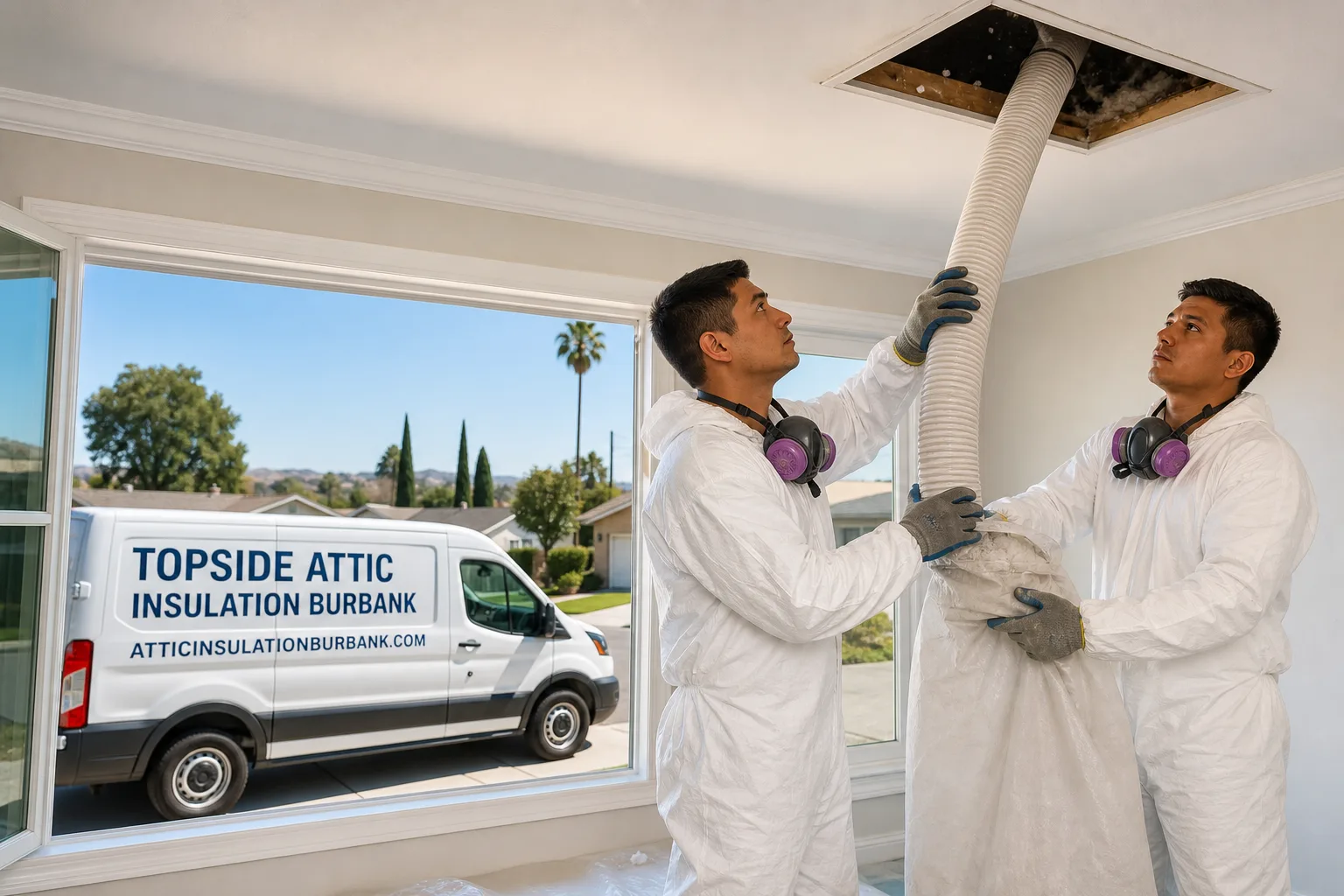
How Much Does Insulation Removal & Replacement Cost in Burbank?
Our Insulation Removal & Replacement services in Burbank, CA typically run between $1,400 and $4,800 for a standard single-story home, with most attic jobs landing around $2,200 to $3,400 depending on attic size, contamination level, and the insulation type going back in. Most jobs in Burbank are completed in one day. The wide range exists because a clean 1,200-square-foot attic swap is a very different scope from a 2,400-square-foot attic with rodent contamination, failing batt insulation stapled to every rafter, and zero air sealing underneath it.
Insulation Removal & Replacement Cost Breakdown (2026)
The table below reflects actual pricing in the Burbank market as of 2026. These are the ranges you should expect to see on a written estimate – not ballpark guesses padded for negotiation room.
| Scope of Work | Typical Burbank Price Range |
|---|---|
| Attic insulation removal only (clean, no contamination) – per 1,000 sq ft | $350 – $600 |
| Attic insulation removal with rodent contamination – per 1,000 sq ft | $600 – $1,100 |
| Blown-in fiberglass or cellulose replacement – per 1,000 sq ft | $450 – $900 |
| Batt insulation (fiberglass or Rockwool) replacement – per 1,000 sq ft | $500 – $950 |
| Attic air sealing (top plates, can lights, penetrations) – per job | $400 – $900 |
| Attic cleaning and sanitizing after rodent activity – per job | $300 – $700 |
| Crawl space insulation removal and replacement – per job | $1,200 – $3,200 |
| Full attic removal + air seal + blown-in replacement (1,200-1,800 sq ft attic) | $2,100 – $3,600 |
| Full attic removal + air seal + blown-in replacement (2,000-2,800 sq ft attic) | $3,200 – $4,800 |
A few things push numbers toward the high end quickly in Burbank. First, the San Fernando Valley heat load is not forgiving – homes here in Magnolia Park, Burbank Hills, and Rancho Equestrian often run aging 1950s to 1970s construction with original blown-in that has compressed to an effective R-value barely above R-11. Getting those attics to California Title 24-compliant R-38 requires removing the old material entirely, sealing every air gap, and adding fresh depth. Second, the City of Burbank does not require a permit for standard attic insulation work, but if mechanical systems in the attic are disturbed or if spray foam is being installed, a local building check is worth the 20-minute call to Burbank Building & Safety before the crew shows up. Third, the proximity to the Verdugo Mountains means homes on sloped lots in Burbank Hills and Glenoaks Canyon tend to have complex attic geometries – low-pitch areas, knee walls, and dormers that take longer to vacuum out and seal properly.
Under the Haven Standard, every scope at Envelope Insulation Co. starts with a written price before anyone touches a tool. What you see on the estimate is what appears on the invoice. No line items added after the crew opens the attic hatch.
What Affects Insulation Removal & Replacement Pricing in Burbank
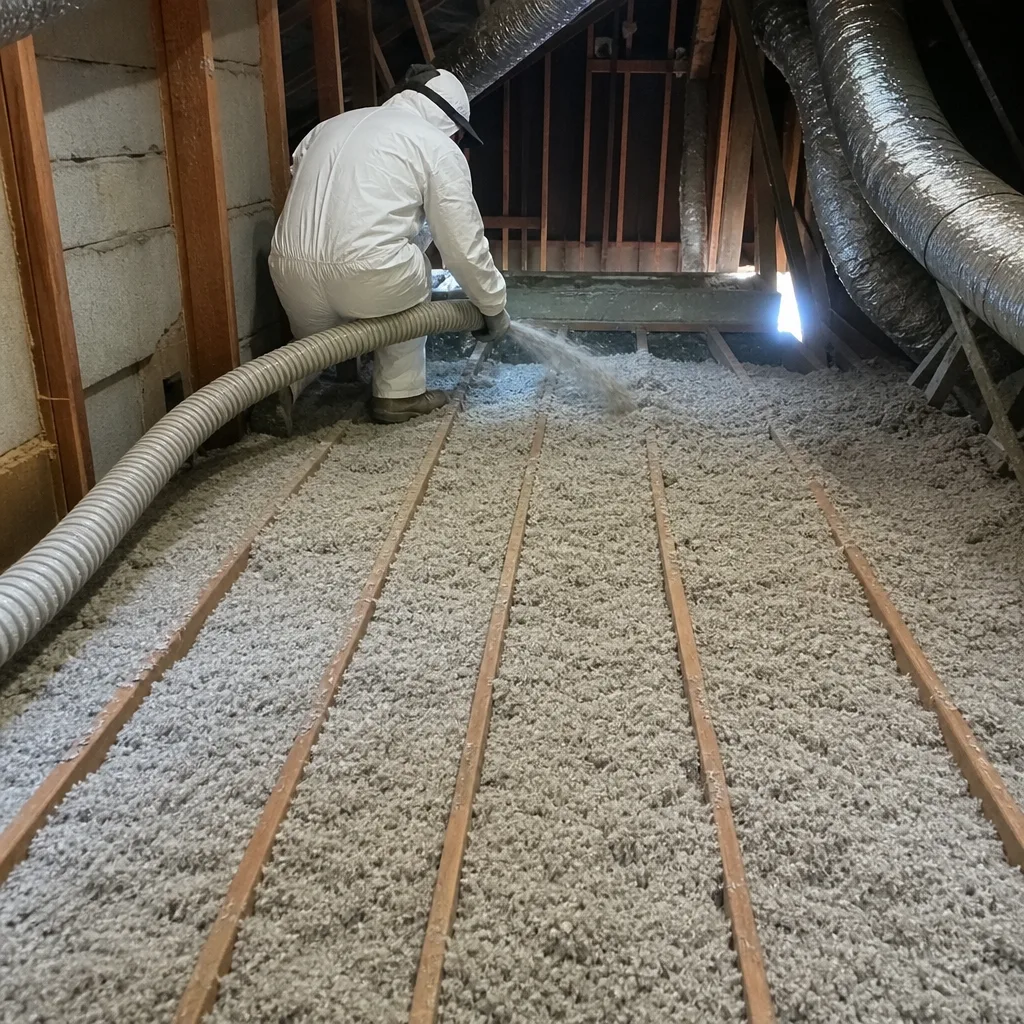
- Attic square footage and accessible floor area. This is the primary cost driver. A 900-square-foot attic in a smaller Burbank bungalow near downtown is a half-day vacuum job. A 2,600-square-foot attic on a larger lot in the Rancho Equestrian neighborhood is a full crew day. Every estimate at Envelope starts with an accurate attic measurement – not a visual guess through the hatch.
- Contamination type and severity. Burbank sits on the western edge of the San Fernando Valley, and roof rats are common throughout the flatlands – particularly in older neighborhoods near Verdugo Avenue and the Magnolia Park corridor. Rodent-contaminated insulation requires bagged disposal, sanitizing spray applied to the attic deck, and sometimes HEPA-filtered vacuum equipment to handle airborne particulates safely. That scope typically adds $400 to $900 to a removal job compared to a clean attic.
- Existing insulation type and depth. Loose-fill cellulose vacuums out faster than dense-pack or wet-applied material. Old batt insulation stapled between rafters, especially the paper-faced fiberglass common in Burbank homes built before 1980, adds labor time because it has to be pulled by hand before the vacuum hose can reach the deck. Depth matters too – 14 inches of compressed vermiculite (occasionally found in pre-1980 Burbank homes) is handled differently than 6 inches of modern blown-in fiberglass.
- Air sealing scope before replacement. This is where Envelope Insulation Co. differs from most contractors in the Burbank market. We do not blow new insulation over an unsealed attic floor. Before any material goes in, every top plate gap, recessed can light, plumbing penetration, and HVAC boot is sealed – with caulk or foam, depending on the gap type. Skipping this step is common and it’s the reason some homeowners see their energy bills barely move after a full insulation replacement. The air sealing adds $400 to $900 to the job, but the blower-door numbers we record before and after show exactly what that step delivered.
- Replacement material and target R-value. California Title 24 calls for R-38 in most Burbank climate zone applications (Climate Zone 9). Getting from a depleted R-11 to R-38 takes roughly 10 to 12 inches of new blown-in fiberglass or cellulose. The material choice – Owens Corning blown-in, GreenFiber cellulose, Johns Manville batts, or Knauf EcoBatt – changes cost modestly but also affects long-term performance. We carry all of them and don’t push any single product.
- Access difficulty and attic geometry. Older Craftsman and Spanish Revival homes in the Burbank flatlands often have low-pitch roofs with attic clearances under 24 inches in the eave areas – tight enough that a crew member has to work on their stomach to reach the far corners. Homes in Burbank Hills with multiple roof ridges, dormers, or finished knee-wall spaces take longer on both removal and installation. Access difficulty rarely doubles a price, but it can add $200 to $600 depending on how constrained the layout is.
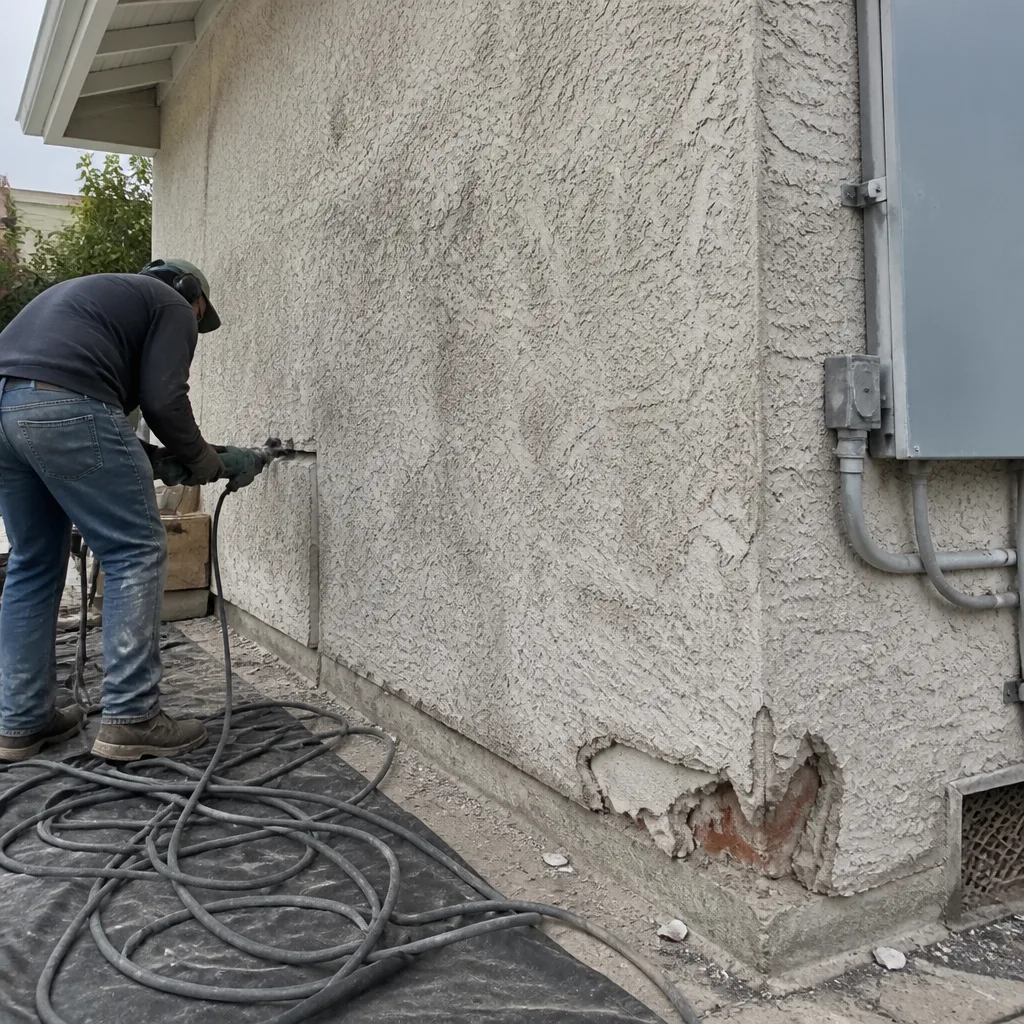 Before
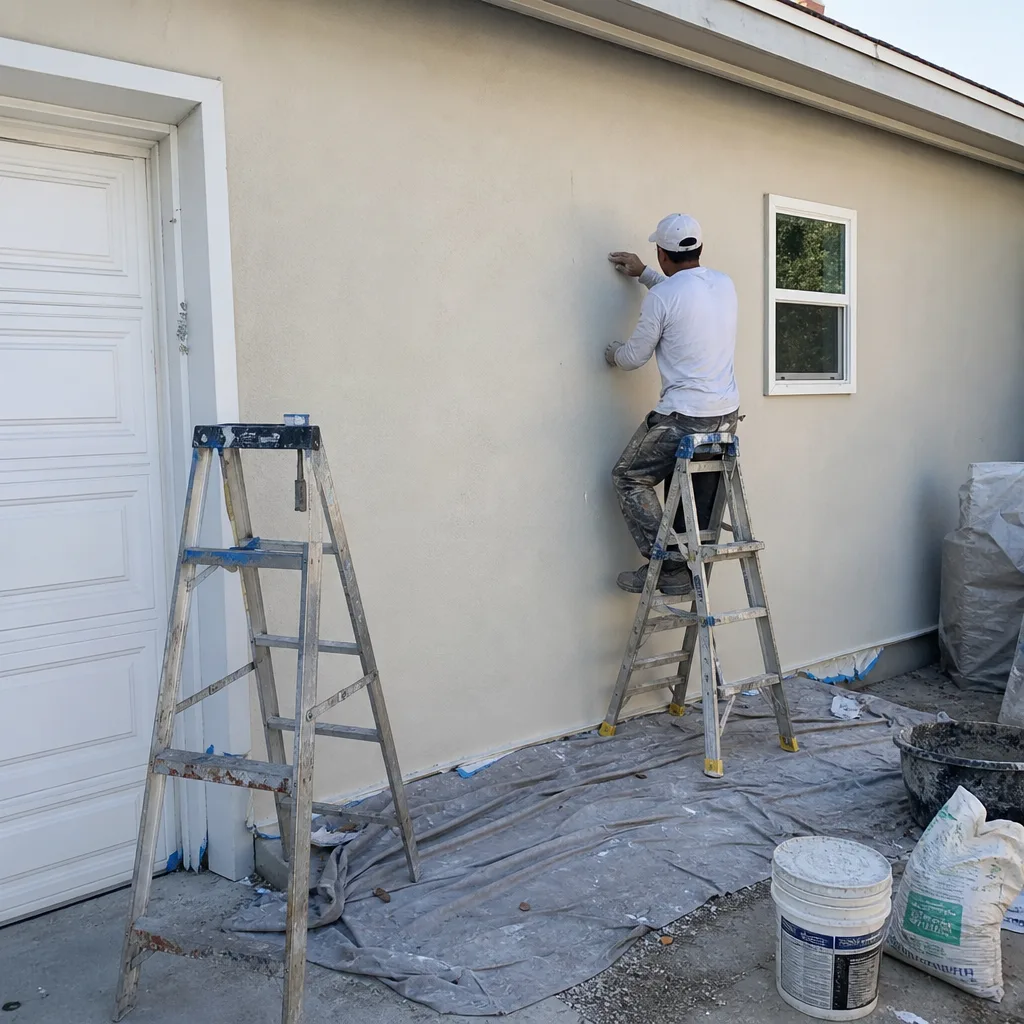 After
AfterBurbank-Specific Notes: Local Codes, Climate, and What We See on the Job
Most insulation replacement work in Burbank does not require a building permit when the job is limited to the attic space and no structural or mechanical modifications are made. That said, the City of Burbank Building & Safety Division at 150 N. Third Street does handle permit questions, and if your project involves spray foam applied to the underside of the roof deck (a hot roof assembly) or changes to existing mechanical equipment, a permit inquiry before scheduling is the right call. Any contractor who tells you permits never apply to insulation work in Burbank is being imprecise.
On the climate side: Burbank summers are aggressive. The July daily high average sits around 93-95 degrees Fahrenheit, and attic air temperatures in unshaded, dark-roofed homes in Magnolia Park and the Burbank Heights area regularly reach 140 to 150 degrees on peak afternoons. Compressed or degraded insulation at R-11 to R-15 is essentially not functioning as a thermal barrier at those temperatures – heat is conducting straight through the ceiling plane into conditioned space, forcing air conditioning equipment to run longer cycles. We regularly see HVAC runtimes drop after a full removal and replacement job paired with a radiant barrier, particularly in south-facing Burbank roofs with lower pitches.
In the Burbank Hills and Glenoaks Canyon areas, we also see homes where the original builder installed blown-in insulation without blocking the eave baffles properly. Over time, the insulation has migrated toward the eave vents and blocked soffit airflow entirely – which accelerates moisture buildup in winter (yes, even in Burbank, roof sheathing moisture is a real issue during December and January marine-layer events) and heat buildup in summer. Removing the old material, installing baffles, and reinstalling correct depth insulation addresses both problems.
For homeowners near the DWP service area in Burbank: Southern California Edison and LADWP both offer rebate programs tied to insulation upgrades. These rebates are subject to annual program caps and change year to year, so the only reliable way to confirm current rebate availability is to check directly with your utility. We document the pre- and post-job R-values on every job, which is typically the paperwork utility rebate programs require. That documentation comes with the job – you don’t have to ask for it separately.
How to Save on Insulation Removal & Replacement
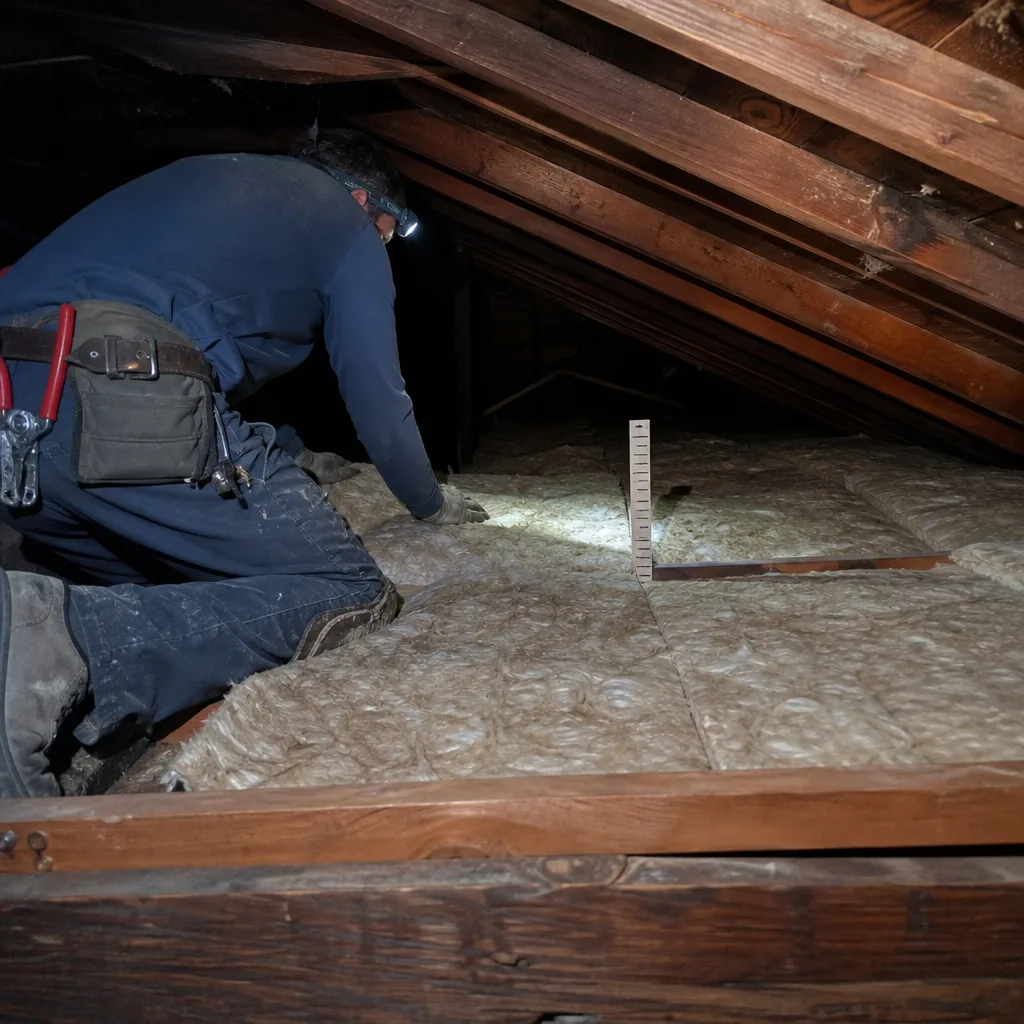
Get a written estimate before agreeing to anything, and make sure the estimate breaks down removal, air sealing, and installation as separate line items. Contractors who quote a single “remove and replace” number without itemizing those three phases are almost always skipping the air sealing – which is the step that determines whether the new insulation actually performs. A lower quote that skips air sealing is not a savings; it’s a deferral. The home’s envelope leakage stays exactly where it was.
Combine scopes when you can. If you’re already pulling old insulation, adding attic cleaning, rodent-proofing, or a radiant barrier to the same job is almost always less expensive than scheduling those as separate visits. The crew is already in the attic with equipment staged. The incremental cost of adding a radiant barrier to an active removal and replacement job is meaningfully lower than returning for a dedicated radiant barrier installation.
Use the blower-door test to prioritize. On homes where budget is constrained, a pre-job blower-door reading – a pressurization test that measures, in a single CFM50 number, how much air the building envelope is losing – shows which penetrations are the biggest contributors to air leakage. That data lets you air-seal the high-impact areas first and defer lower-priority work if needed. It’s a more precise way to allocate a limited budget than guessing based on visual inspection.
Check utility rebate eligibility before the job is scheduled, not after. LADWP and SCE have both offered rebates on qualifying insulation work, but the programs have specific pre-approval steps. If you schedule the work first and apply afterward, you may not qualify. The current rebate documentation is at each utility’s website, and the R-value records we provide after every job are the format those programs typically require.
Ask for a second opinion on any written estimate. Under the Haven Standard, Envelope Insulation Co. offers a free second opinion on any written estimate – bring a competing quote and Wes Okafor or a member of the Envelope team will read it with you line by line. This is not a pressure tactic; it’s a practical way to verify that the scopes being compared are actually equivalent before you commit.
For a free, written estimate on your Burbank home, call (213) 816-1699. You’ll speak with a live person – no voicemail, no callback window measured in business days.
FAQs – Insulation Removal & Replacement Cost in Burbank
How much does attic insulation removal cost in Burbank?
Attic insulation removal in Burbank runs $350 to $600 per 1,000 square feet for a clean attic with no contamination. If rodent activity is present – which is common in older Magnolia Park and Burbank flatlands homes – expect $600 to $1,100 per 1,000 square feet to cover contaminated material disposal, sanitizing, and the additional labor required for safe bagging and HEPA vacuuming. A typical 1,500-square-foot attic with moderate contamination usually comes in at $900 to $1,600 for removal alone. Call (213) 816-1699 for a written estimate on your specific attic – the price will be flat and on paper before any work starts.
Is it cheaper to add insulation on top of old insulation or remove and replace?
Adding over existing insulation is cheaper upfront – typically $400 to $800 less than a full removal and replacement for a mid-size Burbank attic. But it’s only the right choice when the existing insulation is dry, uncontaminated, evenly distributed, and not obstructing the attic floor so that air sealing can still be performed properly. In practice, most Burbank attics we inspect have at least one of the following: compressed fiberglass that no longer holds R-value, rodent nesting material mixed through the insulation layer, or old batt insulation that blocks access to the top plates for sealing. Blowing over any of those conditions produces a new layer of insulation sitting on top of an unresolved problem. Removal and replacement costs more in the short term; it’s usually the option that actually changes the energy performance numbers on the blower-door reading.
Does insulation removal require a permit in Burbank?
Standard attic insulation removal and replacement in Burbank does not require a building permit when the scope is limited to the attic space with no modifications to structural elements or mechanical systems. If the project involves spray foam applied to the underside of the roof deck, changes to existing HVAC equipment, or any structural work, contact the City of Burbank Building & Safety Division before scheduling. On any project where permit status is ambiguous, we confirm the requirement before the crew arrives – not after.
How long does insulation removal and replacement take in Burbank?
Most Burbank attic removal and replacement jobs are completed in one day. A straightforward removal and blown-in replacement in a 1,200 to 1,600-square-foot attic typically runs 6 to 8 hours including air sealing. Larger attics in the 2,200 to 2,800-square-foot range, or attics with heavy contamination requiring extra sanitizing steps, can extend to a full two-day job. Crawl space work is typically a separate scheduled day. Before your job is scheduled, the written scope will include a time estimate – not a vague “it depends” window.
What R-value do I need for insulation in Burbank, CA?
California Title 24 specifies R-38 for attic insulation in Burbank’s climate zone (Climate Zone 9) for most residential applications. Achieving R-38 with blown-in fiberglass requires approximately 10 to 12 inches of new material after the existing insulation is removed and the attic floor is air-sealed. Some higher-performance builds target R-49 to R-60, which adds material cost but reduces heat transfer further – relevant in Burbank given the July attic temperatures that regularly exceed 140 degrees. Every Envelope job is documented with pre- and post-installation R-value measurements included in the job record.
Does Envelope Insulation Co. provide before-and-after blower-door test results?
Yes. On every applicable job, we record a blower-door test – a pressurization measurement expressed in CFM50, which is the cubic feet of air per minute escaping the building envelope when the home is depressurized to 50 Pascals – before and after the air sealing phase. The before and after numbers are included in the Documented Photo Record the customer receives when the crew leaves. This is how we show, in a single measurable figure, what the air sealing step actually accomplished. A Burbank home that reads 3,800 CFM50 before sealing and 2,100 CFM50 after has a documented 45% reduction in air leakage. That’s a verifiable result, not an estimate of how much better it might feel.
Can Envelope give me a second opinion on an estimate I already received?
Yes. Bring any written estimate from another contractor and Wes Okafor or a member of the Envelope team will go through it line by line at no cost. This offer exists because scope mismatches are common in the Burbank insulation market – particularly around air sealing, which many contractors omit from removal-and-replacement quotes entirely. Two estimates with the same total price can represent very different scopes. Reading them side by side in writing is the only reliable way to compare them. Call (213) 816-1699 to schedule a second-opinion review.
Why Insulation Removal in Burbank Is Not a DIY Project
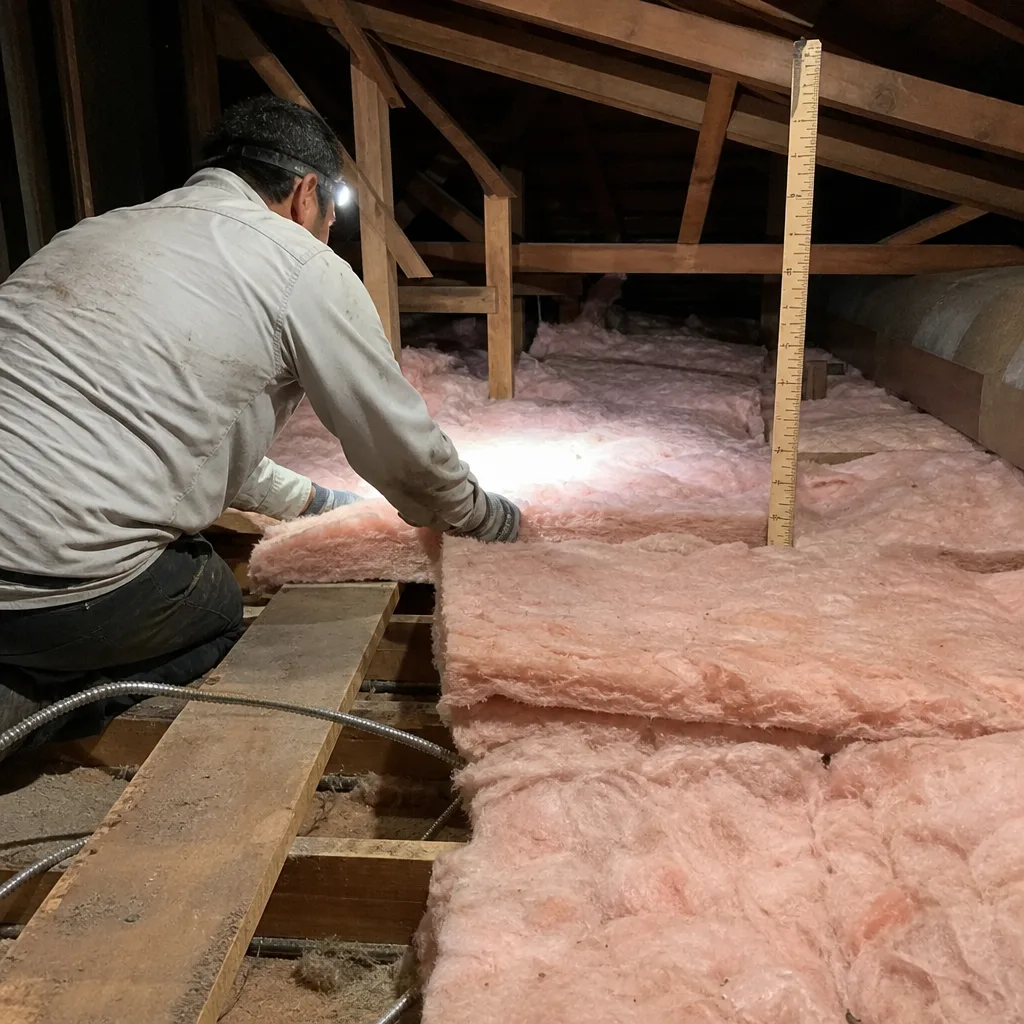
Removing attic insulation involves more than renting a vacuum. In Burbank homes with any history of rodent activity – and that includes a significant portion of flatland properties built before 1985 – the insulation layer contains dried rodent urine and feces that become airborne when disturbed. Without proper respiratory protection (at minimum an N100 respirator, not a dust mask), HEPA-filtered vacuum equipment, and sealed waste bags, the removal process creates a health hazard. The same applies to any Burbank home built before 1978 where vermiculite or old cellulose insulation is present – material that may contain trace asbestos fibers requires testing before disturbance, and handling it without confirmed results is a regulatory and health risk.
Beyond contamination, the air sealing step that should precede any new insulation installation requires working with spray foam and caulk around electrical fixtures, recessed can lights, and top plates. Recessed can lights in older Burbank homes are often the non-IC-rated type – meaning they’re not approved for direct insulation contact – and sealing them incorrectly can create a fire risk. This is work that needs a trained eye and a documented process, not a weekend afternoon.
Key Takeaways
- Insulation removal and replacement in Burbank runs $1,400 to $4,800 for most homes, with the typical attic job landing between $2,200 and $3,400.
- Rodent contamination, attic size, air sealing scope, and replacement material type are the four main price variables for Burbank jobs.
- California Title 24 requires R-38 in Burbank’s climate zone – most homes with original insulation are well below that threshold.
- Air sealing before insulation installation is not optional if you want the new insulation to perform. Skipping it is the most common reason energy bills don’t change after an insulation replacement job.
- No permit is typically required for standard attic insulation work in Burbank, but spray foam and mechanical changes have different requirements.
- Before-and-after blower-door readings document what the air sealing step actually delivered – in a single measurable number, not an estimate.
- Under the Haven Standard, every job starts with a written price and ends with a Documented Photo Record. The 365-Day Done Right Promise covers all completed work.
Get a Written Estimate for Your Burbank Home
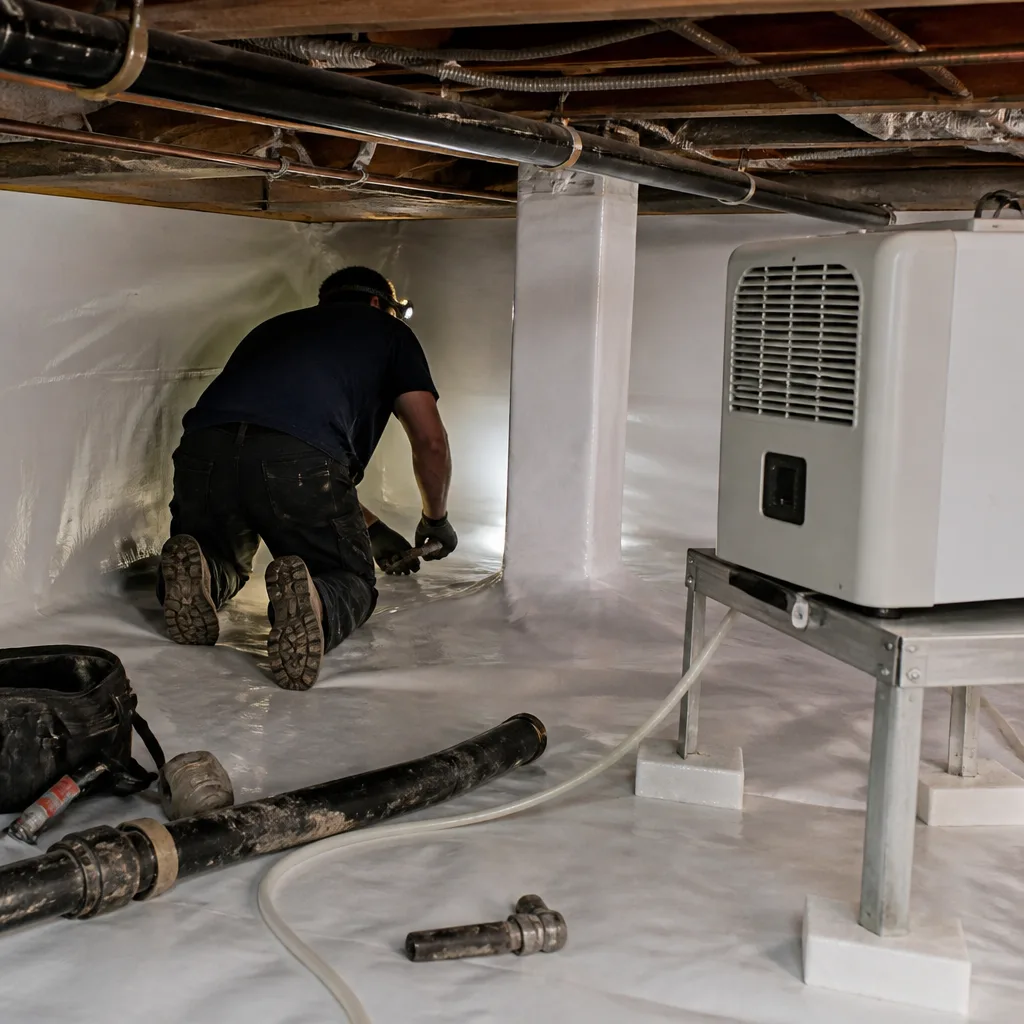
If your attic insulation is original to the house, visibly compressed, smells musty, or if your energy bills have been climbing despite a functioning HVAC system, a written estimate is the right first step. Wes Okafor and the Envelope Insulation Co. team serve Burbank and the surrounding San Fernando Valley – every job starts with a flat written price, and no work begins before you’ve signed off on the scope.
Learn more about what the full process involves on our Insulation Removal & Replacement in Burbank service page, or visit our home page to see the full range of building-envelope services we offer.
Call (213) 816-1699 to schedule your free estimate. A live person answers – no voicemail, no callback windows. You’ll have a written price before anyone sets foot in your attic.
Pricing reflects the Burbank market as of 2026. Topside Attic Insulation Burbank offers free estimates – call (213) 816-1699.
Written by Wes Okafor, Owner at Envelope Insulation Co., serving Burbank since 2016.
What Our Customers Say
"They photographed rodent damage in the old insulation that we had no idea about, and priced the exclusion work separately so we could decide."
- Harriet N."Fixed price, clean work, and they hauled the old material away as agreed."
- Todd M."The winter gas bill dropped by about a third. They had estimated a quarter, so they under-promised."
- Genevieve R.