
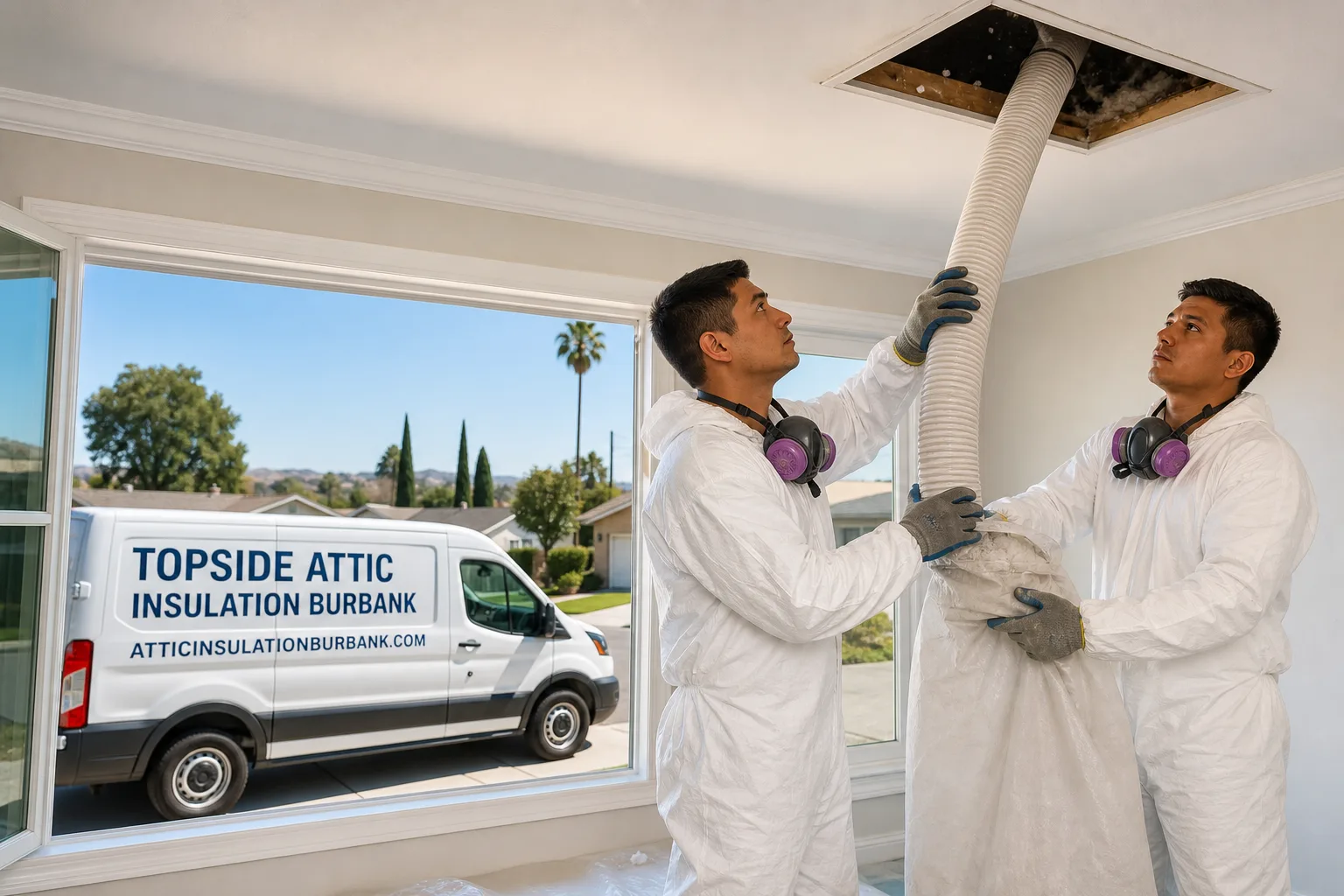
How Much Does Blown-In Insulation Cost in Burbank?
Blown-In Insulation services in Burbank, CA typically run between $1,800 and $4,200 for a standard attic job, with most single-story homes in the 1,400-to-2,200 square foot range landing around $2,200 to $3,100 after air sealing is completed first. That price includes labor, material, and the documented photo record every Envelope Insulation Co. job closes with – but the final number shifts based on current R-value, attic access, and whether loose-fill cellulose or fiberglass is the right call for your home’s construction.
Blown-In Insulation Cost Breakdown (2026)
Blown-in insulation is priced by the square foot of attic floor area, the R-value being targeted, and the material selected. In the Burbank market, fiberglass loose-fill and cellulose are the two materials that make sense for most attic retrofits – spray foam is a different product with a different price point and a different job scope. The table below reflects what Burbank homeowners are actually paying in 2026, not a national average carried over from 2022.
| Job Type / Scope | Typical Cost Range (Burbank, 2026) | Notes |
|---|---|---|
| Attic blown-in, up to 1,000 sq ft (cellulose, R-30 to R-38) | $1,400 – $2,100 | Common in Burbank’s smaller bungalows near Victory Blvd |
| Attic blown-in, 1,000-1,800 sq ft (cellulose, R-38 to R-49) | $2,000 – $3,200 | Typical range for post-war Ranchers in Magnolia Park |
| Attic blown-in, 1,800-2,800 sq ft (cellulose or fiberglass, R-38 to R-49) | $2,800 – $4,200 | Covers most 1960s-1980s two-story homes in the Burbank hills area |
| Fiberglass loose-fill upgrade (same square footage) | Add $0.20-$0.40/sq ft over cellulose | Preferred when moisture history is a concern |
| Attic air sealing (top plates, can lights, penetrations) – standalone | $600 – $1,400 | Done before blown-in on every Envelope job – not optional |
| Existing insulation removal before re-blow | $900 – $2,200 | Required when old insulation is compressed, contaminated, or below R-11 |
| Before-and-after blower-door test (included on applicable jobs) | Included | Pressurization reading – one number that shows air loss before and after |
What the Price Actually Includes
A written price before any work starts is not a policy option at Envelope Insulation Co. – it is Haven Standard Clause 1. That means the flat price, written scope, and written warranty are in your hands before anyone lifts a tool. The job closes with a Documented Photo Record and, on applicable jobs, a before-and-after blower-door reading – a pressurization measurement that gives you one number showing how much conditioned air your home was losing before sealing and how much it loses after.
Materials come from Owens Corning, Johns Manville, GreenFiber, and Knauf depending on what the attic calls for. There is no proprietary product lock-in, which matters because the right material for a 1955 Magnolia Park house with original redwood framing is not automatically the same product that belongs in a 1988 Burbank Hills two-story with spray-foam-sealed rim joists.
Per-Square-Foot Cost Reference
- Cellulose blown-in, R-30: $1.40 – $1.80 per sq ft installed
- Cellulose blown-in, R-38: $1.75 – $2.20 per sq ft installed
- Cellulose blown-in, R-49: $2.10 – $2.70 per sq ft installed
- Fiberglass loose-fill, R-38: $1.95 – $2.45 per sq ft installed
- Fiberglass loose-fill, R-49: $2.35 – $2.90 per sq ft installed
California Title 24 energy code requires a minimum of R-38 in attics for most Burbank homes undergoing permitted work – a detail that catches a lot of homeowners off guard when they get a competing quote written to R-30. If a written estimate you received specifies R-30 for a permitted job, bring it in. Under the Haven Standard Free Second Opinion, Wes Okafor will read that estimate with you and tell you exactly where the numbers line up and where they don’t.
What Affects Blown-In Insulation Pricing in Burbank
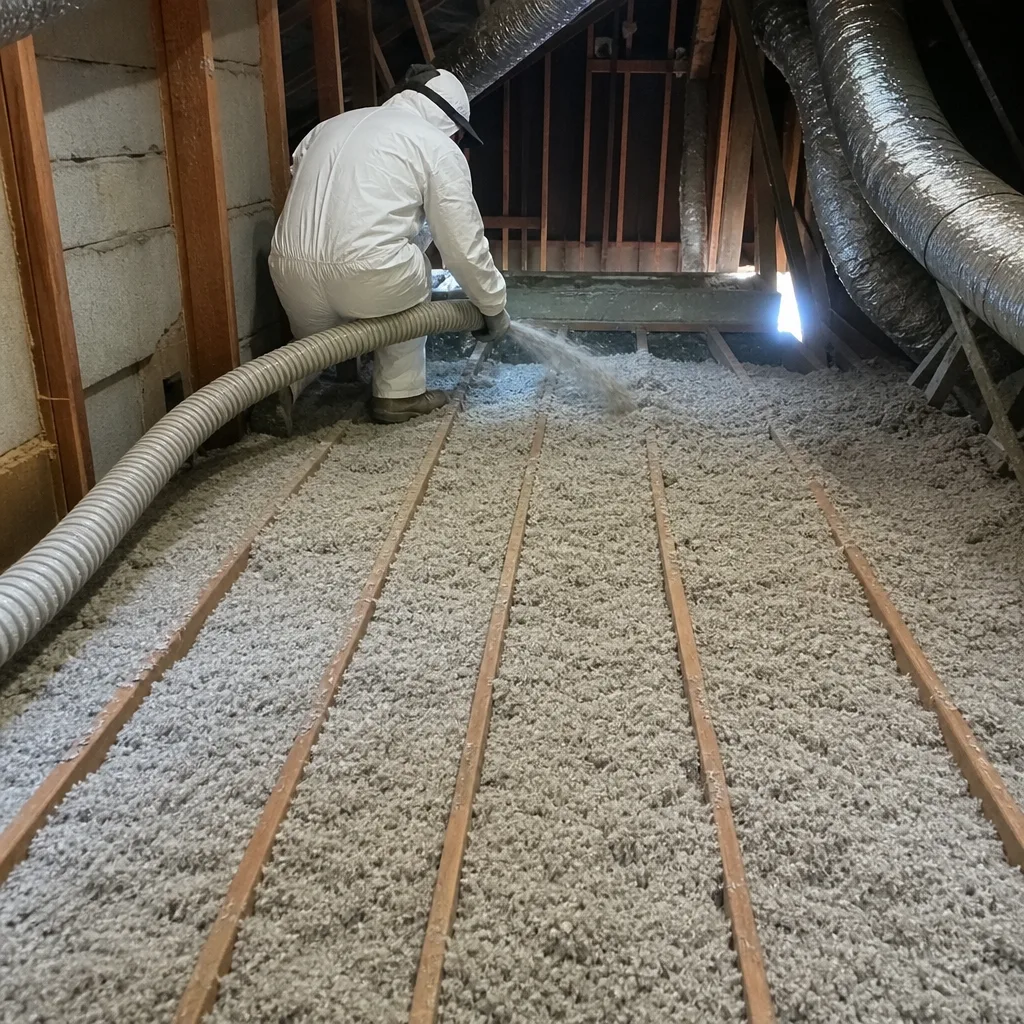
Six variables consistently move the final number up or down on Burbank jobs. None of them are surprises if you know what to look for before the crew shows up.
- Current R-value and what’s already there. Burbank has a large stock of homes built between 1945 and 1975 – many of them in Magnolia Park, near Olive Ave, and along the flats south of Alameda. A significant portion of those attics still have the original batt insulation, often compressed to R-8 or R-10 after decades of foot traffic from HVAC techs and pest control. If what’s there is doing nothing, it has to come out before a proper re-blow. That adds $900 to $2,200 to the job and is not negotiable from a building-science standpoint.
- Attic access and height. Burbank’s hillside homes – particularly in the stretch between Glenoaks Canyon and the Verdugo foothills – often have split-level attic spaces with low knee walls and irregular framing. A crew that can walk an open 8-foot attic moves faster than one working a 22-inch crawl space over a complicated hip roof. Tight access adds labor time, and labor time is reflected honestly in the written price.
- Number of can lights and top-plate penetrations. Recessed can lights – the kind installed in Burbank tract homes throughout the 1980s and 1990s – are direct holes in the thermal envelope. Before Envelope blows in any insulation, every can light gets an air-sealed cover, and every top-plate penetration where plumbing or wiring passes through gets foamed or caulked. A 1,600-square-foot attic with 22 recessed cans takes longer to seal than the same attic with four. That difference runs $150 to $400 in labor and materials.
- Material choice: cellulose vs. fiberglass loose-fill. Cellulose – made from recycled newsprint treated with borate – is the more common choice in Burbank because it settles into irregular framing cavities well and costs slightly less per bag. Fiberglass loose-fill, sourced from Owens Corning or Johns Manville, is the better call when there’s a moisture history or the attic sees significant rodent activity, because fiberglass doesn’t absorb water the way cellulose can. The cost difference is $0.20 to $0.40 per square foot.
- Burbank’s climate and the R-value target. Burbank sits in a valley that traps heat – summer afternoons in the Rancho or Empire Center areas regularly run 10 to 15 degrees hotter than coastal LA. That thermal load is a genuine argument for R-49 over the code-minimum R-38, particularly on south- and west-facing attics. Going from R-38 to R-49 adds roughly 3 to 4 inches of material and typically adds $0.35 to $0.55 per square foot to the installed cost – real money, but less than one year of the AC overage it offsets.
- Existing attic contamination or rodent history. This is more common in Burbank than many homeowners expect. Homes near the Chandler Bikeway corridor and older neighborhoods around Hollywood Way frequently show evidence of rodent activity in the attic insulation. Contaminated insulation requires full removal, HEPA vacuuming, and sanitation before any new material goes in. Skipping that step and blowing over contaminated insulation is something Envelope won’t do – and the written scope will say so explicitly.
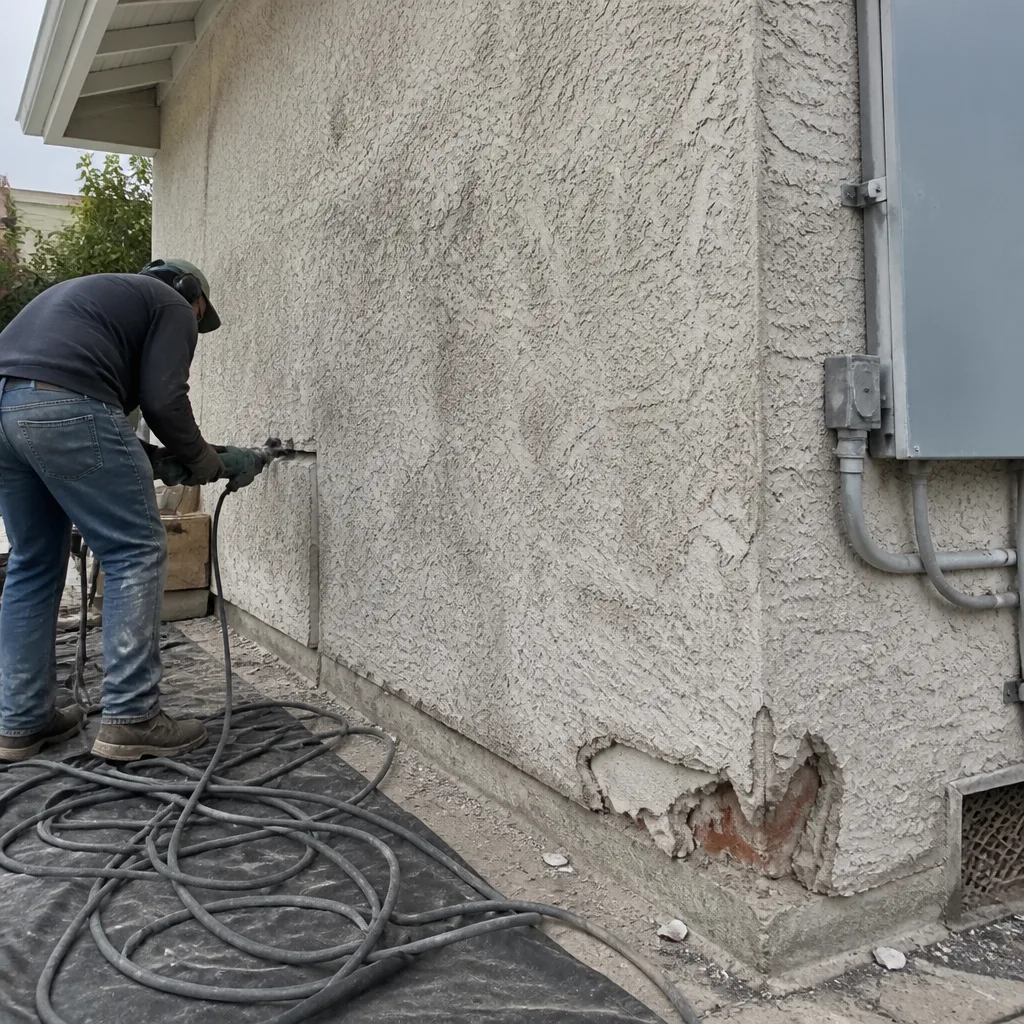 Before
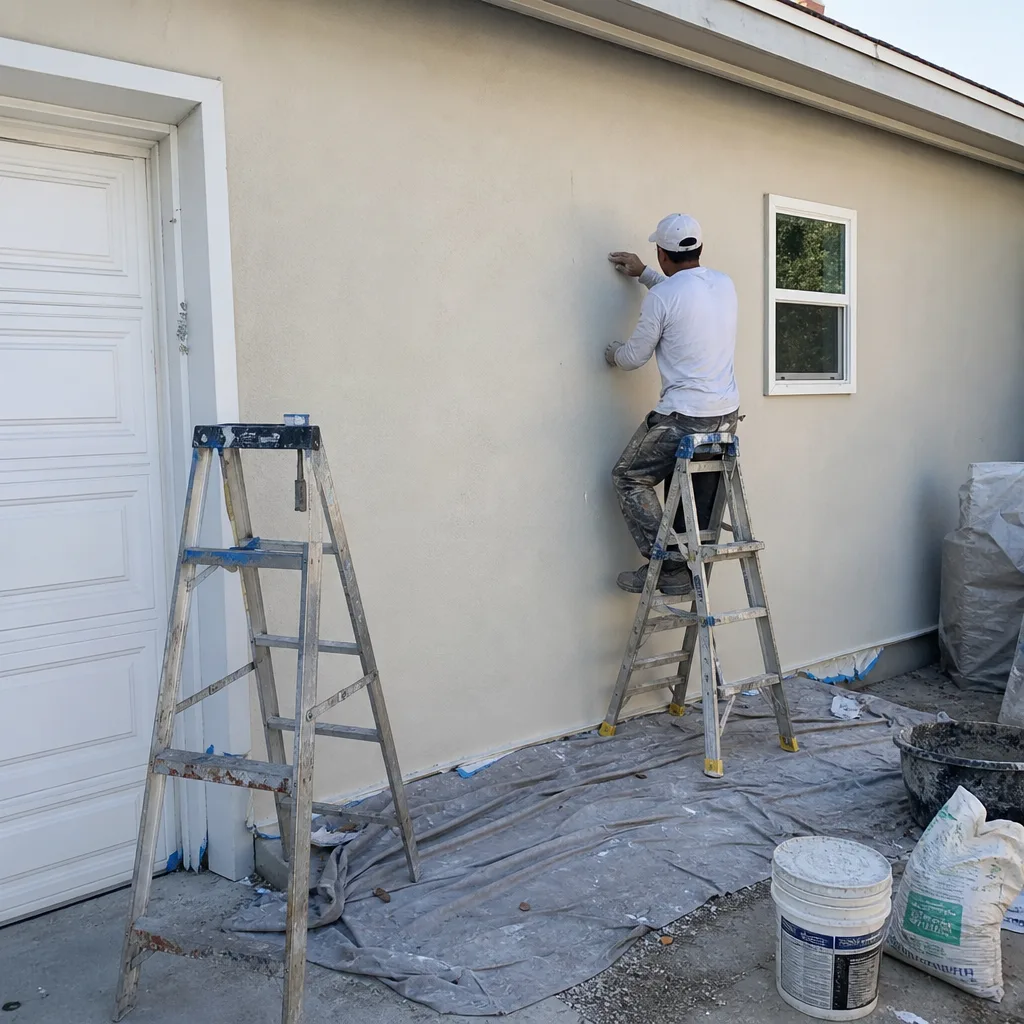 After
AfterAir Sealing: Why It Comes Before the Insulation, Every Time
Most insulation contractors in Burbank will blow insulation into an attic and call the job done. Envelope Insulation Co. will not do that. Air sealing of top plates, can lights, and attic penetrations is completed before any insulation is installed – not as an upsell, but as a prerequisite. There is a building-science reason for this sequence: insulation slows conductive heat transfer, but air leaks bypass insulation entirely. A house with R-49 blown-in insulation and a dozen unsealed can lights is still moving conditioned air out of the building every hour the AC runs.
The blower-door test – a pressurization reading that shows, in one number, how much air a building envelope is losing – is how that work gets documented. In Burbank’s hotter neighborhoods, particularly homes along the Olive corridor and north toward Glenoaks, we regularly see pre-sealing blower-door readings of 3,800 to 5,500 CFM50 – cubic feet per minute at 50 pascals of pressure, which is the standard measurement. After sealing and insulating, those numbers typically drop to 1,800 to 2,800 CFM50. That’s the performance change the homeowner paid for, documented in writing, not described in adjectives.
This is what the Blown-In Insulation in Burbank service includes as a matter of standard practice – and it’s why the job scope and the job price look the way they do.
How to Save on Blown-In Insulation in Burbank
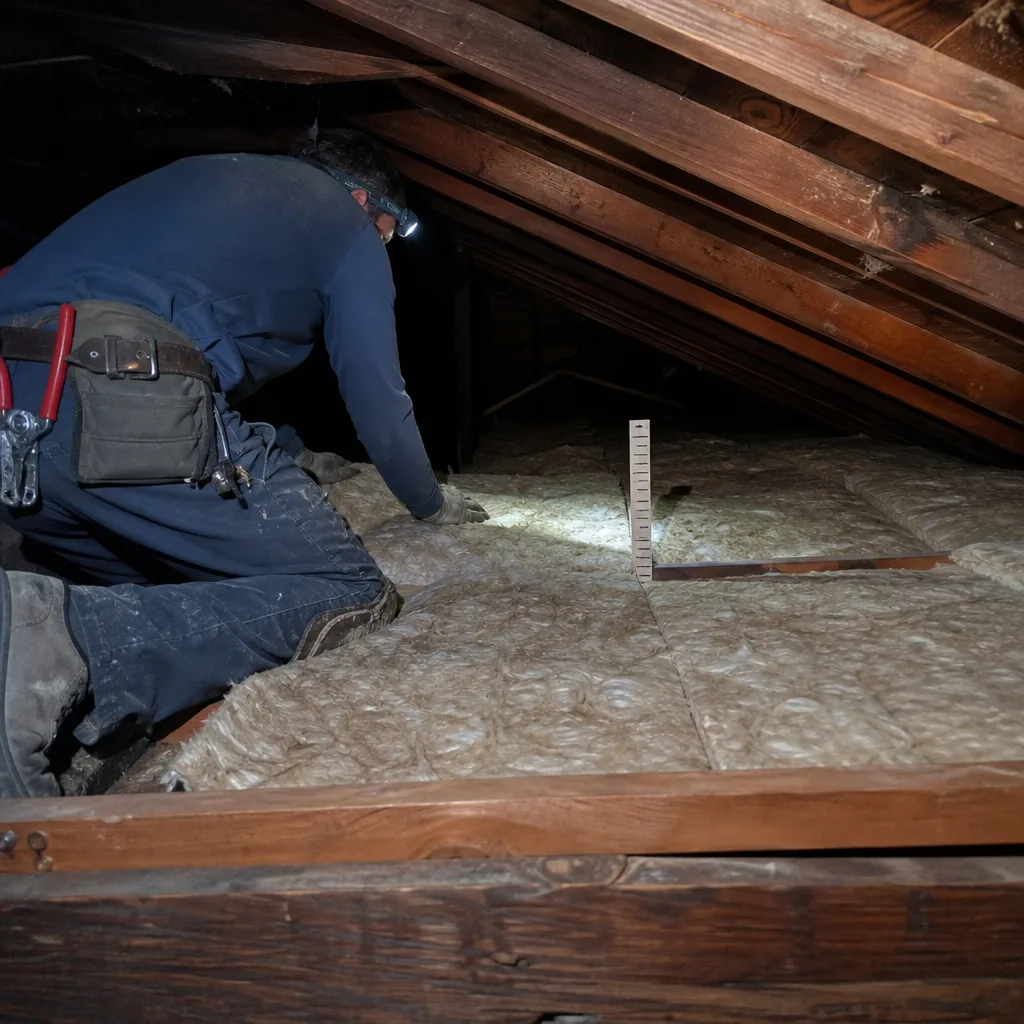
There are real ways to reduce the cost of a blown-in insulation project in Burbank. There are also false economies that end up costing more. Here’s the difference.
Legitimate ways to bring the cost down
- Schedule in fall or early spring. Demand for attic insulation in Burbank peaks in June through August when homeowners are dealing with heat bills and again in October when the first cool nights arrive. Jobs booked in February, March, or November tend to schedule faster and, in some years, carry more flexibility on scope adjustments.
- Combine insulation with air sealing in one mobilization. Air sealing and blown-in insulation done in the same visit cost less than scheduling them separately. The crew is already in the attic; the equipment is already set up. Splitting the work into two jobs adds a trip charge and restart time.
- Use a utility rebate if your home qualifies. Southern California Edison and SoCalGas both offer rebates for attic insulation upgrades that bring a home to R-38 or higher. The rebate amounts change year to year, but in 2025 and into 2026, SCE was paying $0.10 to $0.20 per square foot for qualifying cellulose and fiberglass installations. A 1,600-square-foot attic could see $160 to $320 back. Envelope can confirm eligibility and document the R-value change required for the rebate claim.
- Don’t skip removal when it’s needed. It sounds counterintuitive, but blowing new insulation over contaminated or severely compressed old insulation is not a savings. The new material won’t achieve its rated R-value, the old contamination stays active, and the job typically needs to be redone within a few years. The removal cost now is less than the full job cost later.
- Get a second opinion on any written estimate. If you have a competing quote and something about the scope or the number doesn’t sit right, bring it to Envelope. Under the Haven Standard, Wes Okafor will review it with you at no charge. That’s not a sales tactic – it’s a factual read of what the other contractor wrote and what it does or doesn’t include.
What not to cut
Skipping the blower-door test on a home that’s getting air sealing removes the only objective measure of whether the sealing work was effective. Skipping air sealing entirely and just adding blown-in insulation is the single most common mistake on Burbank attic jobs – and it’s the reason some homeowners are back on the phone six months later wondering why their AC bill didn’t change. The insulation is doing its part. The air is still moving through the gaps.
For a written price specific to your Burbank address, call (213) 816-1699. There is no obligation, no callback window measured in business days, and no “call for pricing” runaround – the estimate is written, itemized, and handed to you before any decision is made.
Burbank Permit Requirements for Blown-In Insulation
Most blown-in insulation projects in Burbank do not require a building permit when the work is confined to the attic and does not involve structural or electrical modifications. However, if the project includes removal of existing insulation combined with attic reconstruction, or if it’s part of a larger permitted remodel, the City of Burbank Building Division may require documentation of R-value compliance with California Title 24 Part 6 energy standards.
Title 24 sets the attic insulation minimum at R-38 for Climate Zone 9, which covers Burbank. Any permitted work that triggers an energy inspection – a bathroom remodel, a new HVAC system, a room addition – will typically require the attic insulation to meet or exceed that standard. A Documented Photo Record of the installed depth and a material data sheet confirming the installed R-value per inch is exactly the kind of paperwork that satisfies a city inspector’s request. Every Envelope job produces that record as a standard deliverable, not something you have to ask for separately.
If you’re unsure whether your project triggers a permit requirement, the City of Burbank Building Division at 150 N. Third Street can confirm in a five-minute call. It’s worth the call before work starts rather than after.
Cellulose vs. Fiberglass Blown-In: The Burbank-Specific Answer
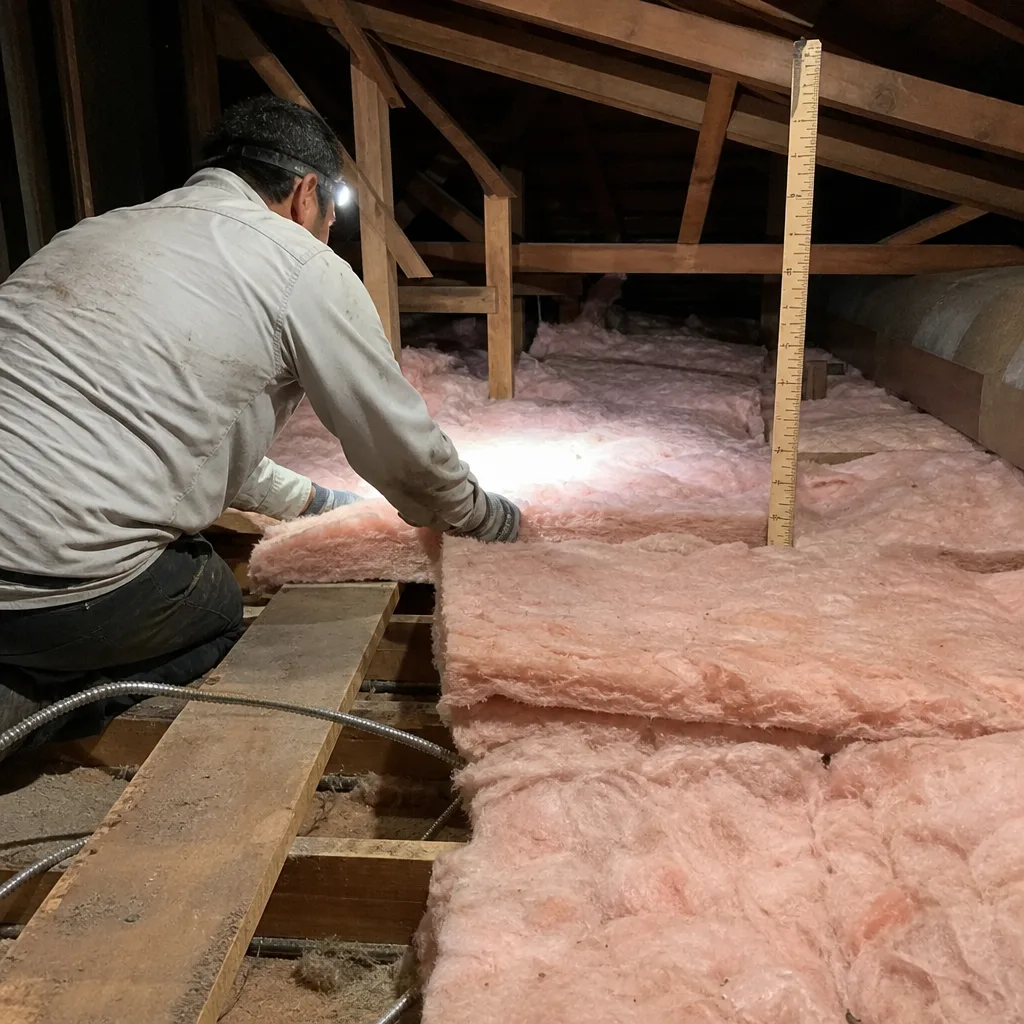
This question comes up on almost every Burbank estimate, and the answer is not the same for every house. Here’s how the decision actually gets made in the field.
Cellulose (GreenFiber, Knauf)
Cellulose is the right call for most Burbank attic retrofits. It’s denser than fiberglass loose-fill, which means it fills irregular framing cavities – the kind common in Burbank’s older craftsman and ranch construction – more completely. It also has a slightly higher R-value per inch, which matters when attic height is limited. The borate treatment provides a meaningful resistance to pests and mold.
The one situation where cellulose is not the first choice: attics with a documented moisture problem or active rodent damage. Cellulose holds moisture longer than fiberglass when it gets wet, and in a Burbank attic that has seen roof leaks or condensation issues near HVAC equipment, wet cellulose is a slow-building problem.
Fiberglass Loose-Fill (Owens Corning, Johns Manville)
Fiberglass loose-fill costs slightly more per square foot but doesn’t absorb water and doesn’t compress as quickly under foot traffic. For Burbank homes that have seen repeated HVAC service calls requiring attic access – or homes where the roof has had ongoing leak repairs – fiberglass is the more durable choice. It also performs well in homes near the Verdugo foothills where morning condensation from temperature swings can be more pronounced.
The installed R-value per inch is slightly lower than cellulose, which means achieving R-49 requires more depth. In a low-pitch attic, that occasionally creates a constraint at the eave baffles. A written job scope from Envelope will note this before work starts and will specify the solution – typically a deeper baffle or a localized depth reduction at the eave perimeter with a compensating increase toward the ridge.
The 9,000-Home Track Record: What It Means for Your Burbank Job
Since 2016, Envelope Insulation Co. has completed work on more than 9,000 homes – every one of them with a written price before work started and a Documented Photo Record when the crew left. That volume means the estimating is not guesswork. When Wes Okafor looks at a 1,550-square-foot ranch on Keystone Street in Burbank’s Magnolia Park neighborhood, the price range comes from a real dataset of similar homes in similar neighborhoods with similar attic configurations, not from a national cost calculator.
The 365-Day Done Right Promise applies to every job. If the installed depth is wrong, if the blower-door numbers don’t reflect the scope of the sealing work, if a photo record shows something that wasn’t addressed – it gets made right. That promise is in writing before the crew arrives.
More detail on the full service line and how the process works is on the home page, including the complete list of services covered under the Haven Standard.
FAQs: Blown-In Insulation Cost in Burbank
How much does blown-in insulation cost in Burbank, CA in 2026?
Most Burbank attic jobs run between $1,800 and $4,200 depending on square footage, the R-value being installed, and whether existing insulation needs to come out first. A 1,600-square-foot attic brought from a depleted R-8 to a full R-49 with cellulose, including air sealing of can lights and top-plate penetrations, typically runs $2,600 to $3,400 as a complete job. For a written price specific to your home’s address and attic configuration, call (213) 816-1699 – the estimate is itemized and written, no obligation.
Is it cheaper to add blown-in insulation on top of what’s already there, or start fresh?
Adding on top is less expensive when the existing insulation is clean, uncontaminated, and still performing at R-11 or higher. In Burbank homes built before 1980, that’s often not the case – the original batts are compressed, contaminated from years of pest activity, or simply too thin to support a code-compliant blown-in layer on top. Removal runs $900 to $2,200 for most Burbank attic sizes. Blowing over compromised material produces a finished R-value lower than what the job is designed to deliver, which is why Envelope won’t do it. The written scope will state clearly which approach applies to your attic and why.
How long does a blown-in insulation job take in Burbank?
A straightforward attic blow on a 1,400 to 1,800 square foot Burbank home takes 4 to 6 hours from crew arrival to documented close – including air sealing. Larger attics with complex framing, significant can-light penetrations, or old insulation removal can run 8 to 10 hours. Jobs that include a blower-door test add roughly 45 to 60 minutes for setup, measurement, and documentation. The written scope delivered before work starts will include a realistic time estimate for your specific job.
Does Burbank require a permit for blown-in attic insulation?
In most cases, no – a standalone attic insulation retrofit in Burbank does not require a building permit. The exception is when the project is part of a larger permitted scope (a remodel, new HVAC, room addition) that triggers a Title 24 energy compliance review. In those cases, California Energy Code requires attic insulation to meet a minimum of R-38 for Burbank’s Climate Zone 9, and documentation of the installed R-value will be needed for inspection. The Documented Photo Record and material data sheets Envelope provides on every job satisfy that requirement. If you’re uncertain whether your project needs a permit, confirm with the Burbank Building Division before scheduling work.
Can blown-in insulation actually lower my energy bills in Burbank’s climate?
Yes, and the blower-door numbers are the honest way to quantify how much. Burbank’s inland valley location produces summer cooling loads that are significantly higher than coastal LA – consistent 95-to-105-degree afternoons from July through September create sustained thermal pressure on an under-insulated attic. Homes we’ve worked on in the Magnolia Park and Rancho neighborhoods have recorded pre-sealing blower-door readings of 4,000 to 5,500 CFM50 dropping to 2,000 to 2,800 CFM50 after air sealing and blown-in installation. That’s a 40-to-55 percent reduction in measured air leakage. Southern California Edison’s own modeling puts the average annual savings for that level of improvement at $280 to $520 per year for a 1,500-to-2,000 square foot Burbank home, depending on current energy rates and HVAC efficiency. Call (213) 816-1699 to get a written estimate that includes the documented baseline measurement your home is starting from.
What’s included in Envelope’s blown-in insulation price?
The written price covers: attic air sealing (top plates, can lights, penetrations – completed before insulation), blown-in material to the specified R-value, all labor and equipment, a Documented Photo Record of the finished installation, and – on applicable jobs – before-and-after blower-door readings. The 365-Day Done Right Promise applies in writing. There is no separate “documentation fee” and no charge for the second-opinion review if you come to us with a competing quote. What’s on the written scope is what you pay; nothing is added after the job starts.
Written by Wes Okafor, Owner at Envelope Insulation Co. (operating as Topside Attic Insulation Burbank), serving Burbank since 2016. Pricing reflects the Burbank, CA market as of 2026 based on jobs completed in Burbank and surrounding neighborhoods. Topside Attic Insulation Burbank offers free, written estimates – call (213) 816-1699.
What Our Customers Say
"They photographed rodent damage in the old insulation that we had no idea about, and priced the exclusion work separately so we could decide."
- Harriet N."Fixed price, clean work, and they hauled the old material away as agreed."
- Todd M."The winter gas bill dropped by about a third. They had estimated a quarter, so they under-promised."
- Genevieve R.