
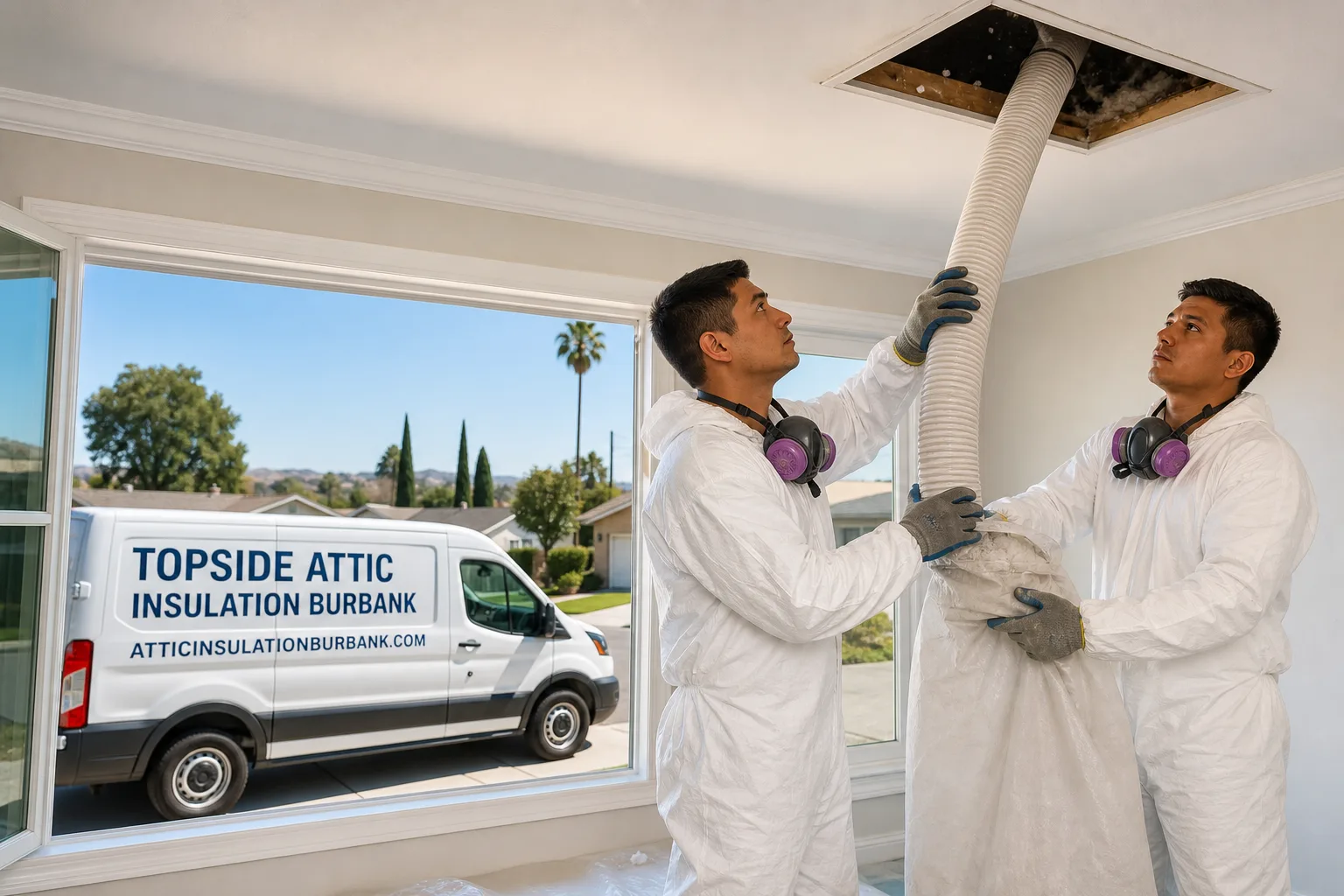
Fast, Reliable Attic Insulation Across Los Angeles
Most attic insulation jobs in Los Angeles run between $2,800 and $6,500 depending on attic size, existing material condition, and whether air sealing is needed first. We dispatch crews from our Los Angeles office and typically schedule inspections within 24-48 hours across the metro area. Call (213) 816-1699 for a written price before any work starts.
We’ve sealed and insulated more than 9,000 homes since 2016, and the Los Angeles jobs stick with us. This is one city with two completely different climates. The San Fernando Valley - Van Nuys, Reseda, Woodland Hills - routinely hits 105-110°F in summer while coastal neighborhoods like Santa Monica and Venice sit at 75°F. Both sides are packed with 1950s-60s tract homes built before California’s 1978 energy code existed. That pre-code housing stock was never designed to handle the heat loads we see now. Valley homes in particular are catastrophically underinsulated relative to their actual attic temperatures, which regularly exceed 150°F in July.
Our Attic Insulation team treats every Los Angeles job as a building-envelope problem first. We air-seal before we insulate, always. Then we document the result.
Why Topside Attic Insulation Burbank Is Los Angeles’s Preferred Attic Insulation Company
We operate under The Haven Standard, which means a written price before any work starts and a Documented Photo Record when the crew leaves. No exceptions. Our Los Angeles customers receive before-and-after blower-door numbers on applicable jobs - a pressurization reading that shows, in one figure, how much conditioned air the home was losing before and after the work.
Our technicians are background-checked and uniformed. Calls are answered by a live person, 24/7. No voicemail loops, no callback windows measured in business days. We coordinate dispatch and scheduling from our Los Angeles office, so crews serve Los Angeles locally without the delays that come from routing teams from distant counties.
We publish our 365-Day Done Right Promise on every job: if it’s not done right, we make it right. Backed by a written scope and written warranty delivered before anyone lifts a tool. We also offer a Free Second Opinion on any written estimate - bring us a competing quote and we’ll read it with you.
Our Attic Insulation Services in Los Angeles
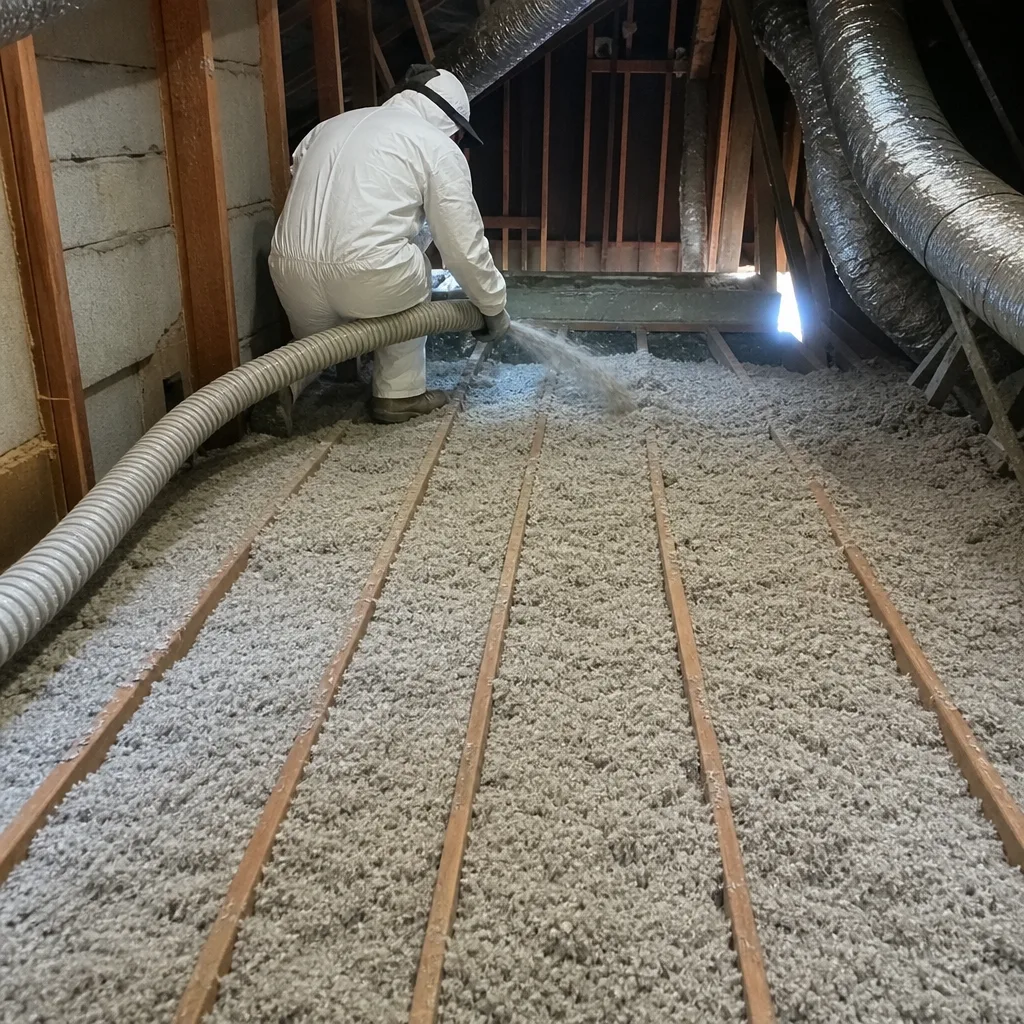
Blown-In Attic Insulation
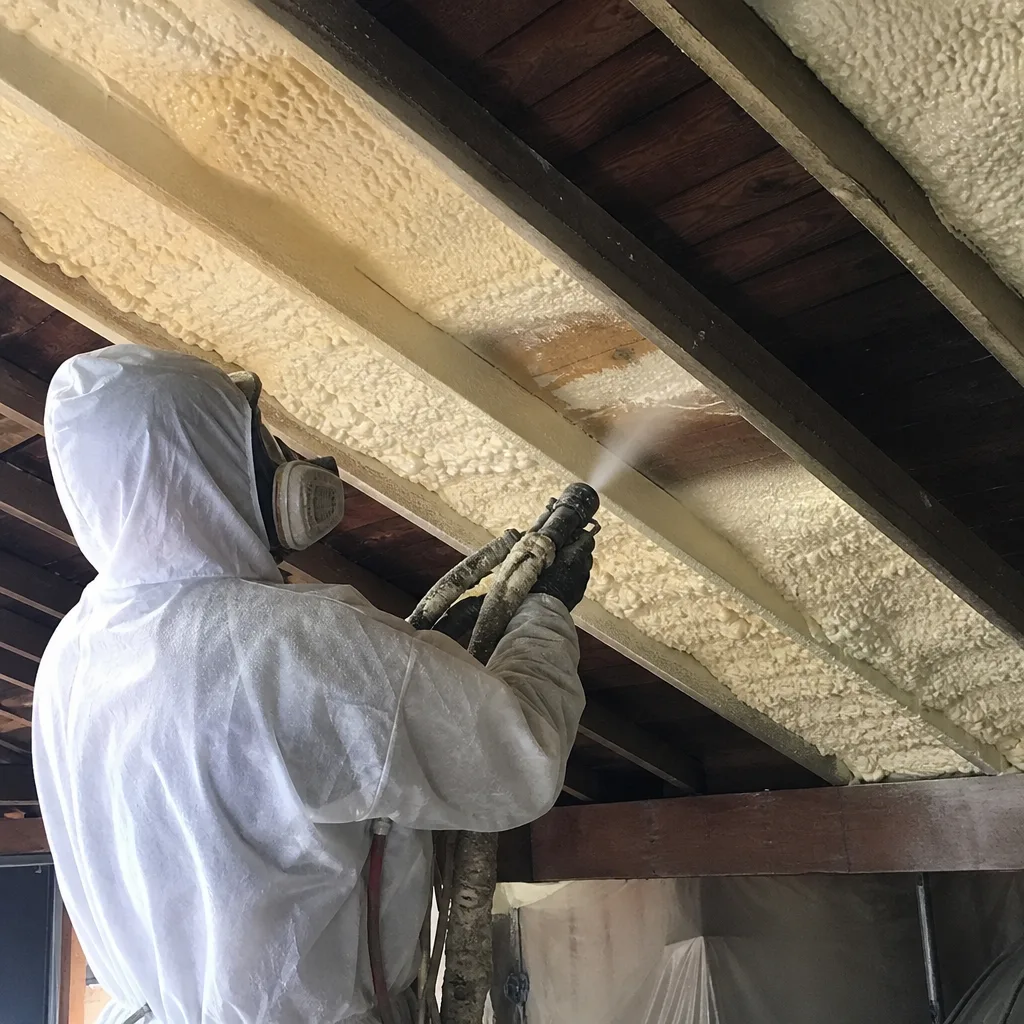
Blown-in insulation - loose-fill cellulose or fiberglass blown through a hose to fill irregular attic cavities - is our most common Los Angeles service. It works especially well in the pre-war Craftsman bungalows and Spanish Colonial Revival homes found in Silver Lake, Highland Park, and Echo Park, where plaster walls over wood lath make other retrofit methods impractical. For newer homes, blown-in covers the complex geometry of truss-framed attics with fewer gaps than batts. We source GreenFiber cellulose and Owens Corning fiberglass, installed to a measured depth with density verification. In the Valley, we typically specify higher R-values than coastal jobs because the cooling load dominates.
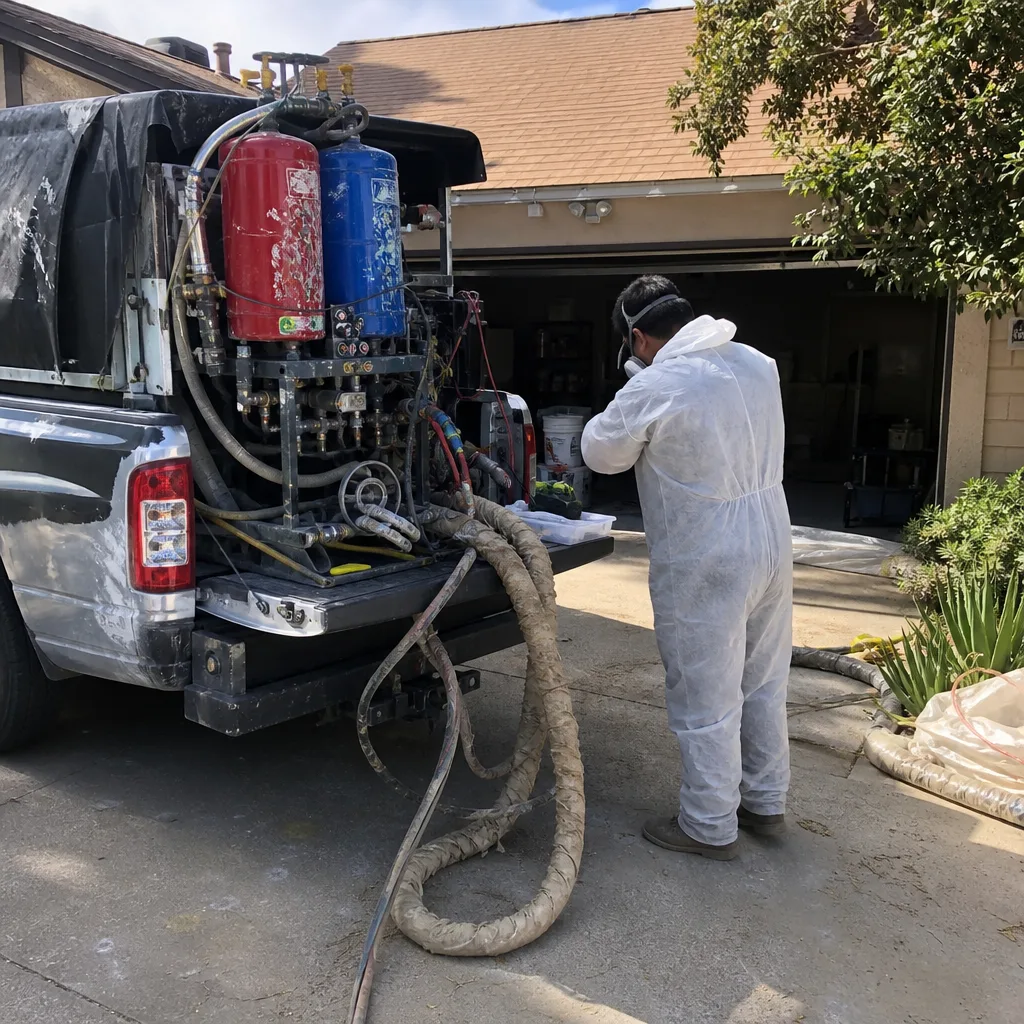
Attic Batt Insulation
Fiberglass or mineral wool batts - pre-cut sheets fitted between ceiling joists - still make sense for Los Angeles homes with regular, unobstructed attic framing and adequate working space. We see this most often in post-1978 construction or in room additions where the attic is still open. Batts require precise cutting around electrical penetrations and baffles; compressed batts lose R-value fast. We don’t install batts over unsealed air leaks. Haven Standard Clause 1: air sealing first, then insulation.
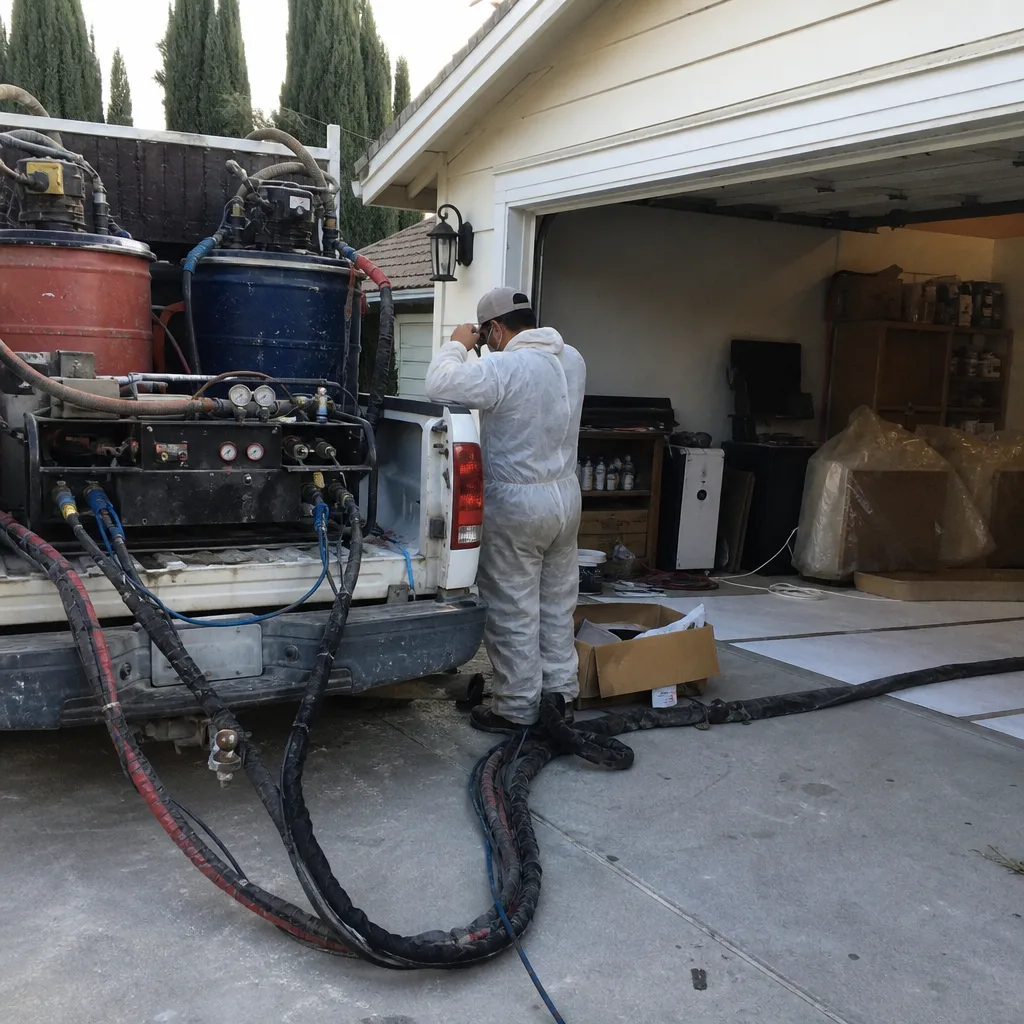
Attic Insulation Top-Up
Many Los Angeles homes have some existing insulation that has simply settled or compressed over decades. A top-up adds new material over the old, but only after we assess what’s there. In a 1962 stucco tract home in Reseda, our crew found the original attic insulation collapsed to R-11, with rusted staples and corroded vent clips along the coastal-influenced side of the attic. We removed the compacted material, air-sealed the ceiling plane, installed GreenFiber blown-in insulation to a high R-value, and added Owens Corning Raft-R-Mate baffles to keep the intake path clear before the homeowner replaced the HVAC. The homeowner reported the house held temperature noticeably better during a 108°F Valley afternoon. Top-ups save cost when the existing material is dry, uncontaminated, and not compressed below R-19. We verify all three before recommending this path.
Attic Insulation Replacement
Replacement means full removal of existing material, air sealing of the entire ceiling plane, and installation of new insulation to a specified R-value. We recommend this for Los Angeles homes with water-damaged, rodent-contaminated, or severely compressed original insulation - common in the 1940s-1970s stucco tracts built across the San Fernando Valley by developers like Marlow-Burns, most constructed with minimal attic insulation because no state energy code existed until 1978. Replacement also lets us correct decades of DIY additions, improperly installed vapor barriers, and blocked ventilation paths. Every replacement job includes a written scope, air-sealing detail, and post-work blower-door test where applicable.
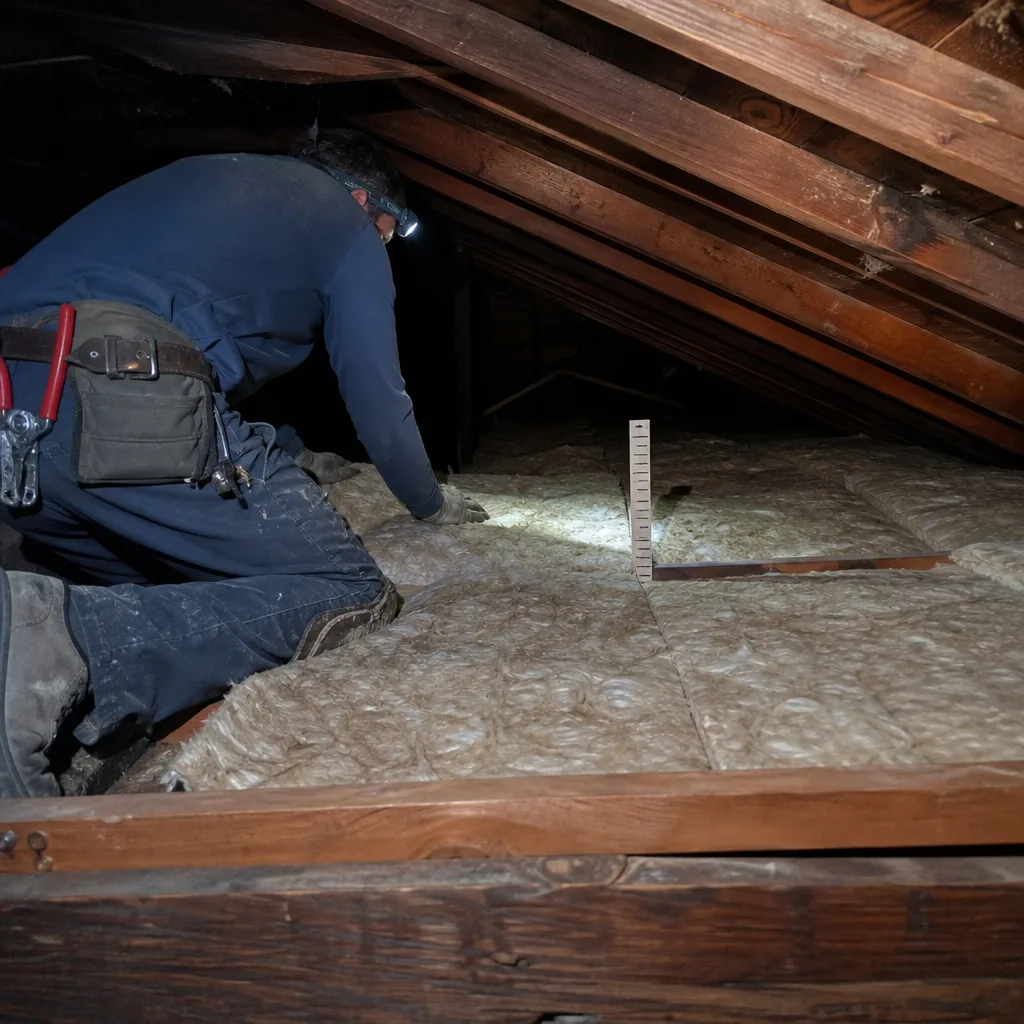
Attic Baffles & Ventilation Prep
Attic baffles - also called vent chutes or rafter vents - maintain the airflow path from soffit vents up to ridge or gable vents, preventing new insulation from blocking intake vents. In Los Angeles’s inland heat-island neighborhoods, this matters enormously. An attic exceeding 150°F with dead air at the eaves is a furnace above your ceiling. We install Owens Corning Raft-R-Mate or equivalent baffles as standard on any job where soffit ventilation exists, and we flag homes with inadequate vent area for correction. Poor ventilation is a leading cause of the 25-30% cooling loss we see through attic ductwork in 1960s-era Valley homes.
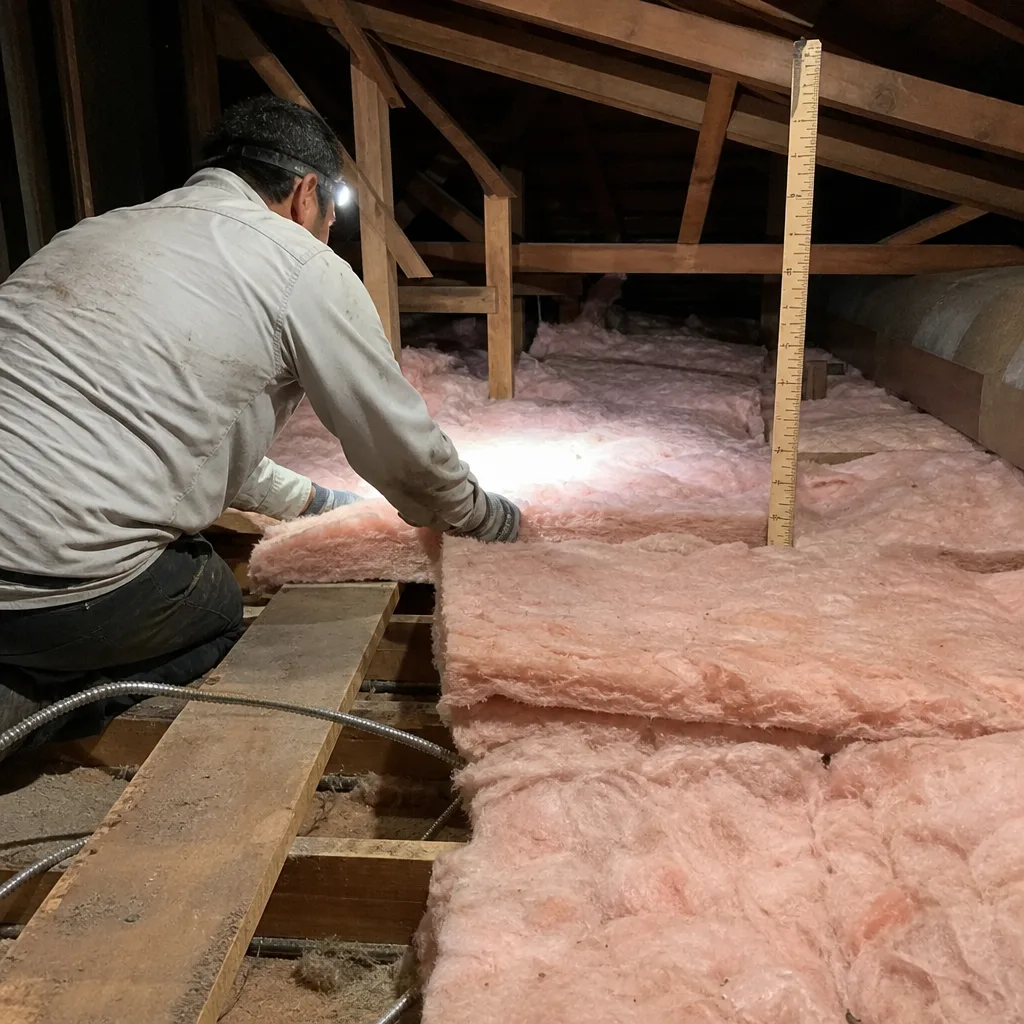
What happens when you call
- 1
A real person answersNo phone trees - you reach a local pro.
- 2
You get an upfront price rangeHonest numbers before anyone is dispatched.
- 3
A background-checked tech heads outLicensed & insured, dispatched right away.
- 4
You approve before work beginsNothing starts until you say go.
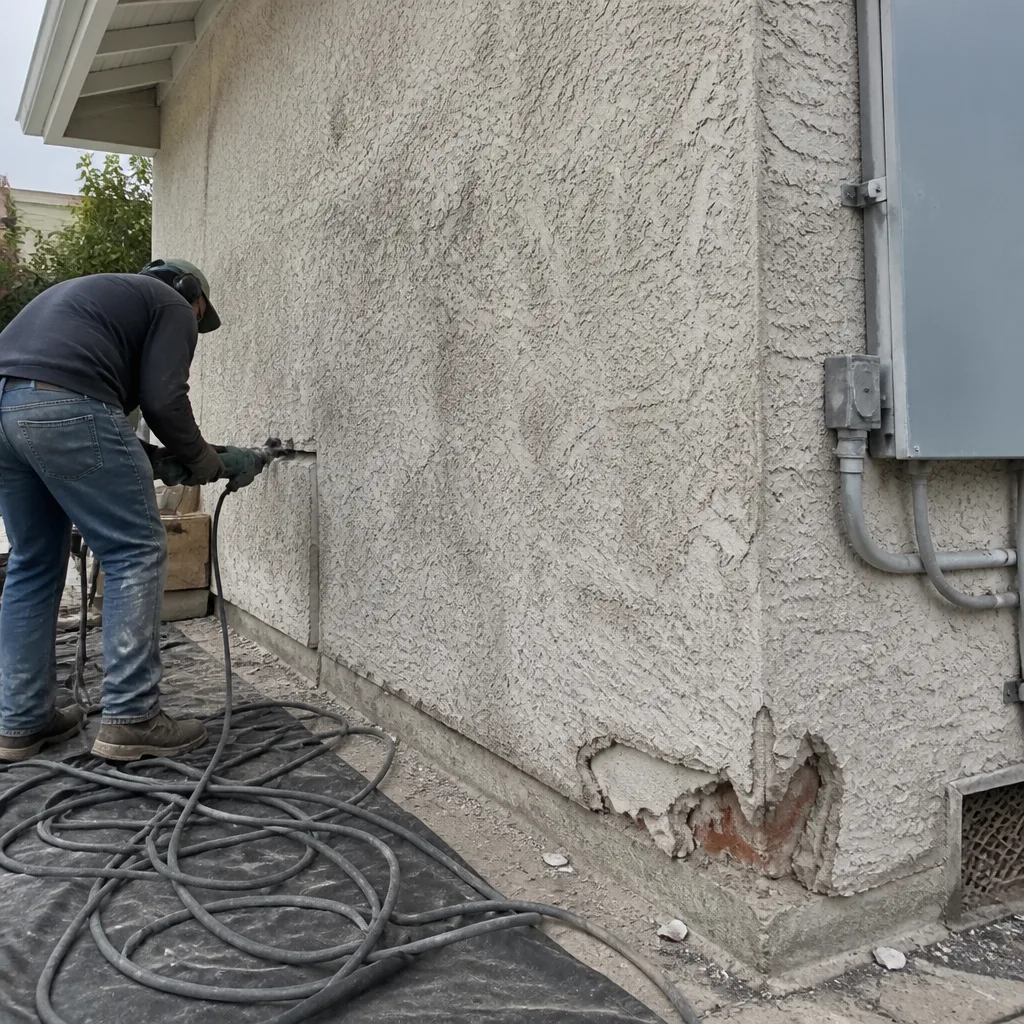 Before
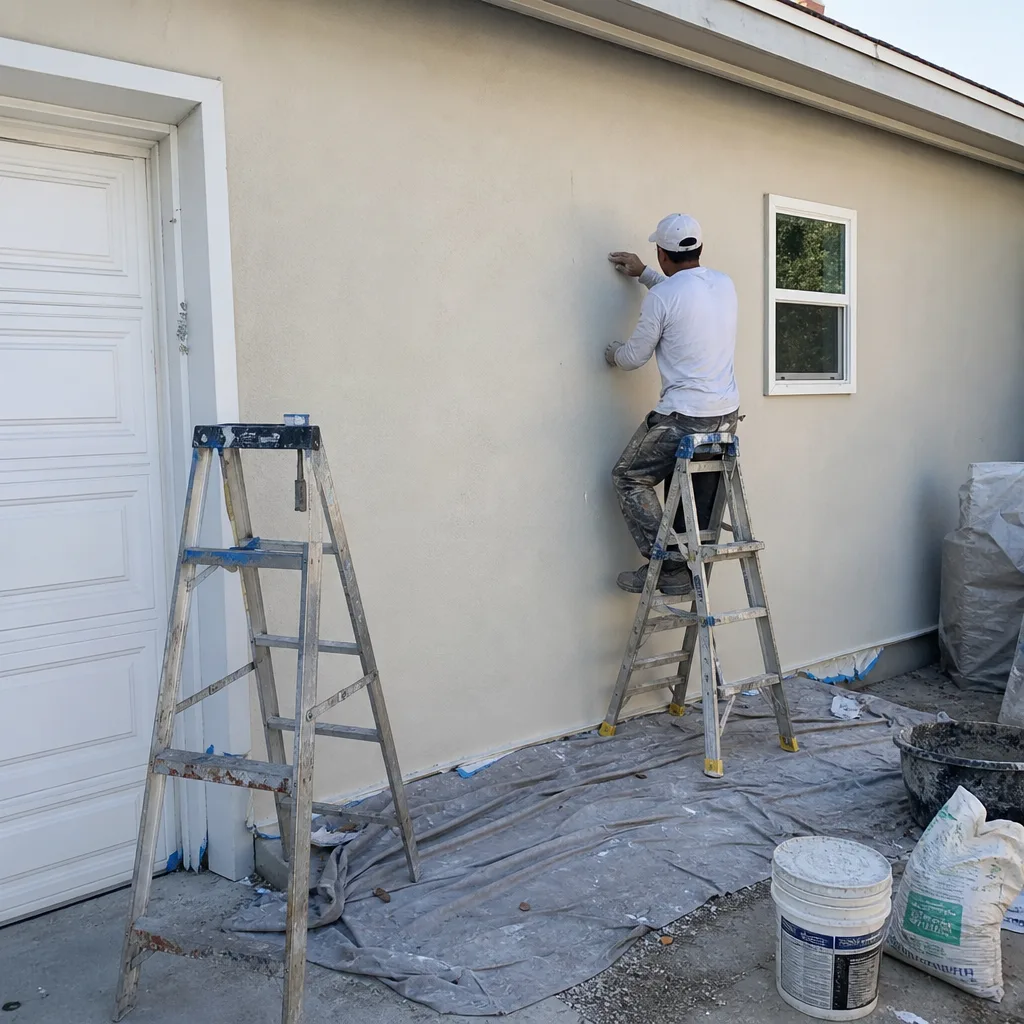 After
AfterTrusted Brands We Service in Los Angeles
We source materials from Owens Corning, Johns Manville, Knauf, GreenFiber, and other major manufacturers - no proprietary product lock-in that limits your options. For Los Angeles homes, we stock GreenFiber cellulose and Owens Corning fiberglass loose-fill locally, plus Owens Corning Raft-R-Mate baffles for ventilation prep. This means faster turnaround on standard jobs and no waiting on special orders for common R-values. If your home has specific requirements - fire-rated assemblies near the Wildland-Urban Interface, for instance, or formaldehyde-free products for sensitive occupants - we specify accordingly and document the substitution in your written scope.
Common Attic Insulation Problems We See in Los Angeles Homes
- Compressed 1950s-60s mineral wool or fiberglass batts that have settled to R-11 or less under 150°F+ inland Valley attic heat. The original material was marginal when installed; decades of thermal cycling and gravity leave ceilings with almost no usable thermal resistance. We find this in Marlow-Burns tracts from Reseda to Van Nuys.
- Salt-air corrosion at coastal-edge Los Angeles homes weakening staples, vent clips, and nearby mechanical fasteners. Santa Monica, Venice, and coastal Palms see insulation sag, shift, or detach from the roof deck years faster than inland neighborhoods. The corrosion isn’t dramatic - it’s incremental, until the material simply isn’t where it was installed.
- Radiant heat gain through unshaded roof decks with poor attic ventilation, which turns the attic into a furnace above the HVAC system. This is the driver behind that 25-30% cooling loss through attic ductwork. The ducts are fine; they’re just running through a 150°F attic with no radiant barrier and insufficient insulation.
- Insulation installed over unsealed air leaks, particularly at top plates, can lights, and plumbing penetrations. Blown-in or batt insulation over a leaky ceiling plane is a filter, not a barrier. Conditioned air escapes, insulation loads with dust and moisture, and performance drops within seasons. We air-seal first, always.
Pricing for Attic Insulation in Los Angeles, CA
A typical blown-in attic insulation job in Los Angeles runs $2,800-$4,800 for a 1,200-1,800 square foot home with accessible attic space and no removal required. Attic insulation replacement, including removal of existing material, air sealing, and new blown-in insulation to R-38 or R-49, typically runs $4,200-$6,500 for the same footprint. Attic insulation top-up jobs, where existing material is viable, generally fall between $1,800-$3,200. Attic baffles and ventilation prep add $400-$800 depending on linear footage of soffit.
What moves the number: attic square footage, existing material condition, accessibility (cathedral ceilings or tight crawl-access attics take longer), whether air sealing is extensive, and R-value target. Valley homes often specify R-49 where coastal homes at R-38 perform equivalently due to lower temperature differential. We provide a flat, written price before any work starts - Haven Standard Clause 1 - and we offer a Free Second Opinion on any written estimate you bring us. Call (213) 816-1699 for an exact quote; estimates are free.
We Also Serve Cities Near Los Angeles
Our crews work throughout the metro area. We regularly complete Attic Insulation in Los Angeles and surrounding communities including Culver City, Alhambra, South Pasadena, and West Hollywood. Dispatch is coordinated from our Los Angeles office, so response times stay short across this service area.
Serving Los Angeles, CA - Our Local Coverage Area
We’re based in the Los Angeles area and know this community well. Use the map below to see our service coverage - if you’re nearby, we can almost certainly help.
FAQs - Attic Insulation in Los Angeles
The Valley’s inland heat island pushes attic temperatures past 150°F in July, while Santa Monica’s marine layer keeps attics closer to ambient. That 50-70°F difference in attic temperature means the same R-value performs completely differently - Valley homes lose far more cooling energy through the ceiling, and underinsulated Valley attics force HVAC systems to condition air against a furnace above. Coastal homes still benefit from insulation, but the priority and R-value target shift. Call (213) 816-1699 and we’ll specify for your zip code.
No. Most were built with R-11 or less, or nothing at all, because California had no energy code until 1978. The original material, where present, has typically compressed or degraded under decades of thermal cycling. These homes were designed for a climate that no longer exists, especially in the Valley. We assess what’s there, document it with photos, and specify replacement or top-up based on measured depth and condition. Call (213) 816-1699 for a free assessment.
Salt air corrodes the metal components that hold insulation in place - staples, vent clips, fasteners for mechanical equipment - years faster than inland environments. The insulation itself doesn’t corrode, but it sags, shifts, or detaches when its supports fail. We find this pattern in Santa Monica, Venice, and coastal Palms. Our crews inspect all attachment hardware during assessment and replace corroded fasteners before installing new material. Call (213) 816-1699 if you’re near the coast and haven’t had your attic inspected recently.
Yes, if the existing material is dry, uncontaminated, and not compressed below R-19. We verify all three conditions during inspection. A top-up adds new blown-in insulation over viable existing material, saving removal and disposal cost. If the original is rodent-contaminated, water-stained, or compressed to R-11 or less - common in 1960s Valley tracts - we recommend full replacement with air sealing first. We’ll show you photos and give you a written price for either path. Call (213) 816-1699 for an exact quote; estimates are free.
Yes. California’s Title 24 energy code mandates insulation upgrades when permits are pulled for HVAC replacement or room additions. This bundles insulation and mechanical work far more commonly in Los Angeles than in states without an equivalent code trigger. We coordinate with HVAC contractors on these jobs, performing air sealing and insulation before the mechanical crew arrives so the new system operates against a properly conditioned envelope. The blower-door numbers we publish show the result. Call (213) 816-1699 if you’re planning HVAC replacement; we can sequence the work and provide a written scope.
Written by Wes Okafor, Owner at Topside Attic Insulation Burbank, serving Los Angeles since 2016.