
Attic Baffles & Ventilation Prep in Burbank, CA
Attic baffles – also called rafter vents or insulation baffles – are channels installed at the eave of each rafter bay to keep a clear air path from your soffit vents up to the ridge. In Burbank, where summer attic temperatures routinely exceed 150°F and the Santa Ana wind patterns drive hot, dry air into every gap, skipping this step before blowing in insulation is one of the most common reasons a newly insulated attic still runs a high cooling bill. Ventilation prep means confirming every soffit opening is clear, every baffle is seated correctly, and airflow can move from eave to ridge before a single bag of insulation goes in.
At Topside Attic Insulation Burbank, ventilation prep is not an add-on. It is part of the job sequence. We do not blow insulation over a blocked or unvented attic floor – the work is completed in the right order, every time. Our Attic Insulation in Burbank service page explains the full scope of what that includes. To schedule a free estimate or ask a question, call us at (213) 816-1699 – a live person answers, no voicemail.
Under The Haven Standard, every job starts with a written price and ends with a documented photo record. Wes Okafor has led the Envelope Insulation Co. team through more than 9,000 homes sealed and insulated since 2016, and the sequence has never changed: prep the ventilation path, seal the air leaks, then add the insulation.
When You Need Attic Baffles & Ventilation Prep
Several conditions indicate that baffles are missing, blocked, or were never installed correctly. Any one of these warrants a closer look before new insulation goes in.
- Previous insulation covers the soffit vents. This is the most common finding in Burbank homes built before the mid-1980s. Blown-in or batt insulation settled toward the eaves over the decades and completely blocks the soffit intake, turning a ventilated attic into a sealed oven. In the Magnolia Park and Rancho area neighborhoods, we see this in roughly half the homes we inspect that were insulated prior to 1990.
- Attic surface temperatures above 150°F in July or August. Burbank sits inland from the coast, which means it does not get the marine layer cooling that parts of Los Angeles receive. Without a working cross-ventilation path from soffit to ridge, heat builds in the rafter bays and transfers directly into the living space below. A properly baffled attic with clear airflow can reduce peak attic temperature by 20-30°F compared to a blocked one.
- Ice dams are not a local concern, but moisture staining is. Burbank’s December-through-March rainy season can drive enough moisture into a poorly ventilated attic to cause wood staining, mold growth on the sheathing, and degraded insulation performance. If you see dark staining on rafters during an attic inspection, inadequate ventilation is a likely contributor.
- You’re replacing or topping off existing insulation. Any time new material is being added, the ventilation path should be confirmed first. Blowing Knauf EcoStar or GreenFiber cellulose over existing batts without checking baffle integrity means you could be burying the problem deeper.
- Your HVAC runs longer than it should for the square footage. When an HVAC technician cannot explain why a properly sized system is struggling, the attic is frequently the answer. Blocked soffit vents reduce the effectiveness of insulation by allowing heat to accumulate rather than exhaust – the R-value on paper does not match real-world performance.
- Your home was re-roofed in the last ten years without a ventilation inspection. Reroofing projects in Burbank sometimes leave soffit vents partially blocked by new fascia or soffit material. If no one checked airflow as part of that project, this is worth verifying now.
Our Attic Baffles & Ventilation Prep Process
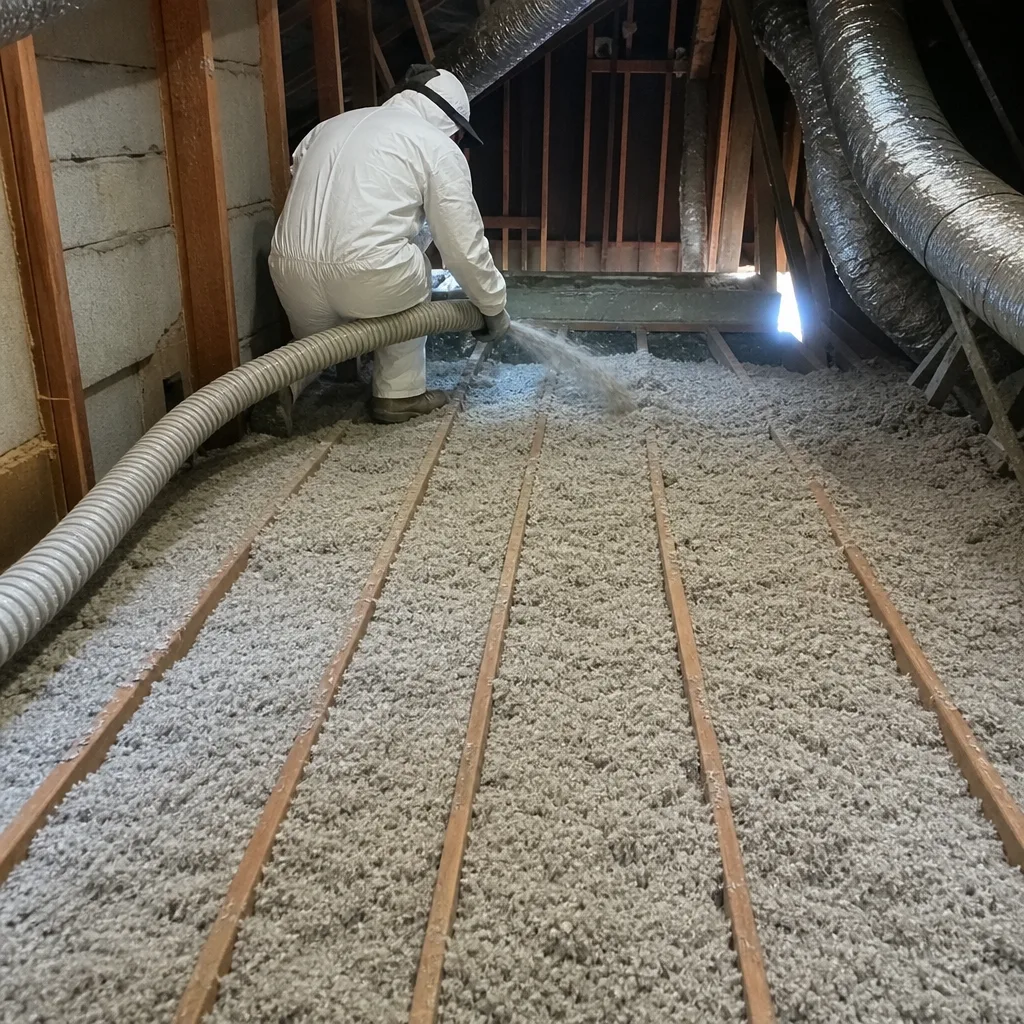
The sequence below describes exactly what happens on a baffle and ventilation prep job. Nothing is skipped to save time, and the written scope you receive before work starts reflects every step.
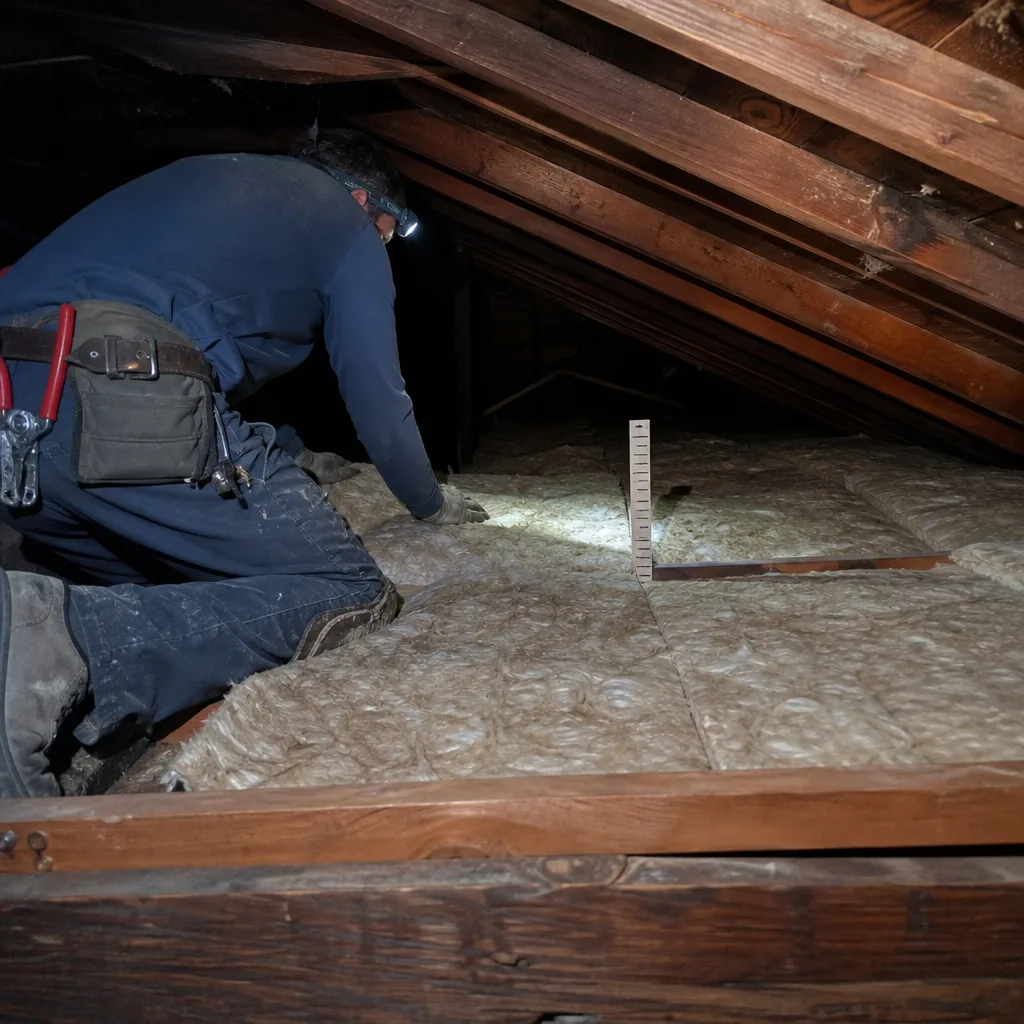
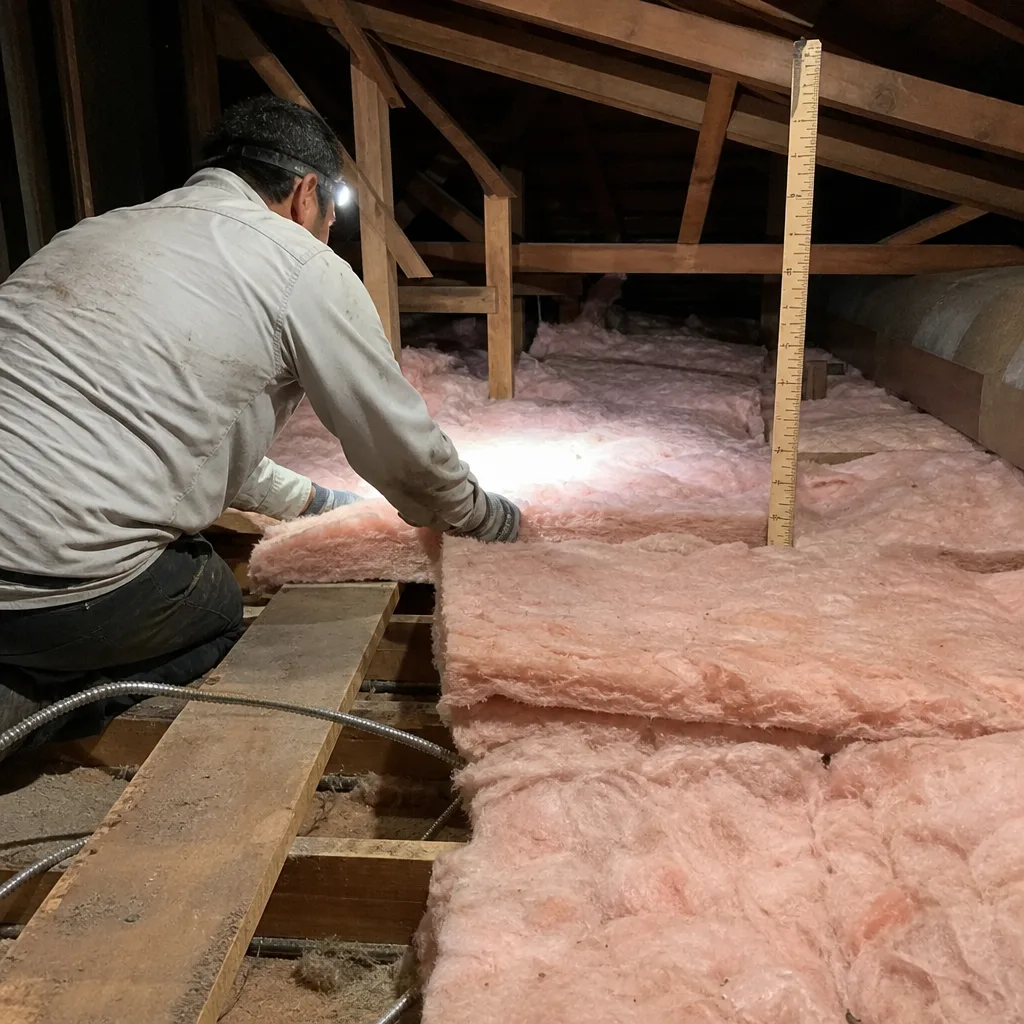
- Pre-work attic inspection with photo documentation. Before touching anything, the technician photographs the existing conditions at every rafter bay along the eave wall – blocked vents, compressed insulation, damaged or absent baffles, and any signs of moisture intrusion. You receive these photos as part of the Documented Photo Record included on every visit, so you can see the before condition with your own eyes rather than taking our word for it.
- Soffit vent clearance verification. Each soffit vent is checked from inside the attic. If existing insulation has settled into the vent opening, it is carefully cleared back so the full net free area of the vent is accessible. In Burbank homes with continuous soffit venting, we measure net free area against the square footage of attic floor to confirm the intake-to-exhaust ratio meets California Building Code requirements – currently a minimum 1:150 ratio in unconditioned attics without a Class I or II vapor retarder, or 1:300 with one.
- Baffle installation at each rafter bay. Owens Corning Raft-R-Mate baffles or equivalent polystyrene rafter vents are cut to fit and stapled into place at every rafter bay running from the eave to a point above the anticipated finished insulation depth. For a standard 16-inch on-center framing common in Burbank’s 1940s-1960s construction stock, this means a baffle in each bay along the full perimeter of the attic floor. Gaps at the edges are sealed with canned foam so the air channel stays intact and insulation cannot migrate into the vent path after installation.
- Ridge and exhaust vent confirmation. Intake airflow is only useful if there is a clear exhaust path at the ridge. We inspect ridge vents, gable vents, and any powered attic ventilators for blockage, damage, or sizing issues. A ridge vent covered by shingles from a sloppy roofing job, or a gable vent screen clogged with debris, effectively nullifies the baffle work below. If we find an exhaust problem, we document it and include the finding in your written report – even if resolving it falls outside our scope.
- Air sealing at top plates and penetrations – completed before insulation. Once the ventilation path is confirmed, we seal the attic floor: top plates, plumbing penetrations, electrical chases, recessed light housings, and any HVAC boot gaps. This is a hard prerequisite under our process. A blower-door test – a pressurization reading that shows, in one number, how much air the building envelope is losing – is run on applicable jobs so we have a before measurement. After sealing is complete, we run the test again. The two readings are documented and delivered to you.
- Post-work photo record and written closeout. When installation is done, the technician photographs the finished baffle installation, the cleared soffit vents, and the sealed attic floor. These photos are added to your job file and sent to you directly. The written closeout includes the blower-door readings where applicable, the materials used, and a confirmation that the 365-Day Done Right Promise applies to the completed work.
 Before
 After
AfterAttic Baffles & Ventilation Prep Pricing in Burbank
Ventilation prep and baffle installation in Burbank typically runs between $350 and $950 when performed as a standalone service. When completed as part of a full attic insulation job – which is the more common scenario – the prep cost is built into the overall project price and is not billed as a separate line item. Most full attic insulation projects in a Burbank home between 1,000 and 2,000 square feet of conditioned space run between $1,800 and $4,200 depending on access, existing insulation condition, and the depth of air sealing required.
Several factors move the number up or down for Burbank homes specifically:
- Rafter bay count and attic access. A hip-roof home with a low pitch and a single 24-by-30-inch hatch takes longer to baffle than a gable-roofed home with easy ridge access. Many homes in the Burbank Hills and Timberland Knolls areas have complex rooflines that add time.
- Existing insulation removal. If blown insulation has to be cleared from the eave area before baffles can be installed, that adds labor. Heavy, compacted fiberglass batts from a 1970s installation take longer to pull back than a light layer of cellulose.
- Depth of air sealing required. A home with fifteen recessed light penetrations and open top plates costs more to seal than one with four penetrations and fire-blocked framing. The pre-work inspection identifies the scope before we price the job – no surprises after the fact.
- Exhaust vent repair or addition. If the inspection reveals that the ridge vent is undersized or blocked and repair is within our scope, that adds to the total. We document the finding either way so you have the information in writing.
Under Haven Standard Clause 1, you receive a written price before any work starts – a flat price, a written scope, and a written warranty. If you have a written estimate from another contractor, bring it to us. We will read it with you as part of our Free Second Opinion offer and tell you exactly what it includes and what it does not.
To get a written price for your Burbank home, call (213) 816-1699. The estimate is free and does not require a commitment.
FAQs – Attic Baffles & Ventilation Prep
What is an attic baffle and why does it matter in Burbank?
An attic baffle is a rigid channel – usually polystyrene or cardboard – installed at the eave of each rafter bay to hold a clear air passage between the soffit intake and the ridge exhaust. In Burbank, attic air temperatures can exceed 150°F in summer without proper ventilation. When insulation blocks the soffit opening, that heat has nowhere to go except down into your living space. Baffles physically prevent insulation from drifting into the vent opening so the ventilation path stays open year after year. Without them, even a freshly insulated attic can underperform significantly within a few seasons as insulation settles. Call (213) 816-1699 for a free assessment of your current baffle situation – we can usually tell you what we’re looking at the same day we visit.
Can you just add insulation without installing baffles first?
We don’t. Adding insulation over an unvented or improperly baffled attic floor locks in the ventilation problem rather than solving it. The insulation performs at its rated R-value only when the attic space can exhaust the heat that accumulates above it. Blowing Attic Batt Insulation like GreenFiber cellulose or Owens Corning fiberglass over blocked soffits gives you a warmer attic, not a cooler house. More to the point, it is the wrong sequence – and under our process, ventilation prep is completed before any insulation is added, not after. If a written estimate you received from another contractor does not mention baffles or soffit clearing, that is worth asking about before the crew shows up.
How do I know if my Burbank home’s soffit vents are actually clear?
The clearest sign from inside the attic is whether you can see daylight through the soffit vents when you look toward the eave from the attic floor. If the eave area is dark and you can feel little to no air movement on a breezy day, the vents are likely blocked. From outside, blocked soffits sometimes show as paint peeling near the fascia or as a visible compression of the soffit material where insulation has pressed outward. The only reliable way to confirm it is an attic inspection with a light and a camera. We photograph every rafter bay during the pre-work visit so you can see the condition before any work begins. Call (213) 816-1699 to schedule that inspection.
Does California building code require attic baffles?
California Building Code Section R806 requires a minimum ventilation ratio of 1:150 between net free vent area and attic floor area (or 1:300 under specific conditions). Baffles are not named as a required product, but maintaining the required airflow path from soffit to ridge is impossible in most Burbank homes if insulation is allowed to fill the rafter bays at the eave – which is exactly what happens without baffles. In practice, building inspectors in the City of Burbank expect to see a clear ventilation channel when new insulation is added, and the permit documentation for insulation work will reflect whether the ventilation ratio has been maintained. We pull permits where required and include ventilation compliance in the written scope so there are no open questions after the job closes.
Burbank Homes We Work In Most Often
The homes we most frequently prep for ventilation work in Burbank fall into two broad categories: the post-war stucco construction in Magnolia Park, Rancho, and the flats south of Olive Avenue, and the hillside construction in the Burbank Hills neighborhoods above Glenoaks. The flat-area homes typically have low-slope hip roofs with continuous soffit venting that has been partially or fully blocked by decades of settled insulation. The hillside homes tend to have steeper pitches and more complex rafter geometry, which makes baffle installation more labor-intensive but the ventilation payoff larger because those attics trap the most heat.
Older homes near the media district and around the Hollywood Burbank Airport corridor often have attic spaces that were partially converted or have HVAC equipment installed after the original construction. Those attic floors tend to have more penetrations, which means air sealing before insulation takes longer – but it also means the performance improvement measured by the blower-door test after sealing is more significant.
This page covers baffle and ventilation prep as a focused sub-service. The full picture of what that prep leads into is described on our Attic Insulation in Burbank page, which covers material options, R-value requirements under California’s Title 24 energy code, and how the complete job is priced and documented. The work this page describes is the foundation that makes the insulation above it actually perform.
Key Takeaways
- Attic baffles keep the soffit-to-ridge air path clear so insulation does not block the ventilation intake at the eave.
- In Burbank’s inland climate, a blocked attic can reach temperatures that reduce insulation effectiveness and drive cooling costs up significantly – baffles are a functional requirement, not an optional upgrade.
- Ventilation prep, including baffle installation and soffit clearing, is completed before insulation is added – this is a hard rule in our process, not a preference.
- Before-and-after blower-door readings are documented on applicable jobs so you can see the air-sealing result in measured numbers, not a verbal claim.
- Written price before any work starts, documented photo record when the crew leaves, 365-Day Done Right Promise on all completed work.
- Standalone baffle and ventilation prep in Burbank typically runs $350 to $950; as part of a full insulation job, it is included in the project price.
Get a Written Price for Your Burbank Home
If you’re planning to add insulation, replace aging material, or you’ve had a contractor tell you your attic venting is a problem, the next step is a free on-site estimate. Wes Okafor and the Topside Attic Insulation Burbank team will inspect the attic, photograph the existing conditions, and give you a flat written price before any work is scheduled. If you’re searching for Attic Insulation Near Me in Burbank, CA, we cover the full city and surrounding areas. There is no vague “starting at” range and no number that changes once the crew arrives.
Call (213) 816-1699 – a live person picks up, not a voicemail system. If you have a written estimate from another contractor, bring it along. We will read it with you and tell you exactly what it covers.
Written by Wes Okafor, Owner at Topside Attic Insulation Burbank, serving Burbank.