
Icynene Attic Insulation: The Burbank Owner’s Guide
We stock and install Icynene-compatible spray foam and hybrid attic insulation systems in Burbank, with most residential attic jobs running between $2,800 and $5,400 depending on square footage and whether the existing material needs removal. Same-day assessment is available, and we carry Icynene H2Foam Lite and Classic Plus series materials on our trucks for homes in the Burbank area. Most owners realize something’s wrong when their upstairs bedrooms won’t cool below 78 degrees even after sunset, or when their PG&E bill jumps 30% in a single summer month despite no change in thermostat settings.
Which Icynene Models This Applies To
Icynene’s residential line breaks into two main series that matter for Burbank attics: the open-cell H2Foam Lite (0.5 lb/ft³ density, R-3.7 per inch) and the closed-cell Classic Plus (2.0 lb/ft³ density, R-6.0 per inch). The label matters because these products are not interchangeable. H2Foam Lite requires a vapor retarder coating in our climate zone per California Title 24, while Classic Plus does not. We’ve found that Burbank homes built between 1955 and 1975 - the ranch-style stock concentrated in Magnolia Park - often have 2×6 rafter bays that max out at 5.5 inches of depth. That means open-cell tops out around R-20 in the cavity, which is below current code for new construction but may be acceptable for retrofit if the attic floor is the primary thermal boundary.
To identify what you have now, check the spray foam surface texture. Open-cell H2Foam Lite has a spongy, irregular surface you can dent with a fingernail. Closed-cell Classic Plus is rigid, smooth, and feels like hardened cake frosting. The product label, if visible on an exposed section near a scuttle hole or HVAC platform, will read “LD-C-50” for H2Foam Lite or “MD-R-200” for Classic Plus. We also see Demilec Heatlok Soya in Burbank homes that were spec’d as “Icynene-equivalent” by previous contractors; the chemistry differs and the adhesion profile to aged roof decking is not identical, something we check before quoting a touch-up or full replacement.
OEM Icynene material is manufactured in Mississauga, Ontario, with distribution through authorized applicators. We are not affiliated with Icynene; we source through the same regional distributors and apply per manufacturer specifications. For repairs under 200 board feet, we stock matching material on the truck. For full attic redecks over 1,000 board feet, we order fresh kits with matched lot numbers to avoid the slight color and density variation that occurs when drums from different production runs meet on the same surface.
Signs Your Icynene Attic Insulation Is Failing
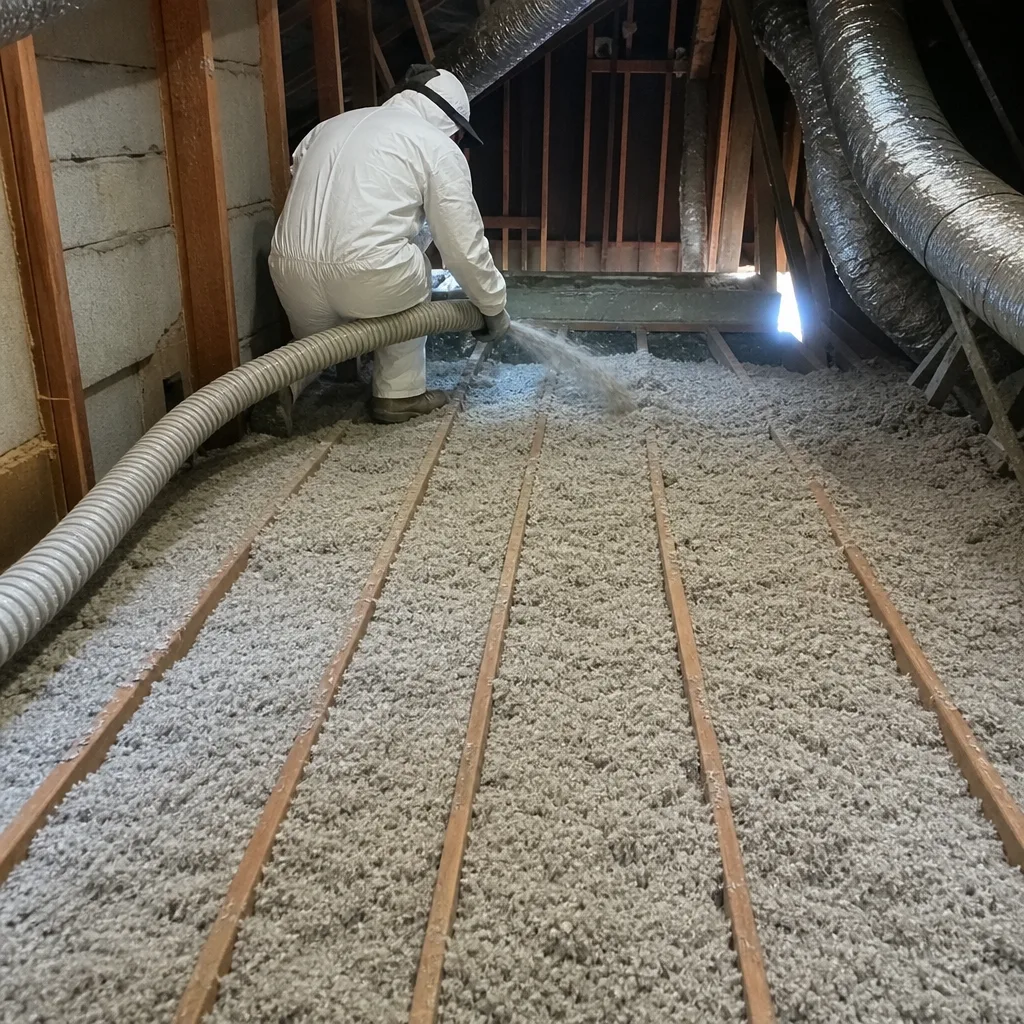
- Shrinking or pulling away from rafter edges. Open-cell foam can shrink 2-5% as it ages, especially if installed in conditions outside manufacturer spec. In Burbank, we’ve seen this accelerate when attic ventilation was blocked during a prior roofing job, trapping summer heat above 140°F against the foam surface. The gap becomes a thermal bypass - an air path that lets conditioned air escape around the insulation rather than through it.
- Discoloration to yellow or brown, especially near the roof peak. This indicates UV degradation if the foam was left exposed without a thermal barrier coating, or chemical breakdown from prolonged heat exposure. Classic Plus holds up better here, but neither product is rated for direct sun contact. We document this with photos and include the thermal barrier remediation in our scope.
- Crumbly texture or surface dusting. Closed-cell foam that has absorbed moisture through a roof leak degrades from the inside out. Burbank’s occasional winter rains, combined with the freeze-thaw cycle in poorly vented attics, can trap water against the foam for weeks. The material loses structural integrity and R-value simultaneously; the blower-door test will show elevated leakage even if the foam looks intact from below.
- Uneven coverage with visible gaps at top plates or around penetrations. This is almost always an installation sequencing error, not material failure. The original crew insulated before sealing. We find this constantly in Burbank’s 1960s split-levels where electricians and HVAC contractors cut new holes after the foam went in. The fix requires removal of the compromised section, air sealing of every penetration with acoustic sealant and rigid blocking, then reapplication.
- Musty odors or allergy symptoms that worsen upstairs. Open-cell foam is vapor-permeable; if the attic side was not properly detailed, moisture can migrate through and condense on cooler surfaces. In Burbank’s spring when marine layer moisture rolls in, we’ve measured attic relative humidity above 70% in homes with this exact failure pattern. The foam itself doesn’t mold, but the dust and organic debris that collects on its surface will.
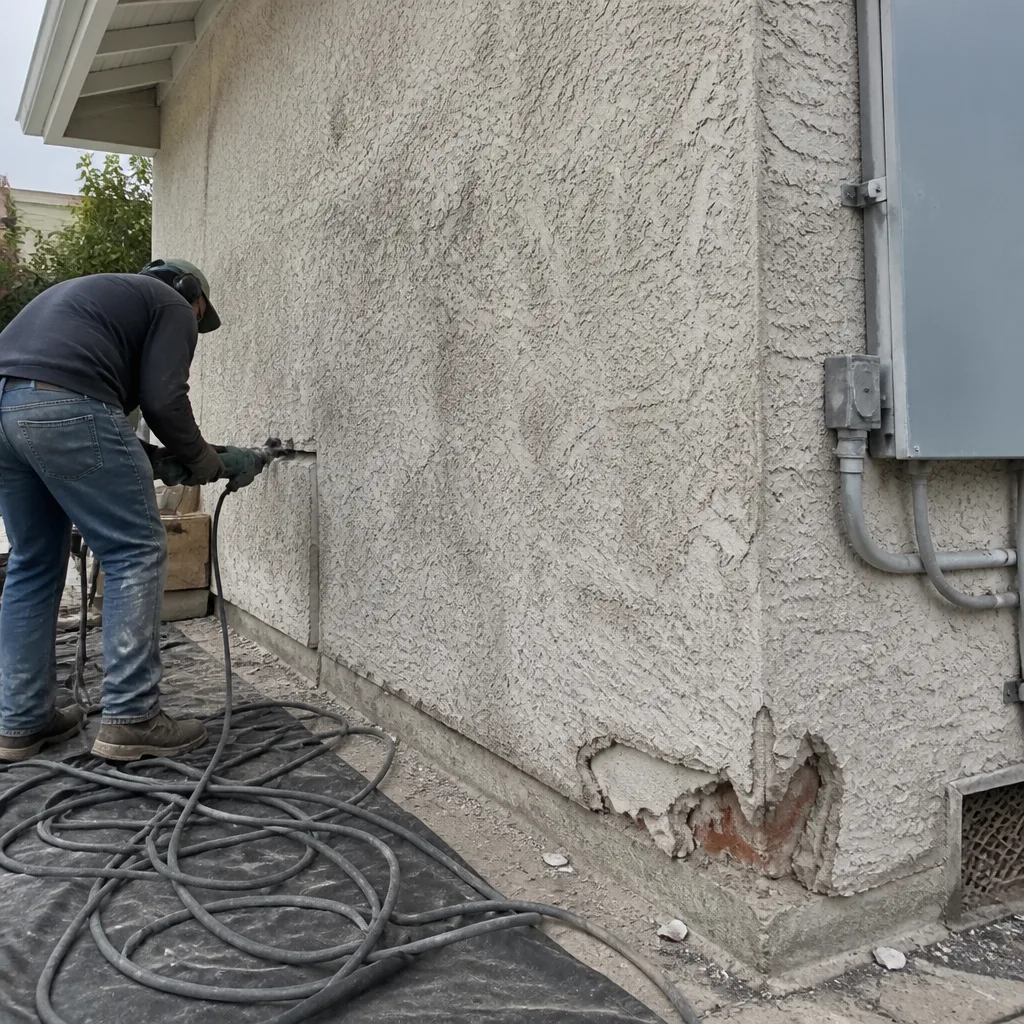 Before
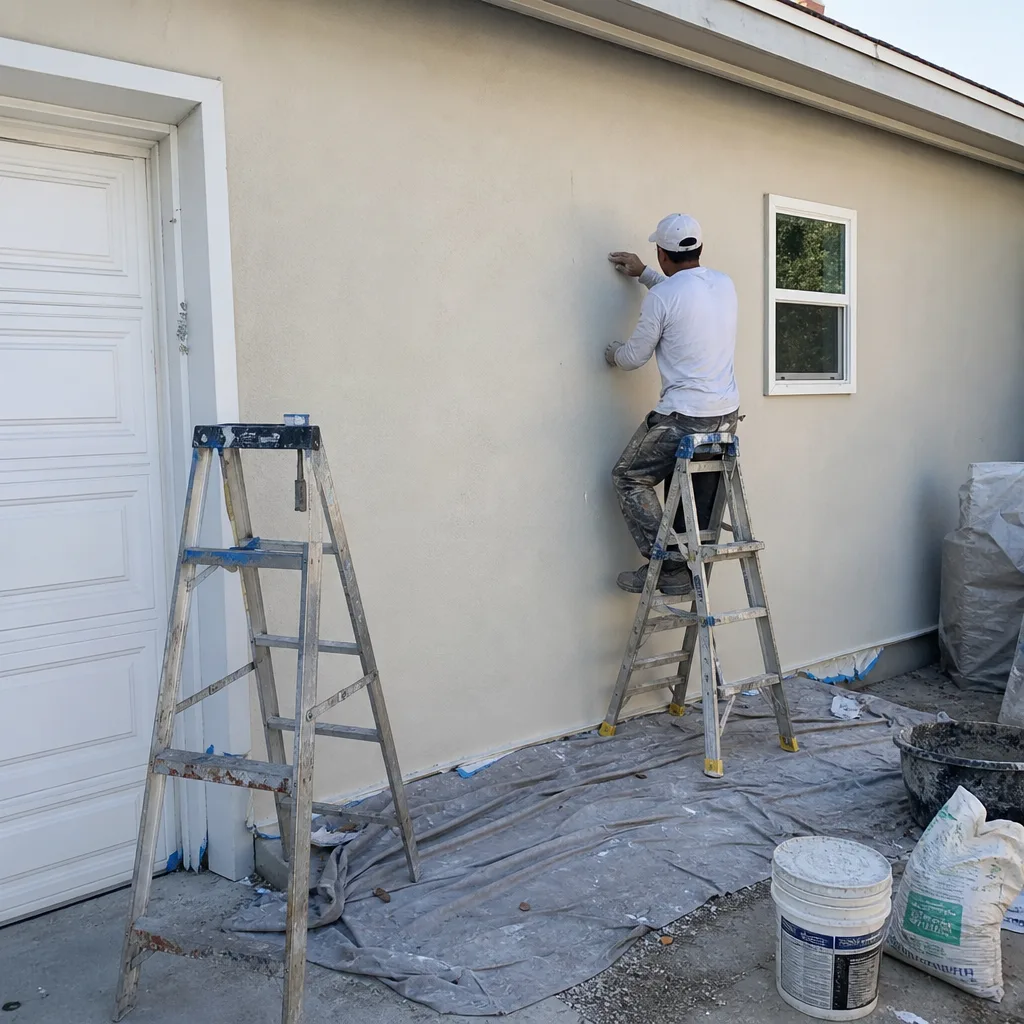 After
AfterReplacement Cost & What’s Included
Most Icynene attic insulation replacements in Burbank fall between $2,800 and $5,400 for a typical 1,200-2,000 square foot home. The low end covers partial remediation: spot removal of failed sections, air sealing of the exposed area, and reapplication with matching material. The high end reflects full attic redeck with existing foam removal, which adds $1.20-$1.80 per board foot for safe extraction and disposal per California DTSC guidelines.
What drives the range: accessibility (scuttle hole vs. permanent stairs), existing foam condition (surface touch-up vs. full removal), and whether the thermal barrier - typically 1/2″ gypsum or an intumescent coating - must also be replaced. Our price includes the blower-door test before and after, a written depth-and-coverage report, and the Documented Photo Record delivered by email before we leave the site. Under our 365-Day Done Right Promise, any retreatment of our work is covered in full. We also offer a Free Second Opinion on any written estimate you’ve already received; bring it in and we’ll read it with you line by line.
DIY or Call Us?
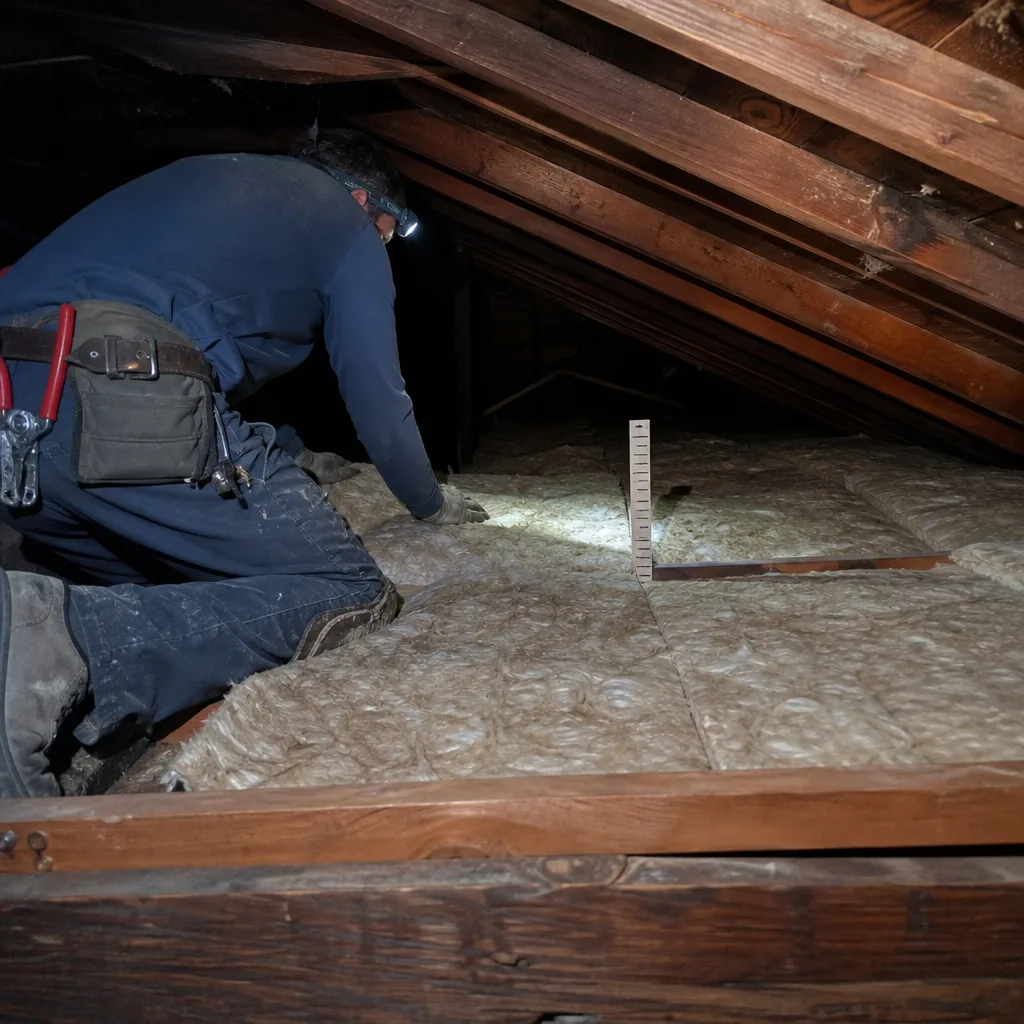
There’s no safe DIY path for spray foam removal or reapplication. The two-component chemistry requires calibrated proportioning equipment, full-face respirators with organic vapor cartridges, and ignition-source control that most homeowners cannot achieve in a residential attic. Even “frosting” kits sold at building supply stores use a different pressure and temperature profile than professional equipment; the resulting foam is often undermixed, with voids and poor adhesion that fail within two years.
What you can safely check: look at the exposed foam surface with a flashlight from the scuttle hole. Note any gaps, discoloration, or texture changes. Take photos with your phone, including one with a coin or key for scale. Then call us at (213) 816-1699. We’ll review the images by text, tell you whether it needs immediate attention or monitoring, and schedule a free assessment if warranted. No voicemail loops - a live person answers, 24/7.
FAQs
Properly installed Icynene spray foam should perform for the life of the building, but we’ve found that Burbank attics with poor ventilation or south-facing exposure can show degradation in 15-20 years. The R-value is what the label says. The performance is what the blower-door test says. We care about the second number. Call (213) 816-1699 for an assessment - estimates are free.
Localized failure can often be repaired by removing the compromised section back to sound substrate, then reapplying matching material. We do this when the failure covers less than 20% of the total attic area and the remaining foam passes adhesion and density testing. If degradation is widespread or the original installation skipped air sealing, full replacement is more cost-effective long-term. Call (213) 816-1699 and we’ll tell you which category you’re in.
Most full attic replacements in Burbank take one to two days: Day one for removal, air sealing, and prep; day two for foam application and thermal barrier installation. Partial repairs often finish in a single day. We don’t start work until you’ve received and approved a written price and scope - that’s Haven Standard Clause 1.
We carry Icynene H2Foam Lite and Classic Plus in standard kit sizes on our trucks, along with compatible thermal barrier coatings and air sealing materials. For jobs requiring more than 30 kits or specialized formulations, we order with 48-hour lead time from the regional distributor in City of Industry. Same-day assessment is available; call (213) 816-1699 to schedule.
Ready to get your attic performance back to what the invoice promised? Text or call (213) 816-1699 for a free assessment. We’ll bring the blower-door rig, the thermal camera, and a written price before any work starts. That’s the Haven Standard, and it’s how we’ve handled 9,000+ homes since 2016.
Written by Wes Okafor, Owner & Lead Insulation Technician, Topside Attic Insulation Burbank at Topside Attic Insulation Burbank, serving Burbank and nearby areas.