
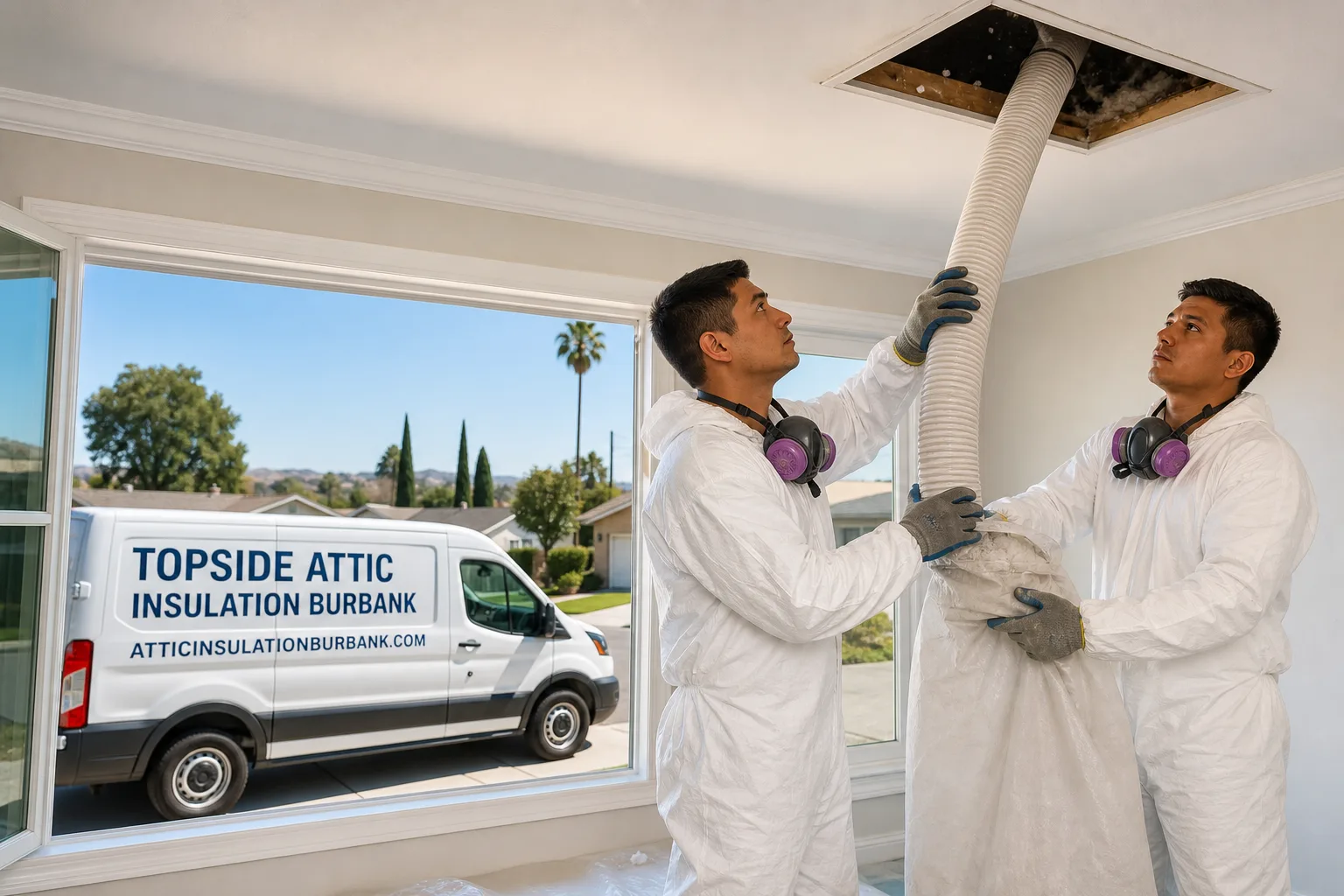
How Much Does Wall Insulation Cost in Burbank?
Our Wall Insulation services in Burbank, CA typically cost between $1.50 and $4.50 per square foot of wall area, depending on material, access method, and whether air sealing is included before the insulation goes in. For a 1,500-square-foot Burbank home with roughly 800-1,000 square feet of exterior wall cavity to fill, most homeowners spend between $1,800 and $4,200 for a complete job done correctly. That range widens considerably if the existing drywall stays in place versus gets opened, or if the home has stucco exterior walls – common throughout Burbank’s mid-century housing stock – which changes the access approach entirely.
Wall Insulation Cost Breakdown (2026)
These ranges reflect actual Burbank market pricing as of 2026. Labor rates in the San Fernando Valley run higher than national averages, and material delivery costs into Los Angeles County add a small buffer compared to more central markets. Every figure below assumes a licensed, insured contractor who pulls permits where required by the City of Burbank Building and Safety Division.
| Insulation Type / Method | Typical Cost Per Sq Ft (Wall Area) | Whole-Home Estimate (800-1,000 sq ft of wall cavity) | Best Application |
|---|---|---|---|
| Dense-pack cellulose (blown into existing walls) | $1.80 - $2.80 | $1,440 - $2,800 | Retrofit stucco or wood-sided homes without opening drywall |
| Dense-pack fiberglass (blown into existing walls) | $1.90 - $3.00 | $1,520 - $3,000 | Retrofit where moisture or pest history makes cellulose less ideal |
| Open-cell spray foam (open walls during remodel) | $2.20 - $3.80 | $1,760 - $3,800 | New construction or gut-remodel with studs exposed |
| Closed-cell spray foam (open walls) | $3.50 - $5.50 | $2,800 - $5,500 | High-value moisture control, structural reinforcement, or narrow cavities |
| Fiberglass batt (open walls during remodel) | $0.90 - $1.80 | $720 - $1,800 | New construction or remodel where budget is the primary constraint |
| Mineral wool / Rockwool batt (open walls) | $1.50 - $2.60 | $1,200 - $2,600 | Fire resistance, sound attenuation, or party-wall applications |
| Air sealing only (before insulation is added) | $0.40 - $0.90 | $320 - $900 | Required prerequisite; never skip this step |
| Drywall removal and replacement (if needed) | $2.50 - $6.00 | $2,000 - $6,000 | When blown-in access isn’t feasible and walls must be opened |
What moves the number up or down?
The single biggest cost lever in Burbank is access method. A home with stucco exterior walls – which covers the majority of pre-1970 Burbank construction in neighborhoods like Magnolia Park and Rancho – can often be retrofitted from the outside by drilling small holes in the stucco field, blowing dense-pack material into each cavity, and patching the holes. No drywall disturbance, no interior paint work. That approach keeps costs at the lower end of the blown-in range. When the stucco is historic, ornate, or already cracked in ways that complicate patching, the calculus changes and interior access sometimes becomes the cleaner option despite the added drywall cost.
Homes built after 1980 in areas like the Burbank hills or newer infill construction tend to have standard wood-framed cavities with drywall on both sides, which makes the blown-in retrofit straightforward. The bigger variable there is whether any previous owner filled part of the cavity with low-density fiberglass batts that have settled or shifted – something we find often in homes purchased between 2015 and 2022, when sellers rarely disclosed insulation condition. Those partially filled cavities need to be assessed before pricing is finalized, because blowing over settled batts produces a mixed-density result that underperforms.
Materials sourced from manufacturers like Owens Corning, Johns Manville, Knauf, Rockwool, CertainTeed, Icynene, Demilec, and GreenFiber are all used on our jobs depending on what the wall assembly and project scope actually call for. There is no proprietary product we push because we earn more on it.
What Affects Wall Insulation Pricing in Burbank
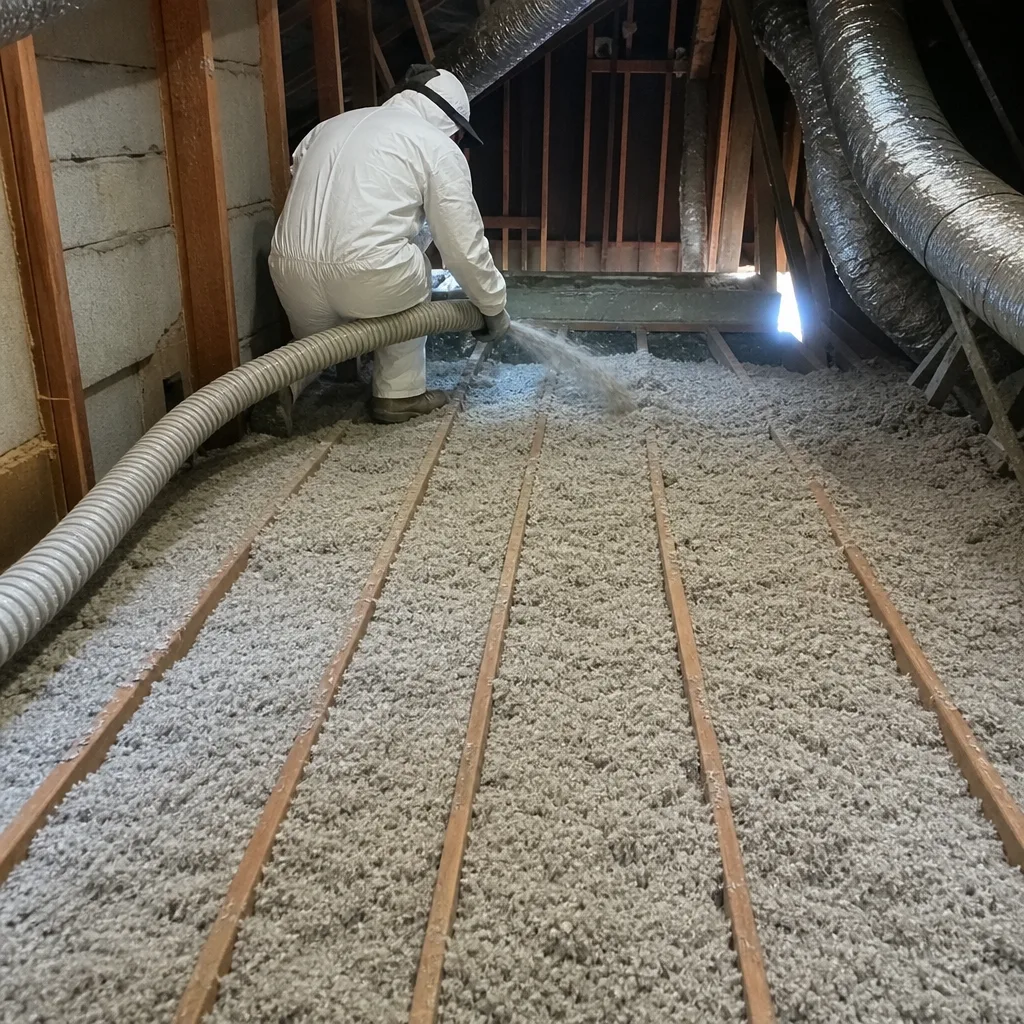
- Wall construction type and exterior cladding. Stucco-clad homes throughout Burbank’s older residential corridors – Olmsted Street, Victory Boulevard, the streets around John Muir Middle School – require a different drill-and-fill approach than lap-sided or wood-panel homes. Stucco patch quality after the job matters for both appearance and moisture management, and a contractor who rushes the patch will leave you with a visible repair that telegraphs itself every time the light hits the wall at an angle.
- Cavity depth and stud spacing. Standard 2×4 framing gives you a 3.5-inch cavity, which limits your R-value options with batts. Older Burbank homes built in the 1940s and 1950s sometimes have non-standard stud spacing or balloon framing – a style where the wall cavities run continuously from foundation to roof rather than being blocked at each floor – which changes how dense-pack material travels and settles, and adds time to the job.
- Whether air sealing is done first. At Envelope Insulation Co., air sealing is not an upsell – it is a hard prerequisite, completed before any insulation material goes in. Top plates, penetrations, outlet boxes, and can lights that share an exterior wall cavity all need to be addressed before the cavity is filled. Skipping this step and blowing insulation over open air bypasses is one of the most common ways a wall insulation job delivers far less than its R-value on paper suggests. The California Building Code (Title 24, Part 6) requires air barriers on new construction; retrofit jobs benefit from the same principle even when the code doesn’t mandate it retroactively.
- Home size and linear feet of exterior wall. A 1,200-square-foot post-war bungalow in the Rancho area of Burbank and a 2,600-square-foot two-story in the Burbank hills have very different exterior wall areas even if the footprints suggest otherwise. Two-story homes have more total wall area but also more opportunity to access cavities from an attic or crawl space on the second floor, which can reduce cost on the upper level. Single-story homes with long uninterrupted wall runs are often the most straightforward jobs to price.
- Existing insulation condition. If the walls were previously insulated with paper-faced fiberglass batts that have absorbed moisture from a past plumbing leak or roof issue, that material needs to come out before anything new goes in. Removal adds cost, but leaving degraded insulation in place and blowing over it creates a worse thermal and moisture situation than starting clean. We document what we find with photos before and after.
- Permit requirements. The City of Burbank Building and Safety Division does not require a permit for like-for-like insulation replacement in existing cavities under most circumstances, but adding insulation to previously uninsulated walls as part of a broader remodel may trigger an energy compliance inspection under California’s Title 24 requirements. Clarifying this before work starts is part of how a written scope protects you – it identifies what the contractor is and isn’t responsible for in terms of code compliance.
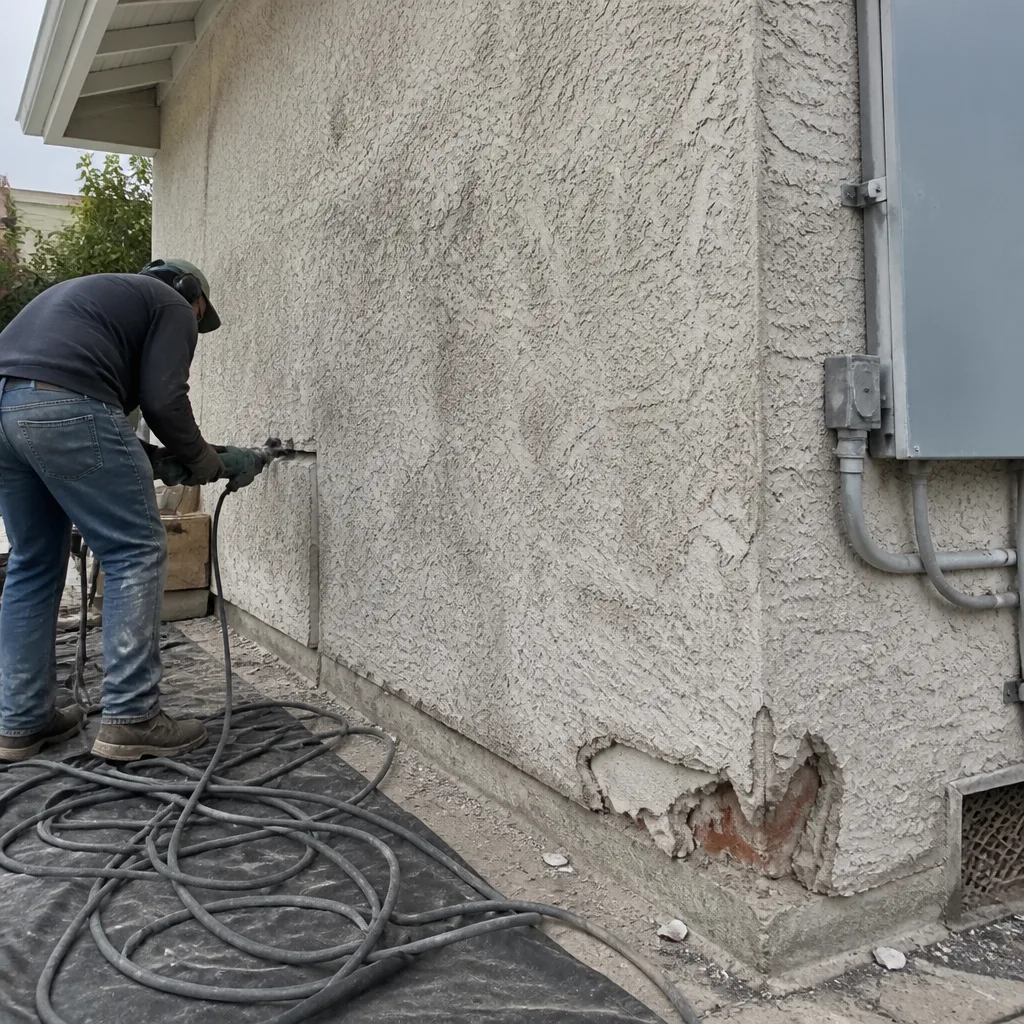 Before
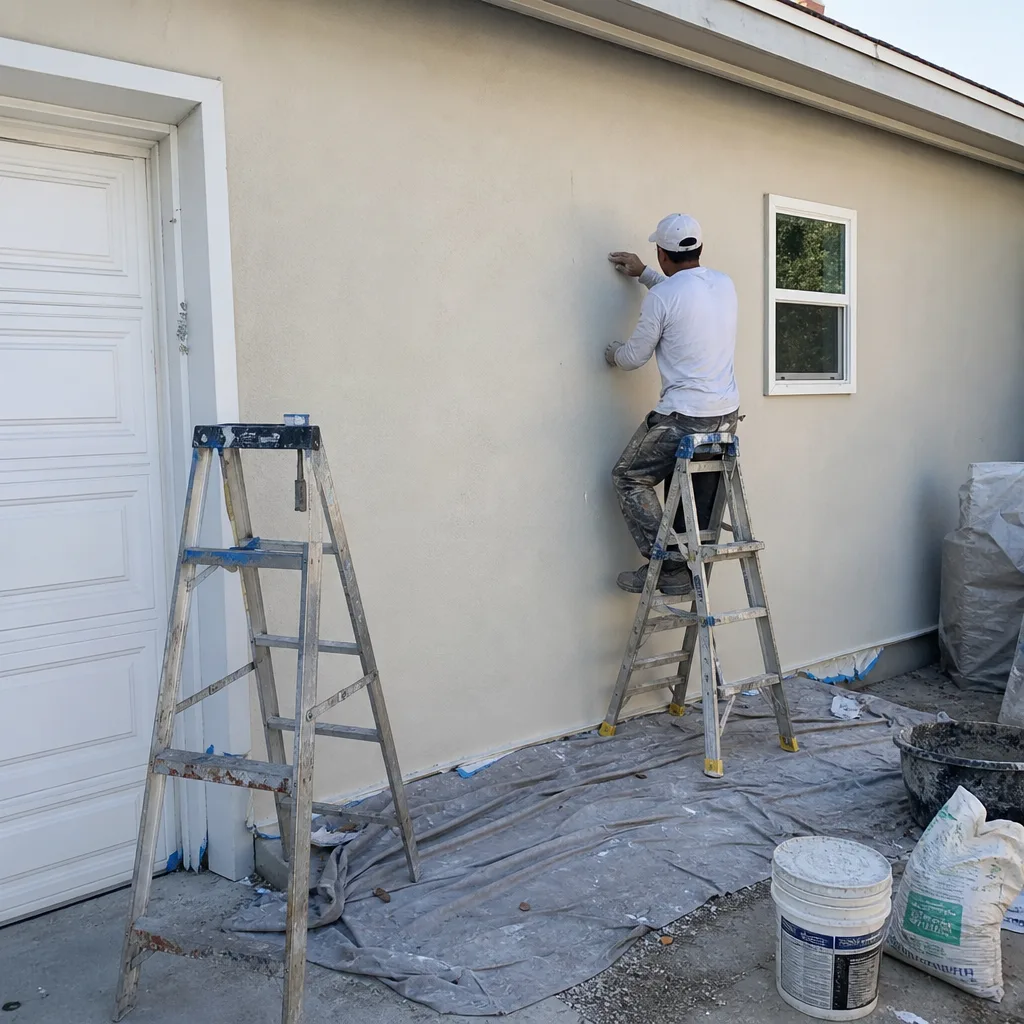 After
AfterBurbank-Specific Context: Why Wall Insulation Matters Here
Burbank sits in the eastern San Fernando Valley, where summer temperatures regularly exceed 95 degrees Fahrenheit and occasionally push past 108. The city’s proximity to the Verdugo Mountains means it also catches the Santa Ana wind pattern that channels dry, hot air down into the valley floor through passes near La Tuna Canyon and the 210 corridor. During a Santa Ana event, outdoor air at 100-plus degrees is being pushed against your exterior walls with positive pressure. If those wall cavities are empty or poorly sealed, that heat load moves into your conditioned space faster than your air conditioning system can reject it.
We see this play out specifically in homes on the north-facing slopes of the Burbank hills and in the flatter grid streets between Glenoaks Boulevard and San Fernando Road, where afternoon western exposure means the exterior walls are absorbing direct sun for four to six hours before interior temperatures start climbing. Homeowners in those areas report the most dramatic comfort improvement after wall insulation jobs – not just lower utility bills, but a material change in how long it takes for the house to heat up on a hot afternoon.
Burbank’s 1940s-era housing stock was largely built without wall insulation at all. The California Energy Code that mandated minimum wall insulation values didn’t exist until 1978. Any home built before that year in neighborhoods like Magnolia Park, Burbank’s downtown residential grid, or the streets around Burbank High School likely has empty 3.5-inch stud cavities. Filling those cavities with R-13 to R-15 dense-pack material is one of the highest-return envelope improvements available – typically costing less than a full HVAC replacement but addressing a root cause that the HVAC replacement alone cannot fix.
For a full look at what wall insulation service in Burbank includes from first assessment through final documentation, see our Wall Insulation in Burbank service page.
How to Save on Wall Insulation in Burbank
Time the job with another envelope project
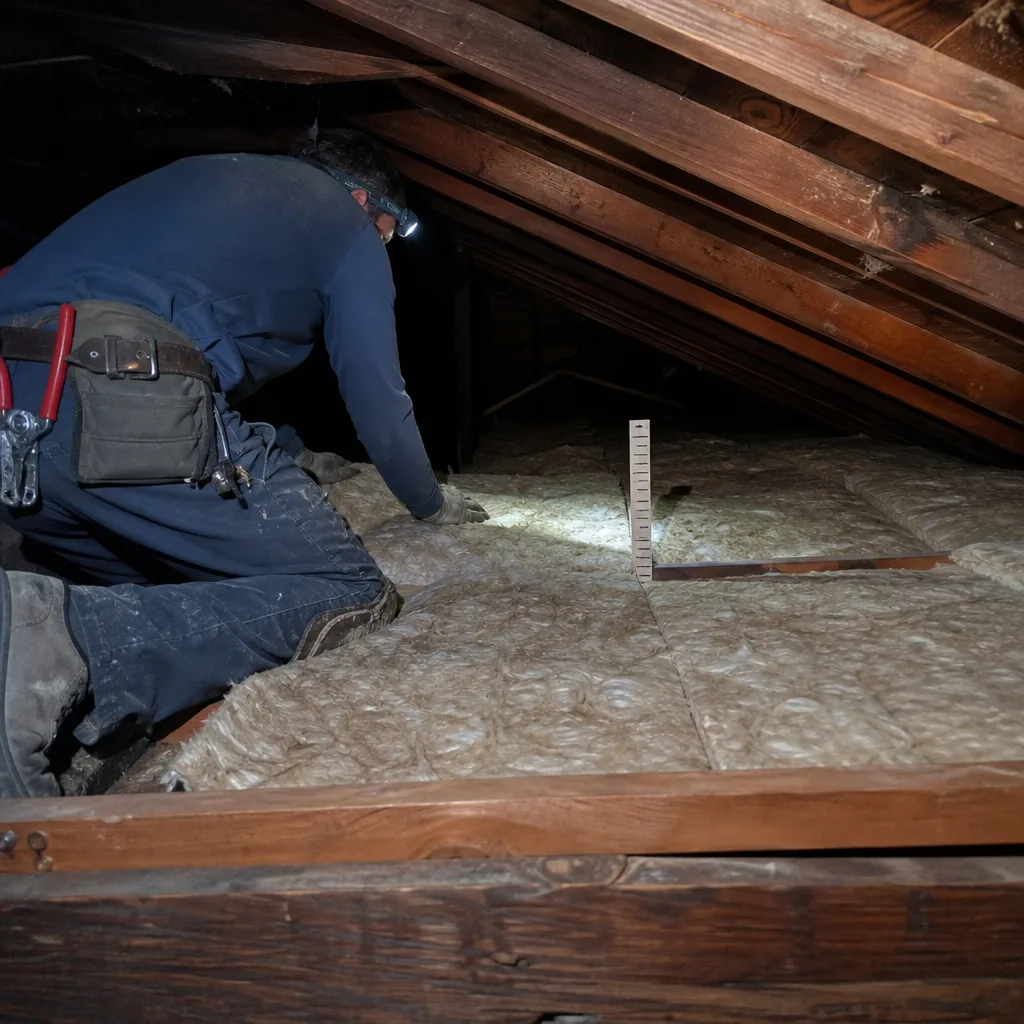
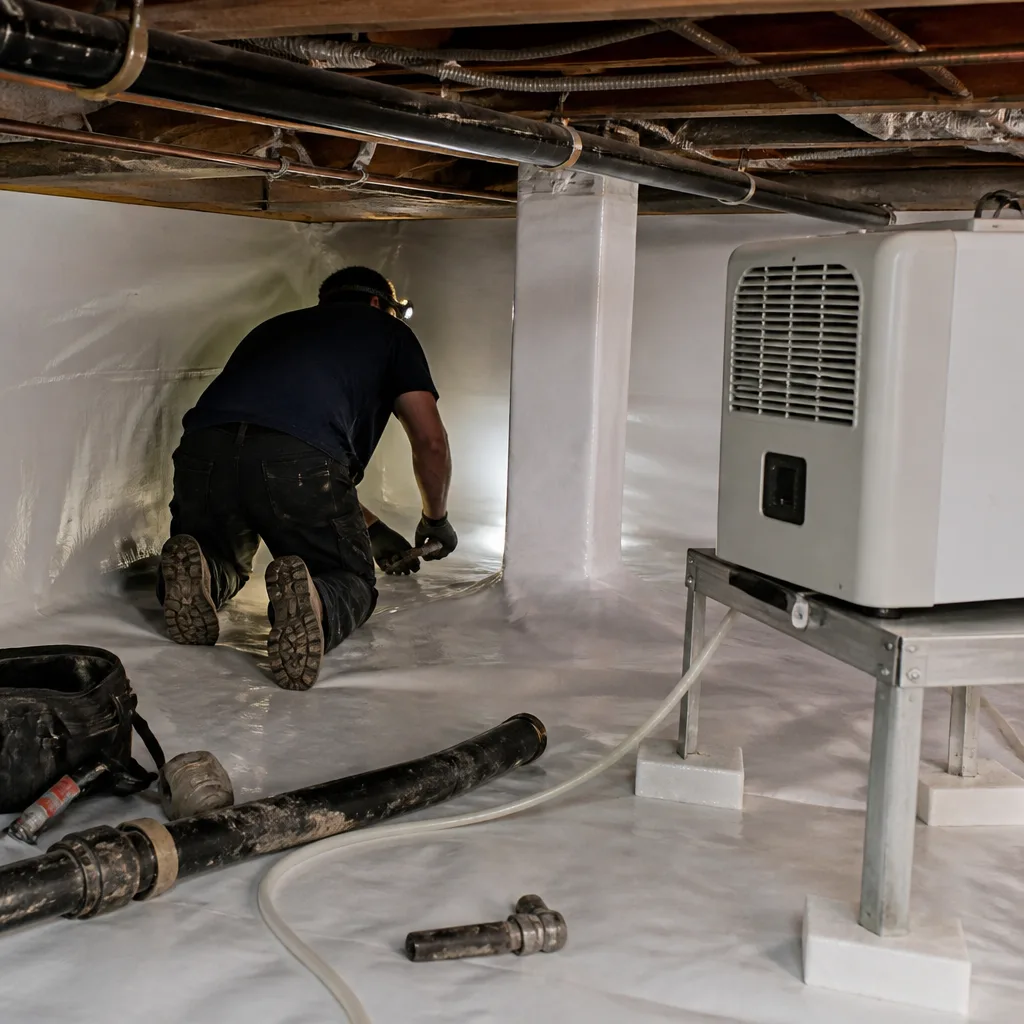
The biggest legitimate savings in wall insulation come from consolidating work. If you are already having your attic re-insulated or your crawl space encapsulated, adding wall insulation to the same mobilization cuts setup costs because the crew is already there, the blower-door equipment is already staged, and the before-and-after air sealing measurements apply to the whole envelope rather than just one component. Jobs that combine attic air sealing and wall insulation in one visit typically run 12-18% less per square foot than the same work scheduled separately.
Use the California HERO Program and utility rebates
Southern California Edison and the Los Angeles Department of Water and Power both offer rebates for qualifying insulation improvements under their residential energy efficiency programs. The rebate structure changes annually, but as of 2026, whole-home air sealing and insulation projects that achieve a measurable improvement in blower-door results – which we document with before-and-after readings on every applicable job – have qualified for rebates ranging from $150 to $600 depending on square footage and improvement magnitude. A contractor who provides written blower-door data gives you the documentation those rebate applications require. One who doesn’t leaves you with nothing to submit.
The Los Angeles County Property Assessed Clean Energy (PACE) financing programs – including those administered through the county – allow qualifying homeowners to finance insulation work through their property tax bill rather than a personal loan. If your Burbank home qualifies, the interest rate is often lower than a home improvement line of credit, and there is no upfront payment.
Get a second opinion on any written estimate
Under the Haven Standard, we offer a free second opinion on any written estimate you have received from another contractor. Bring us the quote – we will read it with you, line by line, and tell you what each item means, whether the scope is complete, and whether the pricing reflects what the Burbank market actually looks like for that type of work. This is not a sales exercise. If the competing quote is solid and the contractor is reputable, we will tell you that. The goal is that you make a decision with full information, not because you were sold.
Don’t cut air sealing to reduce the quote
We know it is tempting to accept a quote that skips air sealing because it is $300-$900 less. The problem is that wall insulation without air sealing can deliver as little as 40-60% of its rated R-value in actual performance, because convective loops – air currents that form inside an insulated but unsealed cavity – bypass the insulation entirely. You pay for R-15 and get R-7 in practice. The air sealing cost always pays back faster than the insulation cost when you run the numbers honestly.
Request a free estimate – get a written price before any work starts
Under Haven Standard Clause 1, every job starts with a written price, a written scope, and a written warranty – before anyone lifts a tool. There are no verbal agreements, no “we’ll figure it out as we go” conversations, and no surprise line items when the invoice arrives. Call (213) 816-1699 to schedule your free estimate. You will get a named technician, a text when they are on the way, and a written price in hand before you have to decide anything.
What You Should Expect From a Wall Insulation Job: The Process
A well-run wall insulation job in Burbank follows a specific sequence. Understanding that sequence helps you evaluate whether a contractor’s proposal is complete or whether it is missing steps that will cost you later.
Step 1: Diagnostic assessment
Before pricing anything, a technician should walk the exterior perimeter of your home and note the wall construction type, cladding material, existing penetrations, and any visible signs of moisture damage or pest intrusion. An infrared camera scan of the interior walls – done under conditions where there is at least a 10-degree Fahrenheit differential between inside and outside – can show existing insulation voids without opening the wall. We include a photo record of what we find at this stage. You see exactly what we see.
Step 2: Air sealing before insulation
We seal the wall cavity bypasses before any insulation material is introduced. For blown-in retrofit jobs, this typically means sealing the top plate connection between the wall and attic space, addressing any penetrations through the bottom plate, and – where accessible – sealing around electrical boxes and plumbing lines that pass through the exterior wall plane. The air sealing step is not optional on any job we do, and it is documented separately in the written scope so you know exactly what was done and where.
Step 3: Blower-door baseline (applicable jobs)
On jobs where we are doing significant air sealing work, we run a blower-door test – a pressurization measurement that shows, in a single figure, how much conditioned air the home’s building envelope is losing – before and after the work. The before number and after number both appear in your job documentation. You do not have to take our word for how much the air sealing improved things; the numbers are there.
Step 4: Material installation
Dense-pack blown-in jobs involve drilling a series of holes in the exterior cladding or interior drywall (depending on access method), inserting a fill tube into each stud cavity, and blowing material to a target density – typically 3.5 lb/cubic foot for dense-pack cellulose, which prevents the settlement that gives loose-fill a bad reputation. Batt jobs in open walls require cutting each batt to fit without compression or gaps at the edges, because a batt that is stuffed into a cavity or cut short loses R-value at both failure modes.
Step 5: Patch, document, close out
Every drill hole gets patched – stucco exterior patches are textured to match the surrounding field as closely as the existing surface allows, interior drywall patches are taped and finished. A photo record is completed at the end of every visit. Your job closes with a written warranty, a documented scope of what was done, and – on applicable jobs – your before-and-after blower-door readings.
Wall Insulation vs. Attic Insulation: Which Comes First?
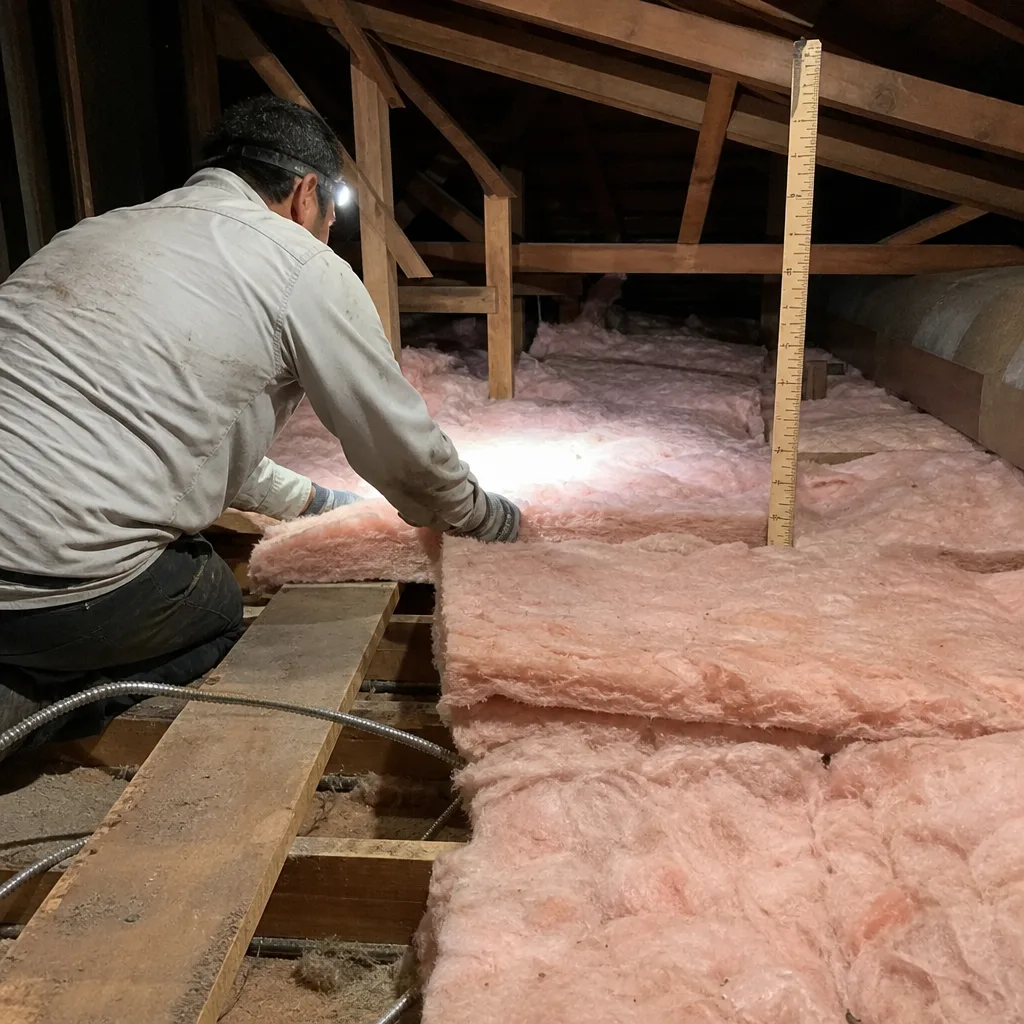
A question we hear often in Burbank: if you can only do one project this year, which has more impact – wall insulation or attic insulation? The general rule is that attic insulation and attic air sealing have a higher return per dollar in single-story homes because the attic is the primary thermal bypass – heat moves through a ceiling assembly faster than through a wall assembly when the ceiling has no insulation and the attic space reaches 150 degrees in July, which it does in Burbank. For two-story homes, or homes where the attic has already been addressed, wall insulation often becomes the highest remaining lever.
The most accurate way to know is a thermal assessment that maps where your home is actually losing conditioned air and heat. That assessment is part of what the initial estimate includes. For context on what a complete building envelope approach looks like, start with the home page, which outlines our full service line.
We have completed wall insulation jobs in every neighborhood in Burbank since 2016 – from the flat streets south of Burbank Boulevard to the hillside properties above Glenoaks, from the industrial-adjacent blocks near the airport to the quieter residential grid around Jefferson Elementary. Across those 9,000-plus jobs, the homes that show the most consistent improvement – measured in blower-door numbers, not sales language – are the ones where air sealing and insulation were done in the right order, with documentation at every stage.
FAQs – Wall Insulation Cost in Burbank
How much does wall insulation cost in Burbank, CA in 2026?
Wall insulation in Burbank costs $1.50 to $4.50 per square foot of wall cavity area, which puts a typical whole-home retrofit for a 1,200-1,800 square foot Burbank residence in the $1,800 to $4,200 range for blown-in material. Open-wall batt installation during a remodel runs lower on material cost but often higher overall once drywall work is included. Closed-cell spray foam in open walls can reach $5,500 or more for the same home. The range is wide because access method, wall construction, and whether air sealing is included all shift the number meaningfully. Call (213) 816-1699 for a written price specific to your home – no work starts without it.
Is it worth insulating the walls of an older Burbank home?
For pre-1978 Burbank homes with empty wall cavities – which is most of the housing stock in Magnolia Park, the downtown residential grid, and areas around Burbank High School – yes, it is usually worth it. Empty stud cavities in a climate that hits 105 degrees Fahrenheit in summer and then drops to 38 degrees on January nights create a continuous load on your HVAC system that insulation directly reduces. The payback period on a dense-pack retrofit in Burbank’s climate, assuming current SCE rates and a home with zero existing wall insulation, typically runs 6-10 years – shorter if you factor in comfort rather than just utility bills. The job also adds documented value to a home in a market where buyers increasingly ask for energy audit results.
Can wall insulation be added without removing drywall?
Yes, in most cases. Blown-in dense-pack installation – using cellulose or fiberglass – reaches wall cavities through small-diameter holes drilled either in the exterior cladding or through the interior drywall. For stucco homes, exterior drilling is often preferred because the patch is less visible and the interior finishes stay undisturbed. The holes are typically 1.5 to 2 inches in diameter, drilled at mid-height on each stud bay. After filling, they are plugged and patched. On a well-executed job, the patch on a smooth stucco field is nearly invisible after repainting. Textured stucco is harder to match perfectly, but a skilled applicator gets close. If you want to see what the patch looks like before committing, ask to see photos from comparable jobs – our documented photo record policy means we have them.
How long does a wall insulation job take in Burbank?
Most single-story Burbank homes can be completed in one full day – typically 6 to 8 hours for a crew of two on a blown-in retrofit. Two-story homes or homes with complex exterior cladding may require a second day. The timeline in your written scope will specify the expected duration before work starts, so you are not left guessing whether the crew is coming back. Air sealing, if done as a separate pre-installation step (as it should be), is usually completed in the same visit or the morning of the insulation day.
Does wall insulation require a permit in Burbank?
For a straight retrofit – adding insulation to existing, previously uninsulated walls in a home that is not undergoing a broader remodel – the City of Burbank Building and Safety Division generally does not require a permit. However, if the wall insulation is part of a larger alteration project that triggers Title 24 energy compliance review, or if the work involves any structural change to the wall assembly, permit requirements apply. The written scope we provide before any work starts identifies what permit status applies to your specific job, so you are not surprised by an inspection requirement after the fact.
Key Takeaways
- Wall insulation in Burbank costs $1.50 to $4.50 per square foot of wall cavity area, with most whole-home retrofits landing between $1,800 and $4,200.
- Access method – drilled exterior stucco vs. interior drywall vs. open-wall during remodel – is the single biggest cost variable.
- Pre-1978 Burbank homes in neighborhoods like Magnolia Park and the downtown residential grid almost always have empty wall cavities, making them strong candidates for retrofit.
- Air sealing must be completed before insulation is added. Skipping it can cut actual thermal performance nearly in half compared to the rated R-value.
- Before-and-after blower-door readings, a documented photo record, and a written warranty are included on applicable jobs – not available on request.
- A written price is provided before any work starts, always. This is Haven Standard Clause 1 and it does not have exceptions.
- SCE and LADWP rebates may apply to qualifying projects; jobs with documented blower-door improvement data are better positioned for rebate approval.
Get a Written Price for Your Burbank Wall Insulation Job
If your Burbank home was built before 1978, has rooms that never seem to cool down in summer, or has utility bills that don’t match what your neighbors are paying, wall insulation is worth a proper assessment. Not a sales visit – a technical walkthrough where we document what we find, tell you what it costs to fix it, and give you a written price before you have to decide anything.
Wes Okafor leads the team at Envelope Insulation Co., and every job he oversees follows the same sequence: written scope first, air sealing before insulation, blower-door numbers on applicable jobs, documented photo record when we leave. We have been doing this in Burbank since 2016, across more than 9,000 homes in the San Fernando Valley, and the work either gets done right or we make it right – that is the 365-Day Done Right Promise, and it is written into every job we close.
Call (213) 816-1699 to schedule your free estimate. A live person answers – no voicemail, no callback window. You will get a named technician, a text when they are on the way, and a written price before anyone touches your walls.
Pricing reflects the Burbank market as of 2026. Topside Attic Insulation Burbank offers free estimates – call (213) 816-1699.
Written by Wes Okafor, Owner at Envelope Insulation Co., serving Burbank since 2016.
What Our Customers Say
"They air-sealed the attic floor before insulating and showed me the blower-door number before and after. The upstairs is finally the same temperature as downstairs."
- Marisol D."Two other companies quoted to blow more insulation on top of what was there. These were the only ones who said the existing material had to come out first, and explained why."
- Clifford E."Crawl space encapsulation done properly. Photographs of the vapour barrier at every seam, and the damp smell in the hallway is gone."
- Ainsley P.