
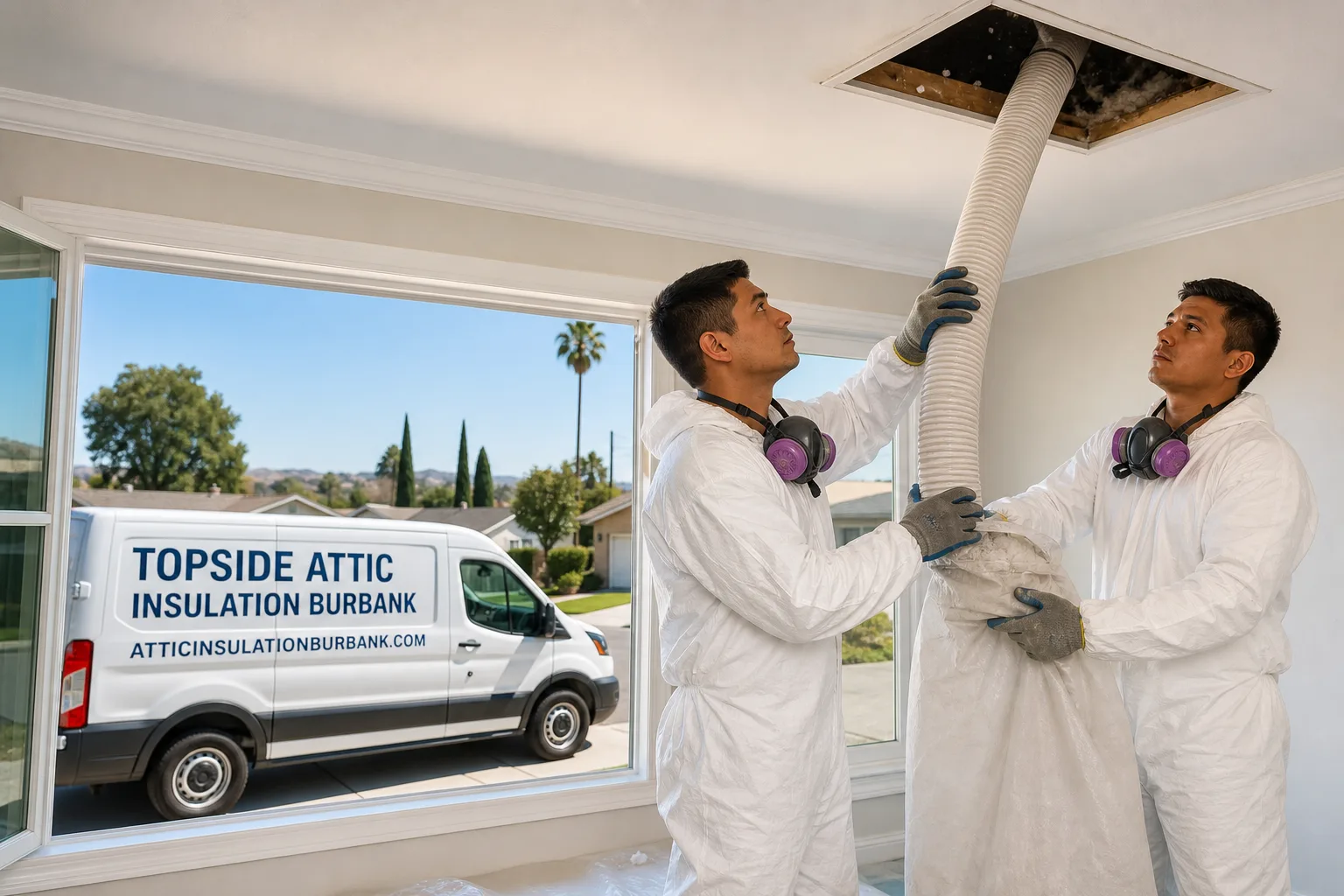
How Much Does Spray Foam Insulation Cost in Burbank?
Spray foam insulation in Burbank, CA typically costs between $1.50 and $4.50 per board foot, depending on whether you’re using open-cell or closed-cell foam and where in the home it’s being installed. Most Burbank homeowners pay between $1,800 and $5,500 for a standard attic or crawl space job, though larger projects with closed-cell foam on exterior walls or rim joists can reach $8,000 or more. Every job at Envelope Insulation Co. starts with a written price before any work begins – no estimates given over the phone that shift when the crew shows up.
Spray Foam Insulation Cost Breakdown (2026)
Below are current installed price ranges for the Burbank market. These reflect material costs, labor, and standard site prep. They don’t reflect accessory work like insulation removal or air sealing, which are quoted separately as part of your written scope.
| Application | Foam Type | Typical Installed Cost |
|---|---|---|
| Attic deck (spray foam on floor) | Open-cell | $1,800 – $3,200 |
| Attic roof deck / rafters (unvented assembly) | Closed-cell | $3,500 – $7,500 |
| Crawl space walls and rim joists | Closed-cell | $1,200 – $3,000 |
| Exterior wall cavity (new construction or open wall) | Open-cell or closed-cell | $3,000 – $8,000 |
| Rim joist only (basement or raised foundation) | Closed-cell | $600 – $1,400 |
| Garage ceiling / bonus room floor | Open-cell | $900 – $2,200 |
| Partial air sealing with foam at penetrations | Two-component spray foam (canned or gun-applied) | $350 – $900 |
A few things worth flagging about these numbers. Open-cell foam – the softer, lower-density product that expands to roughly 100 times its liquid volume – runs $1.50 to $2.00 per board foot installed in Burbank. It’s a solid air barrier and a reasonable thermal insulator, but its vapor permeability makes it the wrong choice for roof-deck assemblies in Southern California’s climate zone 10 without careful detailing. Closed-cell foam – the rigid, high-density product that achieves R-6 to R-7 per inch and doubles as a vapor retarder – runs $3.00 to $4.50 per board foot installed. That higher number reflects both the material cost and the additional rig time it takes to apply correctly in multiple passes.
Labor in the Burbank market is not cheap, and it shouldn’t be. A qualified foam crew is working with pressurized equipment, blending two chemicals at precise ratios, and wearing supplied-air respirators. The difference between a job done at proper off-ratio versus correct ratio isn’t visible to the eye – but it is measurable in air quality, off-gassing, and long-term R-value retention. That’s part of why we use materials from Icynene and Demilec, and why the price you see in your written scope reflects what a correctly executed job actually costs in this market.
What Affects Spray Foam Insulation Pricing in Burbank
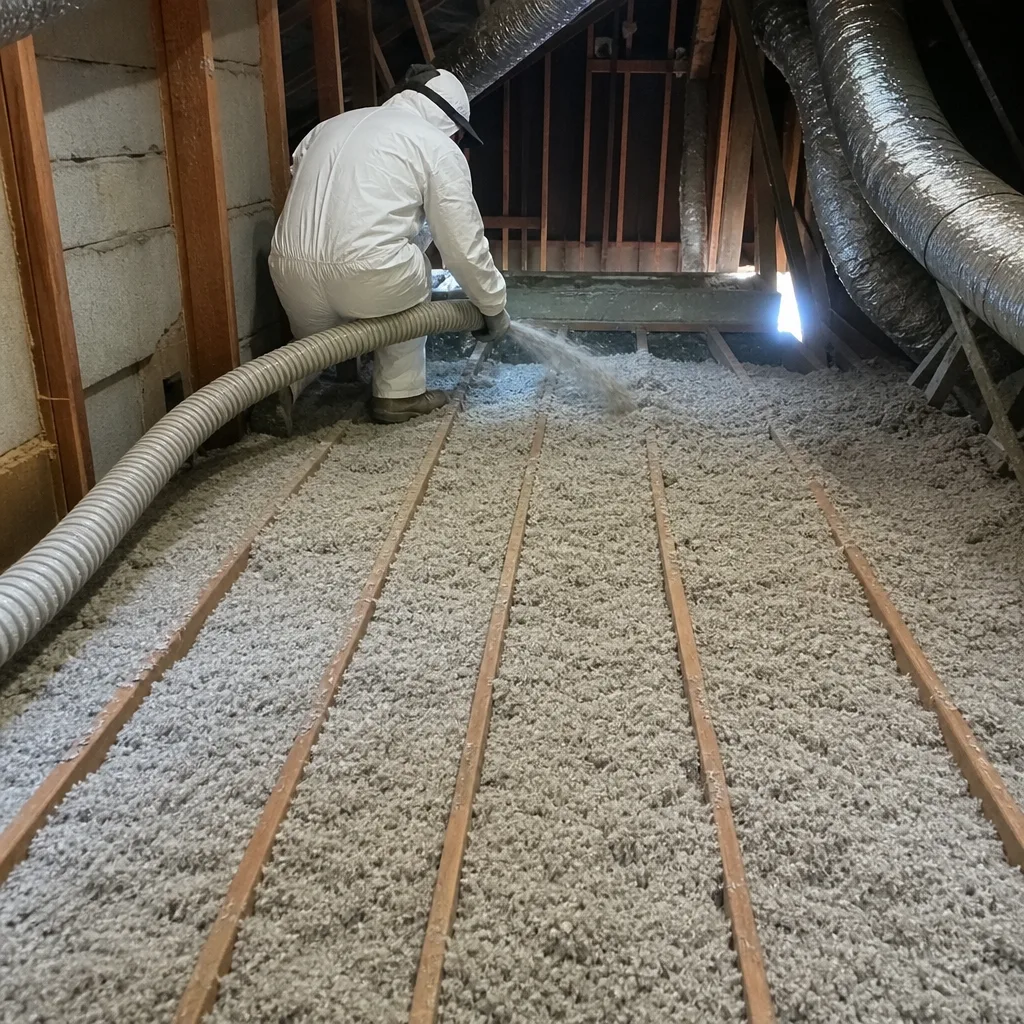
- Open-cell vs. closed-cell foam: The single biggest cost variable. Open-cell foam is significantly less expensive per board foot but delivers lower R-value per inch (roughly R-3.7 vs. R-6.5 for closed-cell). For Burbank attic floors and interior partition noise control, open-cell is often the right call. For roof decks, crawl spaces, and anywhere vapor control matters, closed-cell earns its premium.
- Burbank’s housing stock and attic geometry: A significant share of homes in neighborhoods like Magnolia Park, Rancho, and the Hillside area were built between 1940 and 1970 – and older attic framing often means lower truss heel heights, irregular bays, and obstructions that slow a foam crew down. Tighter spaces cost more to spray than open, walkable attics. A site visit isn’t optional; it’s how we give you an accurate number instead of a rough one.
- Climate Zone 10 requirements: Burbank sits in California’s Climate Zone 10, which carries specific Title 24 minimum R-value requirements for new construction and significant additions. For a conditioned attic assembly, closed-cell foam on the underside of the roof deck needs to reach R-19 minimum – typically 3 inches of closed-cell. Getting there in a low-clearance rafter bay takes more material and more passes, which affects cost. We scope every job against current Title 24 compliance requirements as part of your written price.
- Whether air sealing is done first: At Envelope Insulation Co., air sealing – sealing top plates, can-light penetrations, plumbing and electrical chases with foam or mastic before any insulation goes in – is a prerequisite, not an upsell. That’s The Haven Standard: sealed first, then insulated, in that order. On jobs where a competing quote skipped this step, the foam goes in over live air bypasses and the thermal performance is permanently compromised. Proper air sealing adds cost to the line item; it also produces a measurable result that shows up in the before-and-after blower-door numbers.
- Existing insulation removal: Most Burbank homes we visit have some existing fiberglass batts or blown-in cellulose that needs to come out before foam can be applied. Removal and disposal for a 1,200-square-foot attic typically runs $600 to $1,500 depending on depth and material, and it’s scoped and priced separately so you can see exactly what you’re paying for each phase of the project.
- Square footage and project scope: Foam jobs scale reasonably well – a 2,000-square-foot attic floor isn’t twice the cost of a 1,000-square-foot one because rig setup and mobilization are fixed costs. This means mid-size and larger jobs tend to have a lower effective cost per square foot than very small ones. For targeted spots like a single rim joist or a few penetrations, two-component canned or gun-applied foam is often the more economical and appropriate tool.
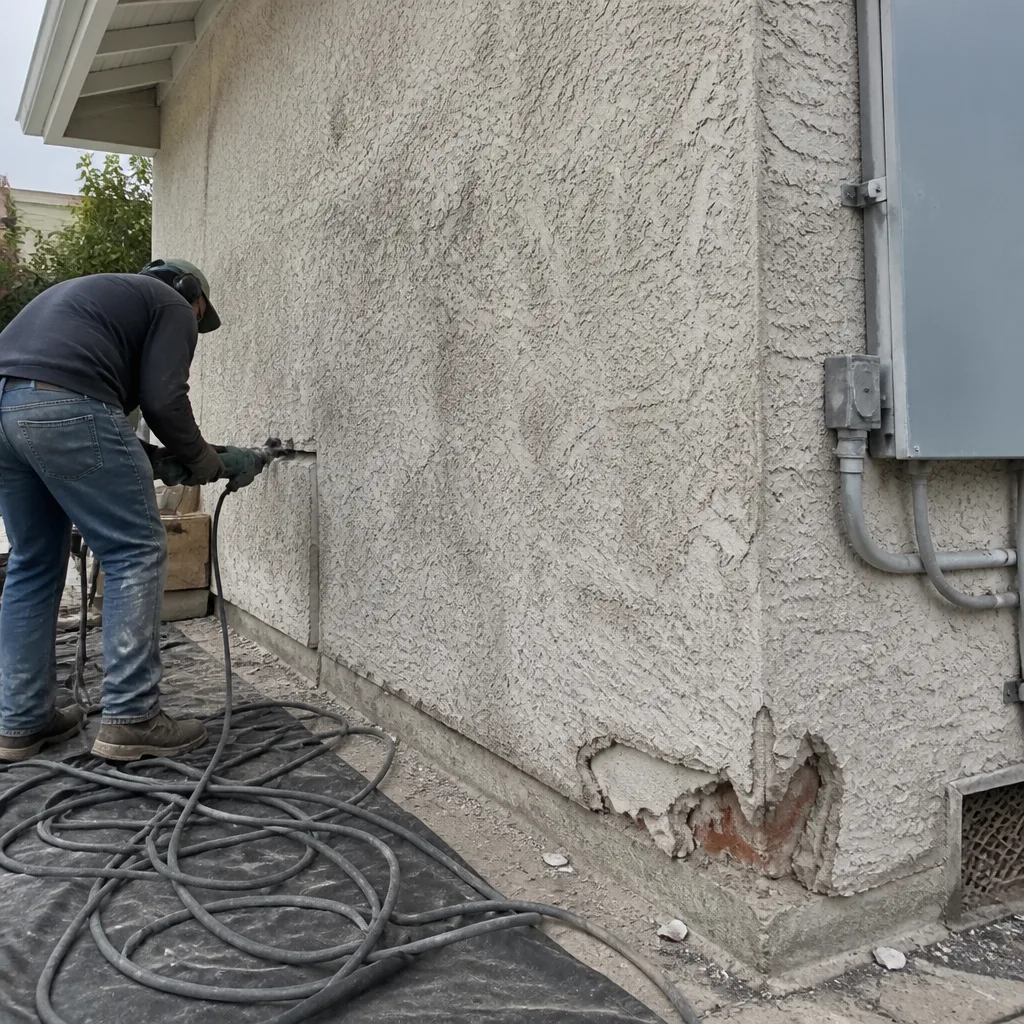 Before
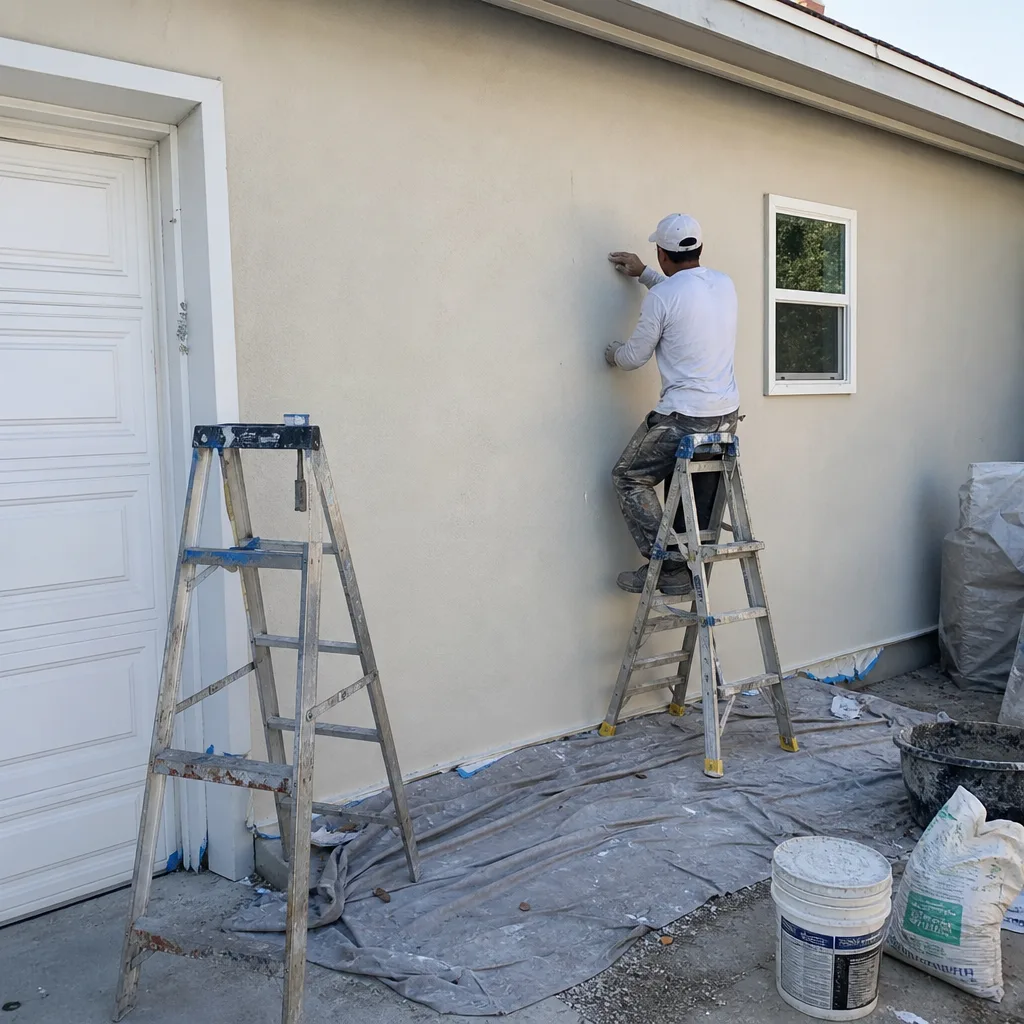 After
AfterOpen-Cell vs. Closed-Cell Foam in Burbank: Which One Do You Need?
This question comes up on nearly every job we run in Burbank, and the answer usually comes down to where the foam is going and what you need it to do.
Open-Cell foam: where it makes sense
Open-cell foam is lighter, quieter to live around during cure, and about half the cost per board foot of closed-cell. For attic floors where you’re insulating between the joists and the attic stays vented, open-cell delivers a solid air barrier alongside decent R-value. It’s also the standard choice for interior partition walls where the goal is sound attenuation – blocking noise transfer between bedrooms or between a garage and living space, which is a common request in Burbank’s denser residential blocks near Olive Avenue and Victory Boulevard.
What open-cell foam doesn’t do: it won’t resist vapor transmission, won’t add meaningful structural rigidity to a wall cavity, and shouldn’t be used on the underside of a roof deck in an unvented assembly without a vapor retarder specified by a building scientist. We see off-label open-cell applications in roof decks fairly regularly on second-opinion jobs – it’s a real problem that generates moisture issues over time in a climate that gets coastal marine layer in late spring and early summer.
Closed-cell foam: where it makes sense
Closed-cell is the right answer for roof-deck assemblies, crawl space walls, rim joists, and any application where the foam needs to act simultaneously as a thermal barrier, air barrier, and vapor retarder. At R-6.5 per inch, you can hit R-19 in 3 inches of material – which matters enormously in low-rafter bays where there isn’t room to stack open-cell to equivalent performance. It also adds racking resistance to wall assemblies, though we’re careful not to oversell that benefit as a structural claim.
For Burbank homes in the hillside area – particularly the streets that climb north toward the Verdugos – closed-cell on a roof deck or against an exterior wall also reduces the risk profile around wildfire-adjacent air infiltration. Air sealing those penetrations is the primary line of defense; closed-cell foam holds that seal durably over time.
Burbank-Specific Factors That Affect Your Spray Foam Project
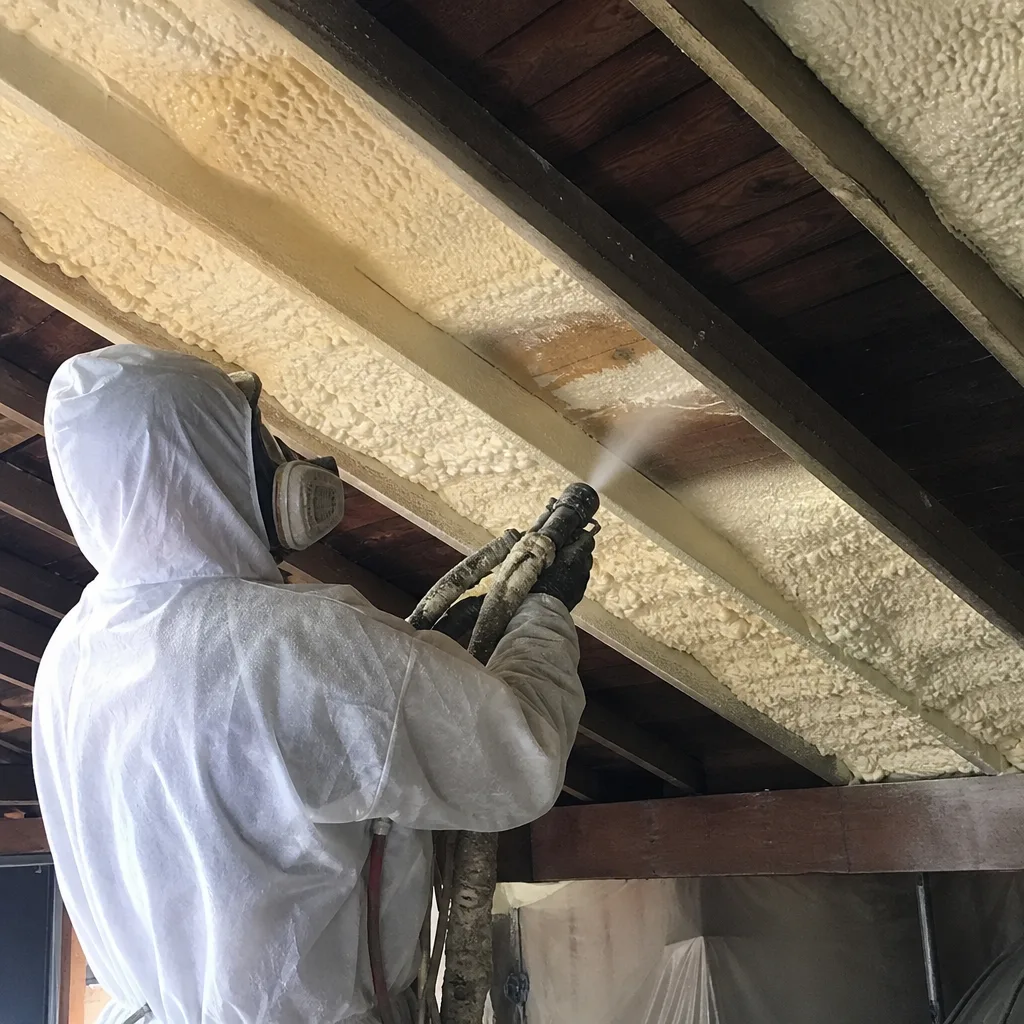
Burbank isn’t a generic Southern California suburb when it comes to insulation work. A few local conditions shape what we scope and recommend on every job here.
The hillside homes north of Glenoaks
Properties that sit on the slopes above the city core – up toward the Verdugo Mountains – tend to have more complex building envelopes: split levels, cantilevers over hillsides, garage-under-living configurations, and irregular crawl spaces. These are exactly the conditions where spray foam outperforms batt insulation, because foam conforms to irregular framing and can be applied to surfaces that batts simply can’t contact consistently. They’re also the jobs that take longer and cost more per square foot to execute properly – something a written scope makes transparent before anyone starts.
The Media District and older commercial-adjacent residential
A cluster of Burbank homes in the Media District area and around the airport corridor were built with unusual mechanical configurations – large attic spaces converted to equipment rooms, ductwork running through unconditioned space, or additions built with minimal insulation detailing. We regularly see blower-door readings in this area that come in above 4,000 CFM50 – a pressurization reading that tells us, in a single number, how much conditioned air the building envelope is losing. After air sealing and spray foam installation on a typical Media District home, we routinely see that number drop to 1,800 to 2,400 CFM50. That’s a documented result, not a claim.
California Building Code and Burbank permits
Burbank falls under Los Angeles County building department jurisdiction for most residential work, and spray foam in an unvented attic assembly typically requires a permit and inspection. This is worth knowing before you accept a quote from a contractor who doesn’t mention it. A permitted job gives you documented code compliance; an unpermitted one can create disclosure complications if you sell the home. We scope permitted work into the written price on every applicable job, and we pull the permit – not the homeowner.
LADWP rebates
Los Angeles Department of Water and Power – which serves Burbank through its own municipal utility, Burbank Water and Power – offers rebates for qualifying insulation improvements. The availability and amounts shift from year to year, but in 2025 and into 2026, Burbank Water and Power has maintained rebate programs for attic insulation and air sealing that can offset $200 to $500 of project cost depending on the scope and home size. We’ll confirm current availability and qualifying specs in your written estimate. Nothing is claimed until it’s confirmed.
How to Save on Spray Foam Insulation in Burbank
There’s real money to save on a spray foam project if you approach it correctly. There’s also money to lose if you optimize for the wrong thing.
Combine the air sealing and foam installation in one project
Air sealing and spray foam installation use overlapping labor and equipment. Scheduling them together on one mobilization is meaningfully less expensive than running two separate crews on two separate visits. More practically, doing the air sealing first and then the foam in the same project window is how you get a job that performs the way it should – you’re not paying for two visits, and you’re not leaving air bypasses under new insulation.
Get a second opinion on any written estimate you already have
We offer a free second opinion on any written estimate. Bring us a competing quote and Wes Okafor or a member of our team will read it with you – not to find problems for the sake of winning the job, but to make sure you understand what’s included, what’s excluded, and whether the specified product and thickness is appropriate for your application. A low number that specifies the wrong foam type in the wrong location isn’t a deal; it’s a redo waiting to happen.
Check Burbank Water and Power rebate eligibility before you commit
As noted above, rebate programs can offset real project cost. The programs have application windows and eligibility requirements – notably, the work generally needs to be permitted and inspected to qualify. Confirm eligibility before the crew starts, not after.
Do the insulation removal as part of the same project
If your attic has old blown-in cellulose or degraded fiberglass that needs to come out, doing removal and foam installation as a bundled project reduces your overall cost compared to scheduling them separately. It also means the foam goes onto a clean substrate, which matters for adhesion and coverage consistency.
Don’t size the project by price – size it by performance
The most common way homeowners overspend on spray foam is by applying the right product to the wrong area, or the wrong product to the right area, because they were trying to trim the quote. A roof-deck application that hits R-15 instead of R-19 because the contractor skimped on pass thickness will fail Title 24 on inspection and will perform measurably worse over time. Get the written scope right first; then look for legitimate savings in scheduling, rebates, and bundling.
For a no-obligation estimate with a written price on the same visit, call (213) 816-1699. We don’t quote from a phone conversation; we come out, look at the space, and give you a number in writing before we leave.
What the Job Looks Like From Start to Finish
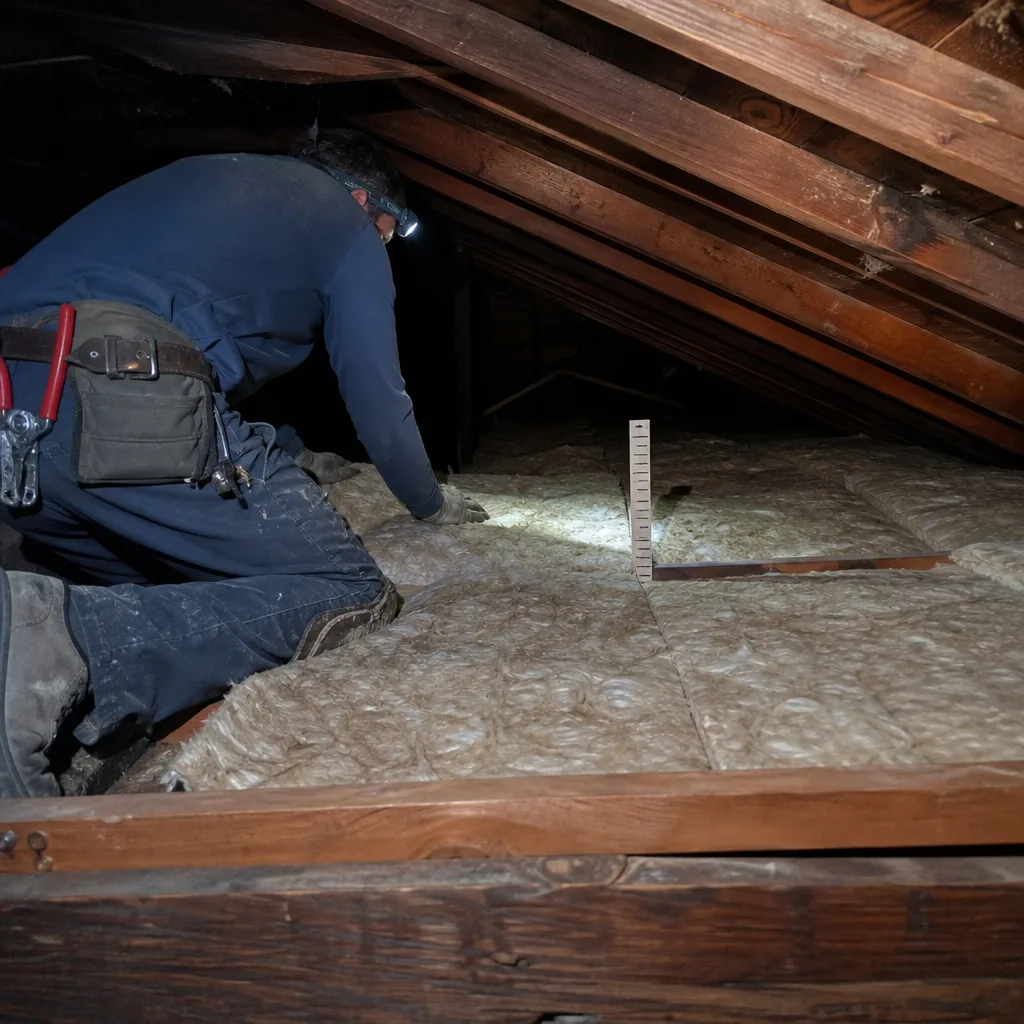
A lot of homeowners come to a Spray Foam Insulation in Burbank job not knowing what to expect from a crew in their attic for a day. Here’s what a standard Envelope Insulation Co. project looks like on the ground.
Day one: site assessment and written scope
A uniformed, background-checked technician – you’ll know their name and get a text when they’re on the way, per Haven Standard – walks the space with a flashlight, a moisture meter, and, on applicable jobs, a blower-door setup. We document what we find with photos before touching anything. You leave that visit with a written price, a written scope, and a written warranty. No work starts without all three in place. That’s Haven Standard Clause 1, and it isn’t negotiable on any job we take.
Air sealing before foam
Before any foam goes in, the crew seals top plates, can-light penetrations, plumbing chases, and any electrical penetrations with foam or mastic. This step is non-negotiable at Envelope Insulation Co. – we won’t install insulation over unsealed air bypasses. The blower-door reading taken before this step gives us a baseline; the reading taken after gives you documented proof of what the air sealing actually accomplished. In a typical Burbank attic that started above 3,500 CFM50, we commonly land post-sealing readings of 1,600 to 2,200 CFM50 before any additional insulation is added.
Foam installation
The foam rig – a heated, pressurized proportioner that keeps the two chemical components at precise temperature and ratio – is staged outside. Hoses run into the attic or crawl space. Technicians in supplied-air respirators and protective suits spray in lifts, checking thickness with a calibrated probe between passes. The home stays unoccupied for two to four hours post-application while initial off-gassing occurs; we build that window into your project schedule.
Documentation and close-out
When the crew leaves, you have: a post-job photo record of the completed installation, post-installation blower-door numbers where applicable, a copy of the permit and inspection sign-off on permitted work, and a signed copy of your written warranty. The 365-Day Done Right Promise is in writing. If something isn’t right within that window, we make it right – not at your expense, and not on a timeline measured in weeks.
FAQs – Spray Foam Insulation Cost in Burbank
How much does spray foam insulation cost per square foot in Burbank?
Installed spray foam in Burbank runs $1.50 to $2.00 per board foot for open-cell and $3.00 to $4.50 per board foot for closed-cell. A board foot is one square foot of coverage at one inch thick, so a 1,200-square-foot attic floor sprayed to three inches of open-cell foam would run roughly 3,600 board feet – putting the installed cost at $5,400 to $7,200 before any air sealing or removal work. Your written estimate will break this out line by line so the math is visible. Call (213) 816-1699 to schedule an on-site visit and get that number in writing.
Is spray foam insulation worth it in Burbank’s climate?
For most Burbank homes, yes – with caveats. Burbank’s Climate Zone 10 sees hot, dry summers with peak attic temperatures that regularly exceed 140 degrees Fahrenheit, and marine layer intrusions in late spring and early summer that create vapor pressure cycles. Closed-cell spray foam on a roof deck eliminates the attic as a heat source by bringing the air conditioning equipment and ductwork inside the conditioned envelope, which is a documented energy efficiency gain. Open-cell on an attic floor, combined with proper air sealing, produces measurable reductions in cooling load. We document both with blower-door readings – a pressurization test that puts a single number on what your building envelope was losing before and after the work.
How long does spray foam insulation last in Burbank?
Closed-cell spray foam, properly installed, has an expected service life of 80 years or more with no maintenance. Open-cell foam is similarly durable, though it’s more susceptible to physical damage in high-traffic attic spaces. In Burbank’s climate, UV exposure is the main degradation risk for any foam left exposed (such as in a crawl space with a vent opening) – most closed-cell applications in exposed locations should be coated with an intumescent paint or thermal barrier per code. We specify that coating in the written scope on any job where it’s required.
Can I get spray foam insulation installed the same day I call?
Generally, no – and you shouldn’t want to. A spray foam job done correctly requires an on-site assessment, a written scope, permit application where required, and equipment staging. Same-day spray foam from any contractor means one or more of those steps got skipped. What we can do is schedule your site visit quickly – often within two to three business days in the Burbank market – and give you a written price on that same visit. If the project is straightforward and the schedule allows, installation can follow within one to two weeks of scope approval.
Is it cheaper to repair or replace old insulation in Burbank?
It depends on the condition of what’s there. If existing insulation is contaminated (rodent activity is common in attics in the Burbank hills and in older Magnolia Park homes), compressed below effective R-value, or covering unsealed air bypasses, replacement with spray foam is almost always the right economic call. Layering new material over compromised insulation is a cost that doesn’t produce proportional performance. Removal and disposal of an average Burbank attic runs $600 to $1,500; combined with new foam installation on a clean substrate, the total project typically delivers a payback period of 7 to 12 years in reduced utility costs – and a documented before-and-after result you can verify rather than just take our word for. Call (213) 816-1699 and we’ll put both options in writing side by side.
Key Takeaways
- Open-cell spray foam in Burbank runs $1.50 to $2.00 per board foot installed; closed-cell runs $3.00 to $4.50 per board foot installed.
- Most Burbank homes pay between $1,800 and $5,500 for a standard attic project; roof-deck or wall applications in closed-cell foam can reach $8,000 or more.
- Burbank’s Climate Zone 10 and Title 24 requirements affect which product and what thickness is code-compliant for your specific application.
- Air sealing must happen before foam goes in – not after. Any written scope that doesn’t separate these as sequential steps is worth questioning.
- Before-and-after blower-door readings are included on applicable jobs so you have a documented number showing what changed, not just an assurance that it did.
- Every job at Envelope Insulation Co. includes a written price, written scope, and written warranty before any work starts. Under the 365-Day Done Right Promise, if it’s not right, we make it right.
- Burbank Water and Power rebates can offset $200 to $500 of qualifying project cost – check eligibility before the work starts, not after.
Get a Written Price for Your Burbank Spray Foam Project
If you’ve read this far, you already know more about our Spray Foam Insulation services than most Burbank homeowners do when they make their first call. The next step is a site visit – an in-person look at your attic or crawl space by a uniformed, background-checked technician who will give you a written price before leaving your driveway.
Wes Okafor and the team at Envelope Insulation Co. have been running these projects under The Haven Standard since 2016, across more than 9,000 homes – every one with a written price before work started and a documented record when the crew left. We’re happy to read a competing quote with you, discuss what’s in it and what isn’t, and let you make the call without pressure.
There’s no voicemail loop here. A live person answers when you call, and we’ll get you scheduled. Call (213) 816-1699 for your free on-site estimate. The price will be in writing before anyone touches your home.
If you’re still researching your options, the home page has a full overview of every service we offer across the building envelope – attic insulation, air sealing, radiant barrier, crawl space encapsulation, and more.
Pricing reflects the Burbank, CA market as of 2026. All figures are installed costs including labor and materials. Individual projects vary based on scope, access, and current material pricing. Topside Attic Insulation Burbank offers free on-site estimates with a written price on every visit – call (213) 816-1699.
Written by Wes Okafor, Owner at Envelope Insulation Co., serving Burbank, CA since 2016.
What Our Customers Say
"Crawl space encapsulation done properly. Photographs of the vapour barrier at every seam, and the damp smell in the hallway is gone."
- Ainsley P."They photographed rodent damage in the old insulation that we had no idea about, and priced the exclusion work separately so we could decide."
- Harriet N."Fixed price, clean work, and they hauled the old material away as agreed."
- Todd M.